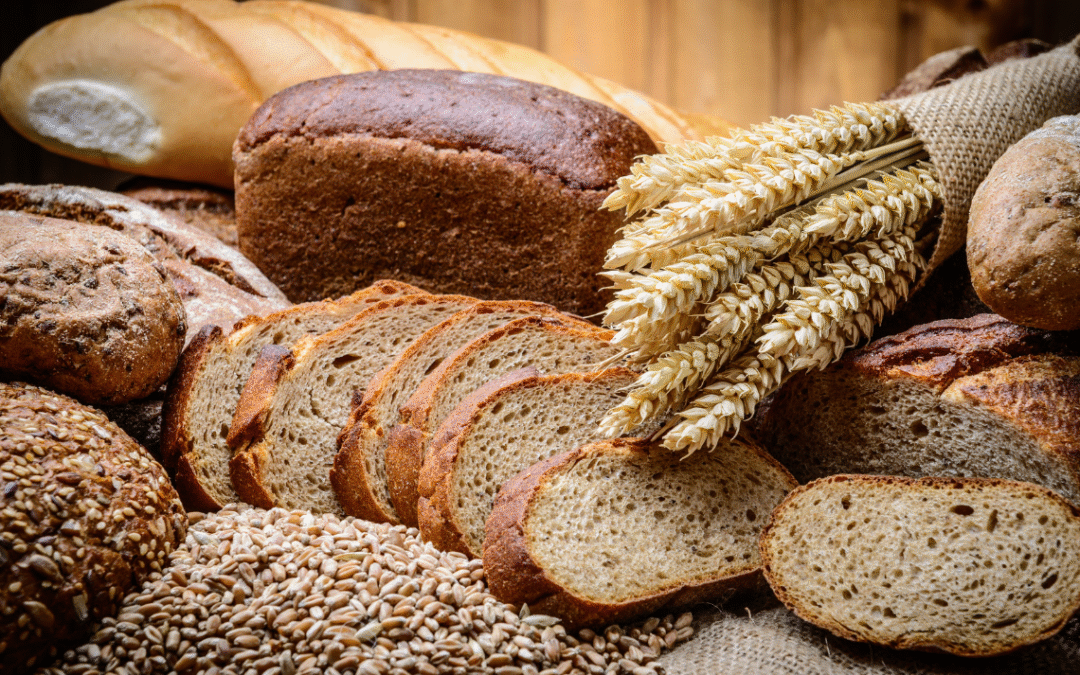
What Is Sourdough Bread?

What Is Sourdough Bread?

A Beginner’s Guide to Getting Started with Sourdough

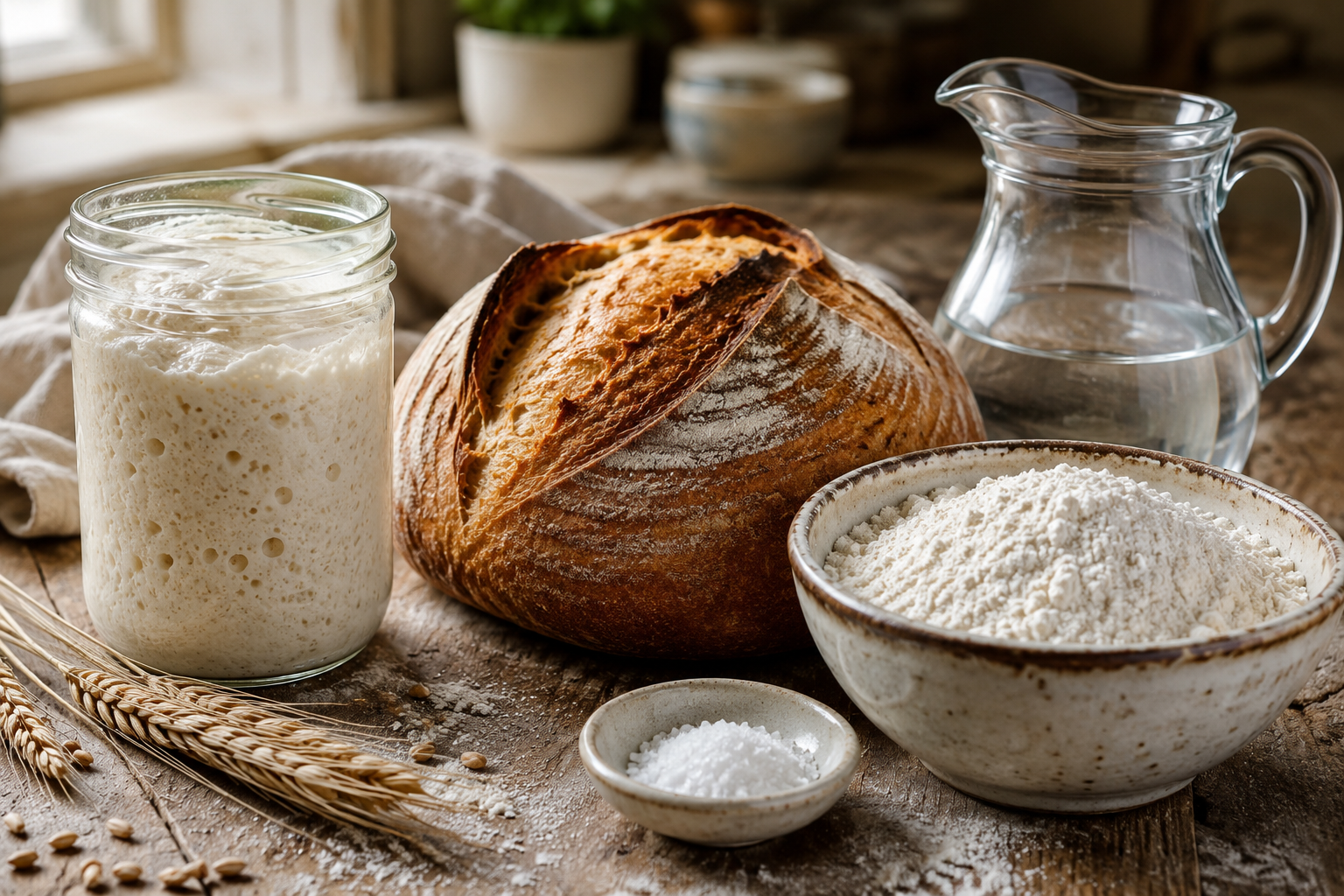
You’ve probably heard the buzz about sourdough, but what is sourdough bread, really? To put it simply, it’s more than bread. It’s part history, part science, and very much heart. In fact, sourdough is bread that feels alive — because in many ways, it truly is.

Whether you’re curious about baking your own loaf or simply want to understand why people can’t stop talking about it, this guide will walk you through the essentials. As a result, you can think of it as your first friendly step into the world of sourdough.

A short history of sourdough

N

First, it appeared in Ancient Egypt

The earliest evidence of sourdough goes back to Ancient Egypt, when bakers discovered that flour and water left out would begin to bubble and rise naturally.

N

Later, it became a staple during the Gold Rush

In the 1800s, San Francisco miners were nicknamed “sourdoughs” because they carried their starters with them like gold.

N

Finally, it returned in today’s artisan revival

Today, sourdough has made a huge comeback in kitchens around the world. Home bakers and artisan bakeries alike celebrate its slow, flavorful fermentation process.

What Is Sourdough Bread Made Of?
(Sourdough Starter Explained)

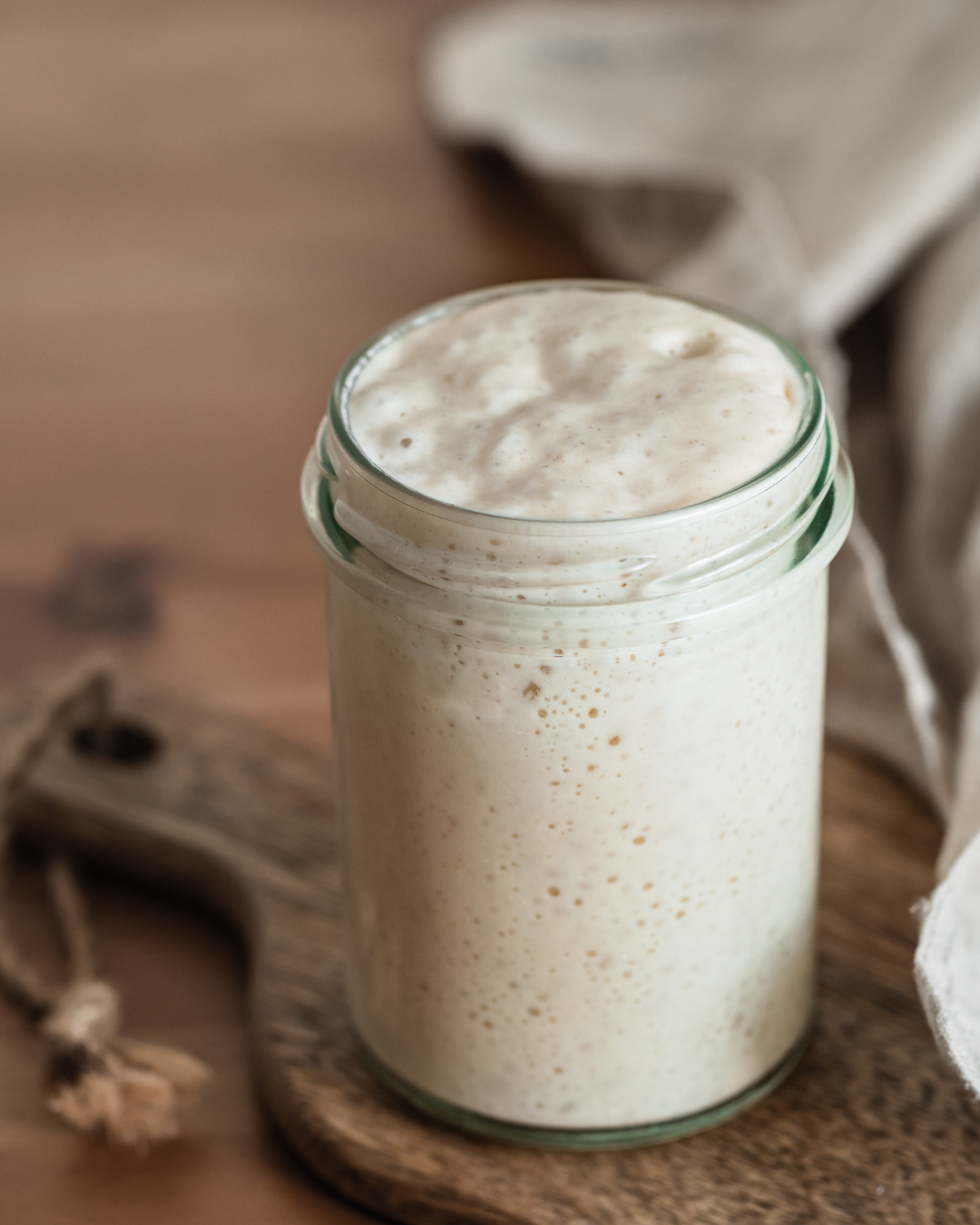
A sourdough starter is a simple mix of flour and water that captures wild yeast and friendly bacteria from the air and your kitchen. Over time, this mixture becomes bubbly and active. That’s your natural leavening — no commercial yeast needed.

  • Yeast’s job: Create bubbles so your bread rises.
  • Bacteria’s job: Add flavor and mild acidity (and help your bread last longer).

Your starter is the heart of sourdough. Feed it regularly, and it will reward you with bread that’s flavorful, chewy, and unique to your kitchen.

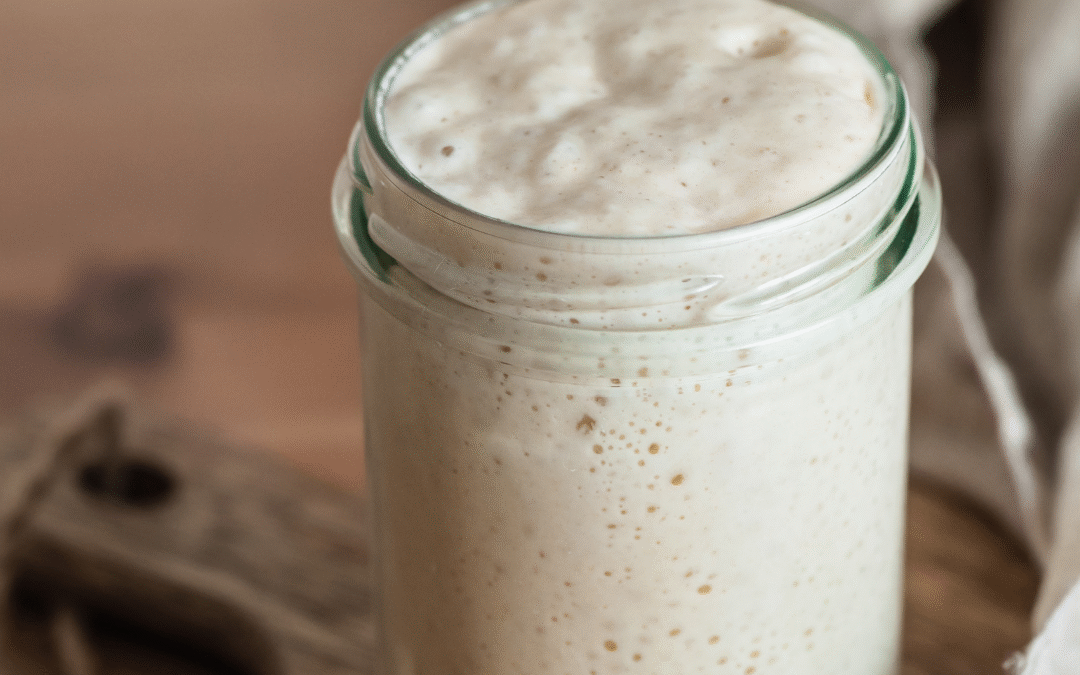
Wild yeast and lactic acid bacteria fermenting in a sourdough starter jar

How Sourdough Bread Is Made at Home

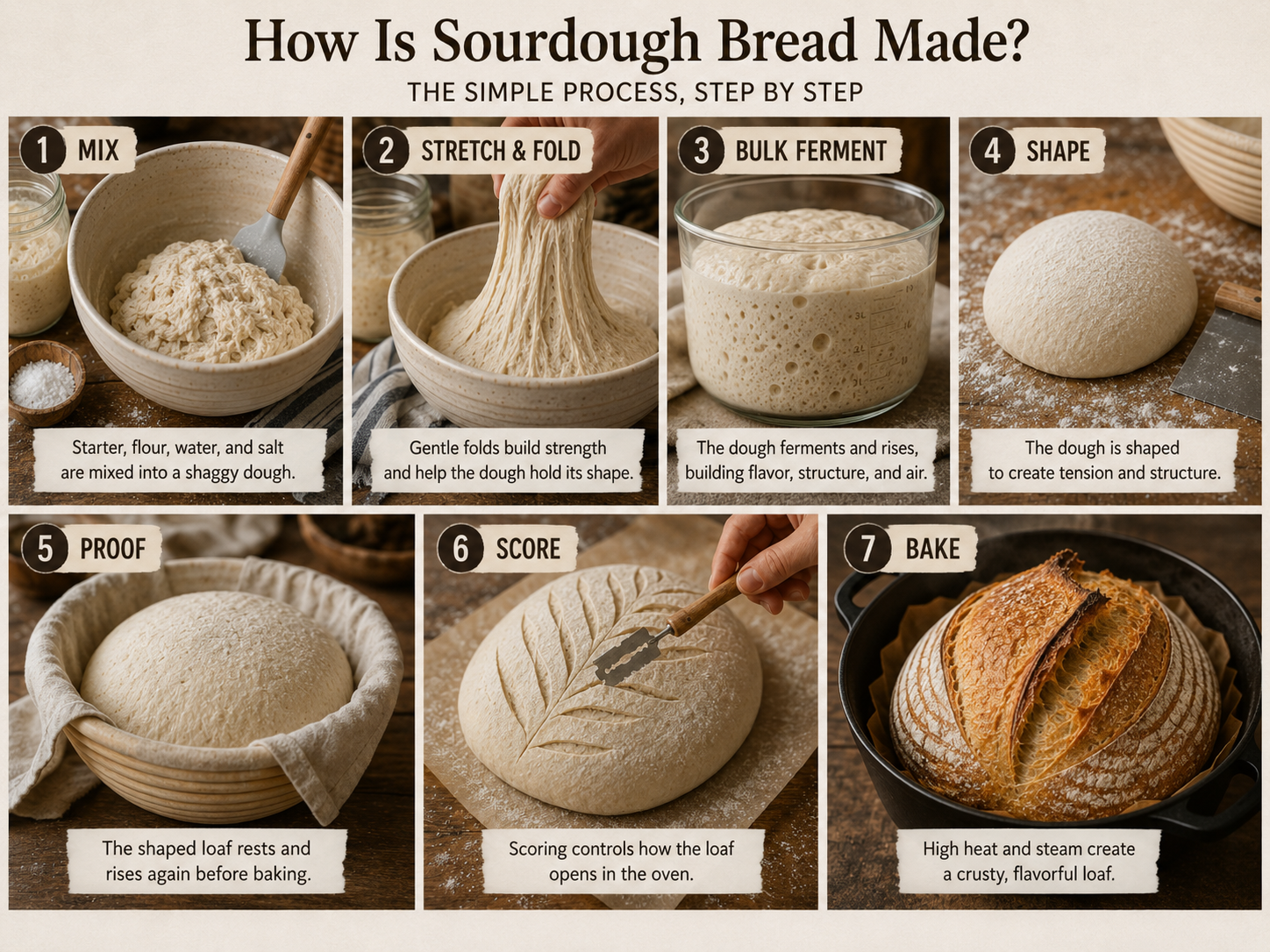
Here’s the big picture of how sourdough bread comes together:

1. First You Mix

Starter, flour, water, and salt are combined.

2. Then You Rest (and Stretch)

The dough ferments slowly, with folds along the way to strengthen gluten.

3. After That You Shape the Dough and Let it Proof

The dough is shaped, then proofed (rested) at room temp or in the fridge overnight.

4. And Finally it Bakes Into a Golden Loaf

A hot oven (often with steam or a Dutch oven) transforms that dough into a crusty loaf.

The process is slower than yeast bread, but that’s the point, the time creates flavor, texture, and a little bit of magic.

Sourdough vs Yeast Bread: What Makes Them Different?

Topic Sourdough Commercial Yeast Bread
Leavening Wild yeast plus lactic acid bacteria Packaged baker’s yeast
Timeline Slow, flavor-building fermentation Fast rise
Flavor Complex, mild to tangy Mild, often neutral
Texture Chewy, open crumb Soft to tight crumb
Shelf life Keeps longer naturally Stales faster

As a result, sourdough naturally keeps fresh longer than most homemade yeast breads, even though it may not last as long as store-bought loaves with preservatives.

Deeper dive into my article : Sourdough vs Yeast Bread

Note: sourdough made with wheat is not safe for people with celiac disease. For that, use a gluten-free sourdough recipe. Read my blog posts: How to Make a Gluten Free Sourdough Starter and Easy Beginner Recipe Sourdough Gluten Free Bread.
So, What Does It Actually Taste Like?

Not all sourdough tastes sour. For example, a well-fed starter creates mild flavor, while longer fermentation creates a stronger tang.

  • Mild sourdough: Soft tang, nutty and wheaty.
  • Tangy sourdough: Stronger bite, deeper flavor, more “classic” sour taste.

Either way, sourdough has a depth of flavor you just don’t get from regular yeast bread.

little boy eating sourdough bread

Here are some beginner sourdough bread terms…

Getting lost in sourdough lingo? In that case, here’s a quick glossary to help you out:

  • Starter: Flour + water mixture that makes bread rise.
  • Levain: A portion of starter built up for a specific bake.
  • Bulk fermentation: The first long rest where dough rises and develops flavor.
  • Proofing: The final rise before baking.
  • Hydration: The amount of water in your dough, usually written as a percentage.
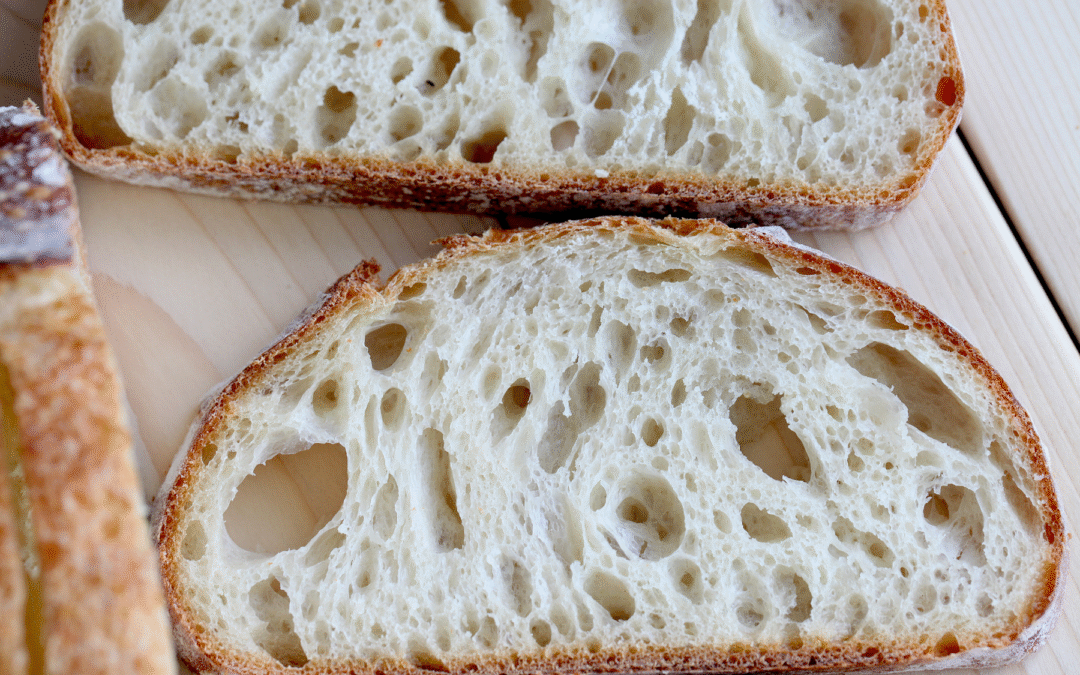
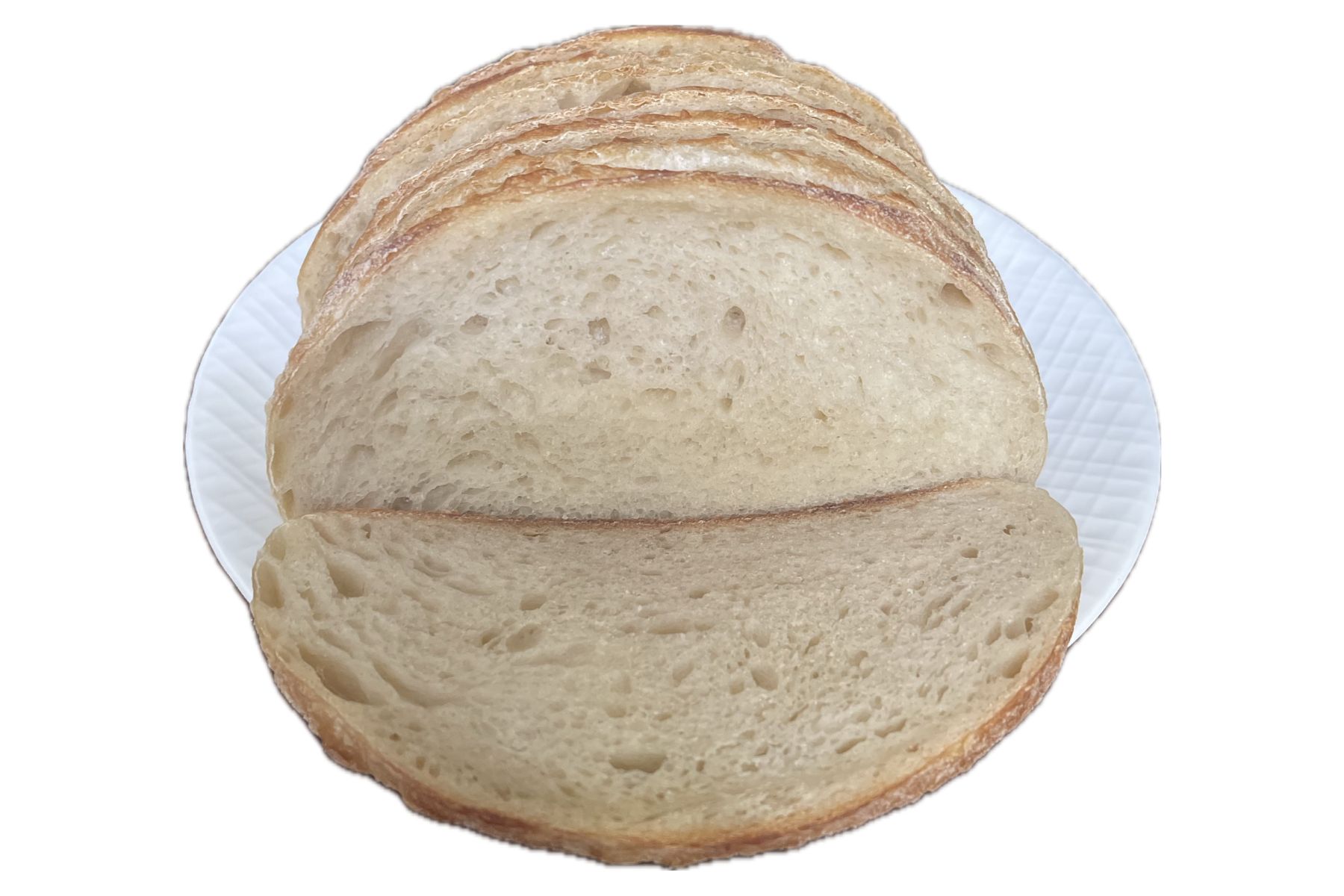
  • Crumb: The inside texture of the bread. Open crumb = big holes. Tight crumb = smaller holes.

Simple Tools You Will Need To Make Baking Easier

You don’t need a bakery setup to begin baking sourdough. With just a few simple tools, you’ll make your first loaves with less stress and more success. Here are my go-to essentials:

Affiliate Disclaimer: This post contains affiliate links. If you purchase through these links, I may earn a small commission at no extra cost to you. I only recommend products I personally use and love, and your support helps me keep sharing free sourdough recipes and resources.

  •  Digital kitchen scale – Baking is science, and flour can be surprisingly tricky to measure with cups. A scale gives you accuracy (and peace of mind).
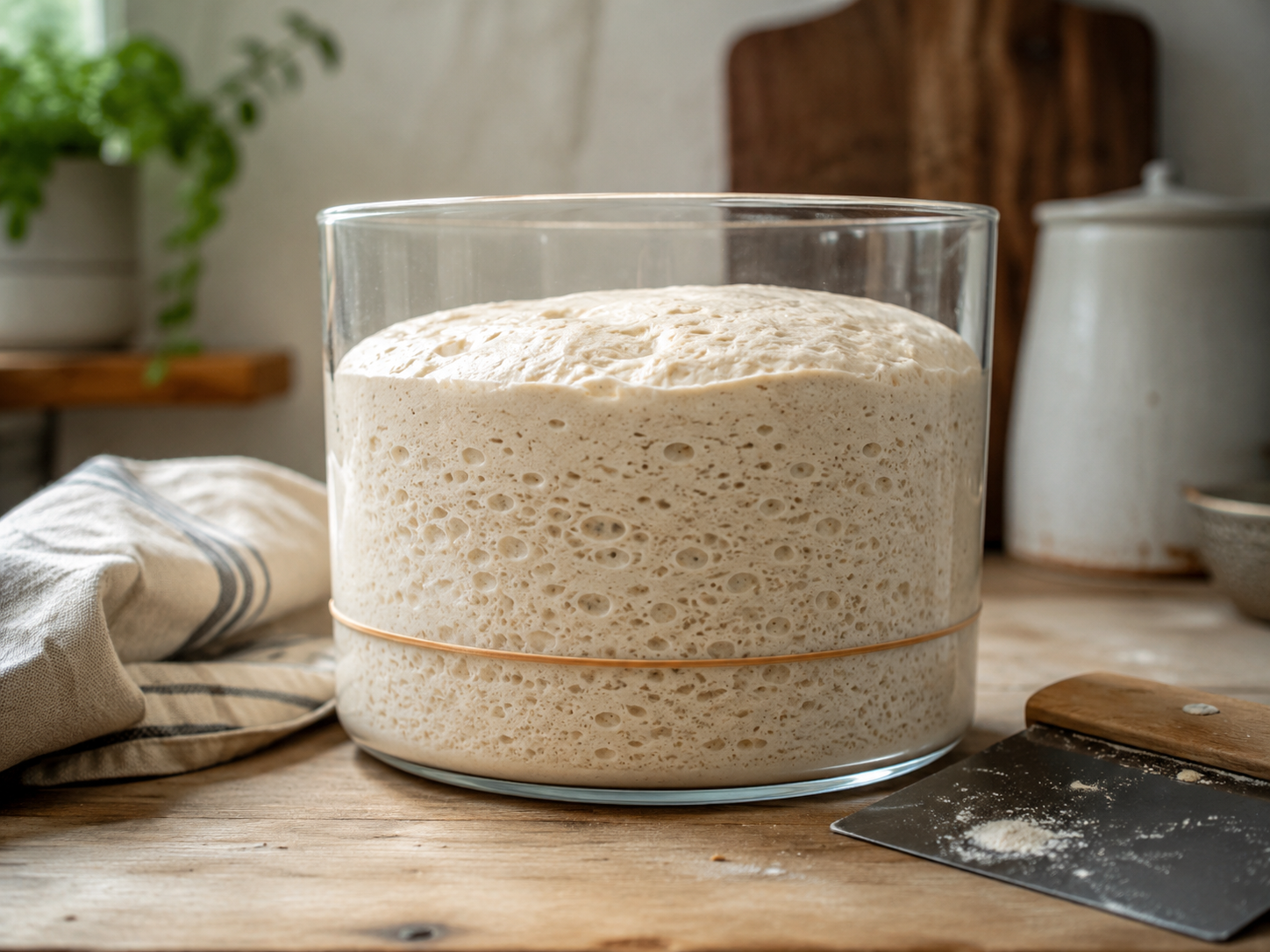
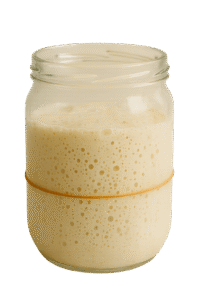
  • Glass jar with a loose lid for your starter  – A clear jar lets you watch the bubbles and growth, which is half the fun. Add a rubber band around the jar to mark how much your starter has risen.
  • Silicone spatula – Easy mixing and jar scraping with less waste. Flexible edges keep starter and dough where they belong instead of stuck to the bowl.
  • Mixing bowl – A large, sturdy bowl makes mixing and folding dough easy. Bonus if it’s glass or ceramic so you can see how much your dough rises.
  • Instant-read thermometer – Not essential, but incredibly helpful for checking dough and water temperatures. It takes the guesswork out of fermentation.
  • Banneton (proofing basket) kit – Gives your dough support during the final rise and creates those beautiful spiral flour patterns. If you don’t have one yet, a bowl lined with a well-floured tea towel will do the trick.
  • Bench scraper – Sticky dough is part of sourdough life. A bench scraper helps you handle it gracefully and keeps your counter neat.
  • Dutch oven – A Dutch oven traps steam, creating that crackly crust and gorgeous oven spring. In fact, it’s one of the easiest ways to get bakery-quality bread at home. My absolute favorite that I use is Krustic Dutch Ovens. 

👉 Want my full setup? Here’s my complete list of sourdough tools I recommend.
A Quick Note on Sourdough Bread Health Benefits

Sourdough’s slow rising process makes it easier to digest and, in many cases, healthier than many other breads. Want the full scoop? Head over to my next post: Why Sourdough Bread Is Better for Your Health (And Who Benefits Most).

FAQs About Sourdough Bread

Does sourdough taste sour?
Not always. A well-fed starter and shorter fermentation create mild flavor. Longer fermentation creates a stronger tang.

Is sourdough healthier than regular bread?
Yes. In fact, for many people it is easier to digest and has a gentler impact on blood sugar and kidney health. Learn more in my post: Why Sourdough Bread Is Better for Your Health.

Can beginners bake sourdough at home?
Absolutely. With patience and the right tools, anyone can do it. Start simple and build from there.

If this helped, save it for later, share it with a friend who loves good bread, and tell me in the comments what sourdough questions do you have?

In conclusion, sourdough bread is tradition, science, and heart combined. It’s bread made with a living starter, rooted in history, crafted slowly, and celebrated for its flavor and texture. It’s not just food — it’s a connection to tradition, to the kitchen, and to something deeply satisfying.

Ready to bake your own? Start here: How to Make a Sourdough Starter (Step-by-Step Guide)

Why Sourdough Bread Is Better for Your Health + Who Benefits

Why Sourdough Bread Is Better for Your Health + Who Benefits

5,000 Years Ago, Food Was Medicine

Picture this: you sit down to enjoy a warm slice of bread, but instead of bloating or a heavy crash, you feel nourished, light, and satisfied. That’s the heart of why sourdough bread is better for your health — it’s bread that loves you back. For thousands of years, people baked bread this way. It wasn’t packed with additives, preservatives, or fast-rise yeast. It was slow, natural, and alive.

That bread was — and still is — sourdough bread.

If you’ve ever wondered exactly why sourdough bread is better for your health, this post breaks it down simply and clearly. We’ll explore the science, the benefits you can feel, and who sourdough helps most.

👉 New to sourdough? First, check out my What Is Sourdough Bread? article to learn the basics of sourdough starters, fermentation, and how it all works.

What Changed with Modern Bread

For over 5,000 years, sourdough was the bread of everyday life. It relied on natural fermentation — wild yeast and lactic acid bacteria working together over time. But in the last century, bread shifted from slow food to fast food.

❌ Modern bread: commercial yeast, refined flour, added sugars, preservatives, and hard-to-pronounce ingredients.

âś… Sourdough bread: slow-fermented, natural, and nourishing, just flour, water, salt, and time (with occasional enrichment like milk or honey).

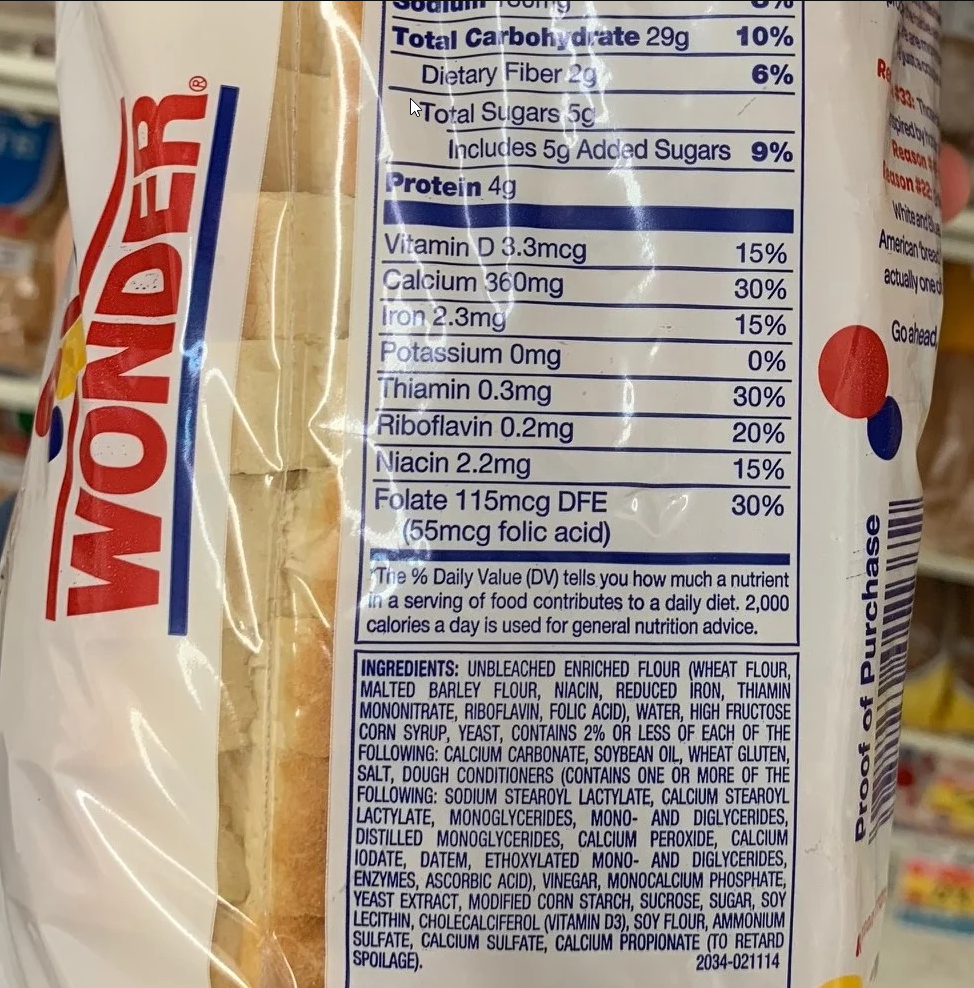
This difference is what makes sourdough so much gentler and healthier. Look at the list of ingredients in Wonder Bread Sliced Bread.

Wonder Bread Ingredient List

The Health Benefits:
Why Sourdough Bread Is Better for Your Health

Easier on Digestion

Fermentation “pre-digests” gluten and breaks down phytic acid, the compound that blocks nutrient absorption. This is one reason why sourdough bread is better for your health if regular bread leaves you feeling bloated.
(Source: Mayo Clinic)

A 2023 review of 25 studies showed that people who switched from bread made with baker’s yeast to sourdough bread reported significant improvements in gastrointestinal comfort. (Health.com).

That’s why many people with sensitive digestion feel better choosing sourdough over conventional bread.

Supports Gut Health

Here’s the truth: baked sourdough bread doesn’t contain live probiotics — the heat of baking kills them off. Instead, sourdough is rich in prebiotics: fibers and compounds that act like fuel for the good bacteria already living in your digestive system.

That prebiotic power helps support a healthier microbiome and, in turn, strengthens your immune system.

And even before baking, the fermentation process allows lactic acid bacteria to thrive. These natural microbes are responsible for sourdough’s tangy flavor — and they’re also the reason sourdough can help maintain a more balanced gut environment (Harvard T.H. Chan School of Public Health).

Blood Sugar Balance

Unlike conventional white bread, sourdough causes a slower, steadier rise in blood sugar. This is thanks to the acids created during fermentation, which change the way starches are digested.

Glycemic Index Comparison

  • White wheat bread: ~71
  • Sourdough bread: ~54 (Health.com)

This is one reason sourdough is often recommended for people monitoring blood sugar, diabetes, or energy crashes.

Nutrient Absorption

Fermentation makes minerals more bioavailable, meaning your body can actually absorb and use them.

Nutrients boosted by sourdough fermentation include:

  • Iron (for energy and oxygen transport)
  • Zinc (for immunity and healing)
  • Magnesium (for muscles, nerves, and blood sugar balance)
  • Selenium & Manganese (for cell protection)
  • B Vitamins (for metabolism and brain health)

This is what makes sourdough nutrition unique: the same flour becomes more nourishing once it’s naturally fermented.

Naturally Longer Shelf Life

The organic acids produced during sourdough fermentation don’t just benefit your gut — they also act as natural preservatives. That’s why sourdough stays fresher longer than most commercial breads, without chemical additives.

little boy eating sourdough bread

Who Benefits Most from Sourdough Bread

While sourdough can benefit almost everyone, it’s especially helpful for:

  • Those with sensitive digestion → less bloating, easier breakdown of gluten and FODMAPs.
  • People managing diabetes or blood sugar swings → lower glycemic impact helps stabilize energy.
  • Individuals with kidney or heart concerns → homemade low-sodium (or no-sodium) sourdough is a cleaner option. Try my NO Sodium Sourdough Bread Loaf Recipe here.
  • Wellness-minded food lovers → anyone wanting to enjoy more natural, healthy sourdough options without additives.

⚠️ Friendly disclaimer: This information is for educational purposes only. Always consult your doctor before making dietary changes, especially if you have conditions like diabetes, kidney disease, or heart concerns.

👉 If you’re gluten-free, don’t worry, check out my Gluten-Free Sourdough Bread Recipe
for options that fit your lifestyle.

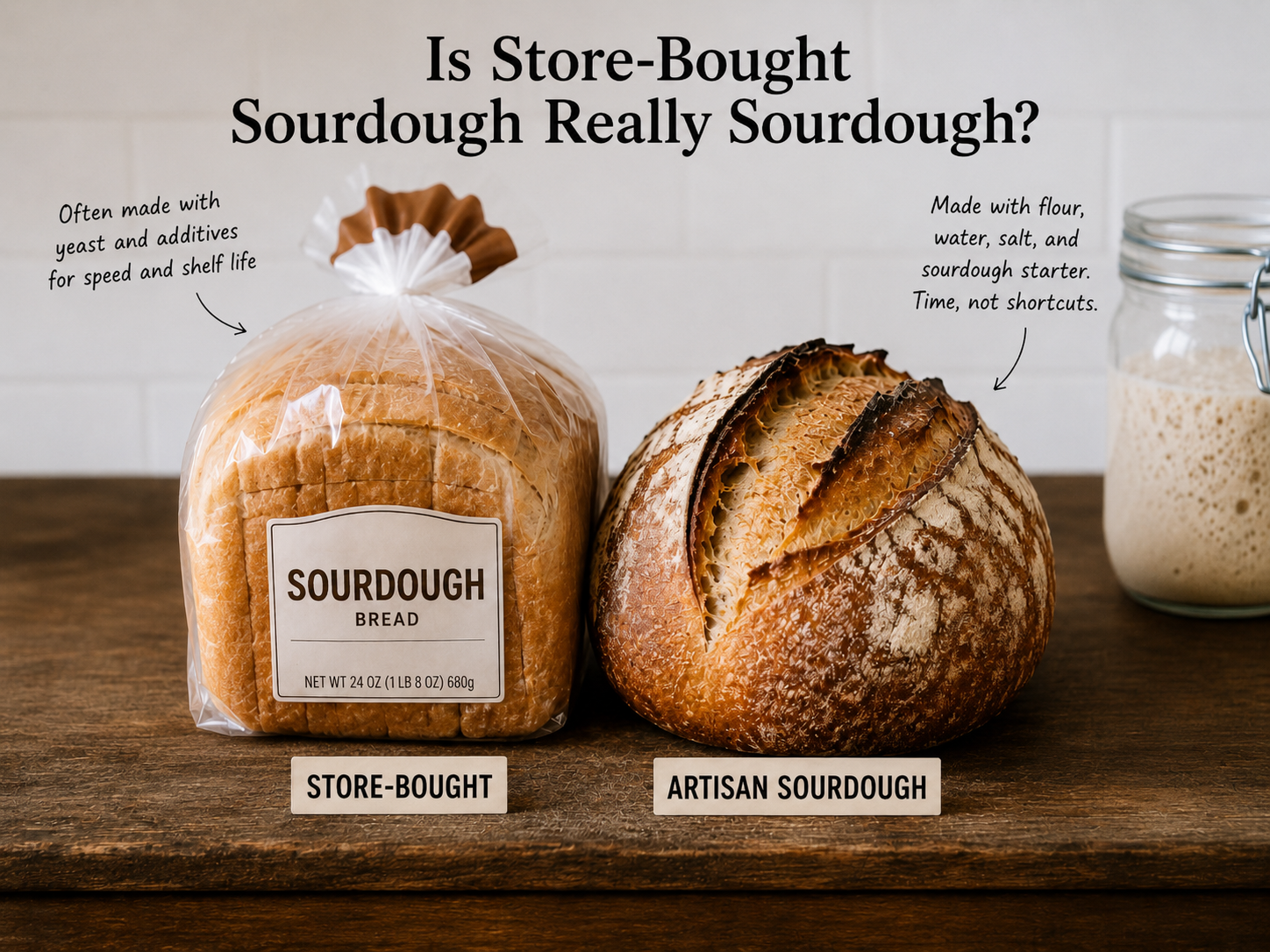
The Grocery Store Trap: Is It Real Sourdough?

Most supermarket “sourdough” looks the part — but often isn’t.

❌ Instead of being slow-fermented, many loaves are rushed with commercial yeast, preservatives, and additives. They might taste tangy, but that doesn’t make them true sourdough.

✅ Real sourdough is alive. It’s naturally fermented with just flour, water, and a starter full of wild yeast and lactic acid bacteria. That slow process is what gives it the gut-friendly benefits you’ve heard about.

👉 Pro tip: if you’re not sure, ask your baker how the bread was made or scan the ingredient list. If you see commercial yeast or additives, it’s not real sourdough.

Beyond Bread: Sourdough in Everyday Foods

Sourdough isn’t just about rustic boules and crusty loaves. Once you have an active starter, it becomes the secret ingredient you can fold into almost anything you bake or cook. That means you get the same health benefits — easier digestion, gut-friendly microbes, better nutrient absorption — in foods you already love.

  • Sourdough Pizza – A bubbly, light crust that’s crisp on the outside and tender inside. It’s easier to digest than standard pizza dough and tastes like something straight out of a wood-fired oven.
  • Sourdough Pasta – Imagine your favorite comfort food, but with a deeper flavor and more nutrition packed into every bite. The slow fermentation makes it gentler on your stomach while still giving that al dente bite.
  • Cookies, Cakes, and Crackers – Adding a spoonful of starter to your batters and doughs gives desserts and snacks a subtle tang and complexity. It’s a little twist that makes familiar treats taste gourmet.

The truth is, once you start experimenting, sourdough has a way of sneaking into everything. From Saturday morning pancakes to savory focaccia, it turns ordinary recipes into nourishing, memorable meals. Bringing sourdough into your kitchen means bringing creativity, flavor, and health into every corner of your cooking.

Below is a picture of my fresh homemade Sourdough Pasta.  Get the recipe for my Sourdough Fettuccini. 

a Plate of Fresh Sourdough Pasta

What the Research Really Says

Early studies and clinical reviews show real promise: improved digestive comfort, lower glycemic index, and better nutrient absorption.

However, experts also note that more long-term research is needed to fully understand how sourdough affects health outcomes like diabetes or gut disorders (NCBI).

👉 Translation: sourdough isn’t a magic cure, buit it’s a healthier, more natural choice than most modern bread.

Helpful Terms to Know

Fermentation: The natural process where wild yeast and bacteria break down flour.

Sourdough Starter: A living mix of flour and water that powers sourdough.

Lactic Acid Bacteria: The microbes that improve digestion and gut health.

Glycemic Index: A measure of how quickly food raises blood sugar.

Frequently Asked Questions

Is sourdough bread healthy compared to regular bread?

Yes — sourdough is easier to digest, supports gut health, helps balance blood sugar, and makes nutrients more available compared to most modern breads.

Who benefits most from eating sourdough bread?

People with sensitive digestion, those managing blood sugar, anyone watching sodium, and wellness-focused eaters often benefit most. And anyone looking for a healthier lifestyle.

Does sourdough bread contain probiotics?

No — baking kills probiotics, but sourdough does contain prebiotics, which fuel healthy gut bacteria.

Is store-bought sourdough the same as real sourdough?

Usually not. Many supermarket loaves use commercial yeast or additives. True sourdough is naturally fermented with just flour, water, and salt.


The Bottom Line: Why Sourdough Is Better for Your Health

Sourdough isn’t just bread. It’s food that truly loves you back — easier to digest, better for your gut, supportive of blood sugar, and more nourishing overall.

For thousands of years, people knew intuitively why sourdough bread is better for your health — and modern science confirms it.

Today, it can still nourish you.

👉 Ready to try it yourself? Start with my Beginner Sourdough Starter Guide.
👉 Once your starter is thriving, bake your first loaf with my Beginner-Friendly Sourdough Bread Recipe.

And tell me in the comments: Are you more excited to start your own starter, or jump straight to baking your first loaf?

How to Make a Sourdough Starter (Step-by-Step Guide From Scratch)

How to Make a Sourdough Starter (Step-by-Step Guide From Scratch)

There’s something magical about nurturing life in your kitchen. When I first started baking sourdough, I remember hovering over a jar of flour and water, checking for bubbles as if it were a newborn baby. Some days I wondered if it was working at all. Other days, it overflowed the jar like a science project gone wild.

That’s the beauty of a sourdough starter: it’s alive, unpredictable, and uniquely yours. And once it’s thriving, it becomes the heart of every loaf you bake,  a living link to tradition and to bakers who’ve been doing this for centuries.

But here’s the truth most people won’t admit: it’s not a sin to buy a starter instead of making one. Many beginners struggle in the first few weeks, and sometimes it can take up to a month before a starter is really strong. That’s why I share my 140+ year-old heritage starter, a culture that’s been bubbling for generations. With it, you can start baking amazing bread in days, not weeks.

Still, if you’d love the experience of cultivating your own, let’s walk step by step through how to make a sourdough starter from scratch.

What Is a Sourdough Starter?

 Understanding how to make a sourdough starter is the first step toward baking real bread without commercial yeast.

A sourdough starter is a living culture made from just flour and water. Over several days of regular feedings, it captures wild yeast and beneficial lactic acid bacteria from the flour and your environment.

The yeast produce carbon dioxide, which makes dough rise, while the bacteria produce acids that give sourdough bread its complex flavor and natural keeping quality. Together, they transform a simple jar of flour and water into a natural leavening agent that replaces commercial yeast entirely.

Think of it as the beating heart of sourdough baking — once established, you can keep it alive indefinitely with regular feedings. Some starters are decades or even centuries old, passed down like family heirlooms. Mine, for example, is over 140 years old and has been bubbling for generations.

 My Starter Story

When I first tried to create my own starter, I kept restarting whenever I doubted the process (perfectionist problems). Eventually, I was lucky enough to receive a thriving starter from a local micro bakery owner — it was beautiful, bubbly, fruity, and sweet. When I baked my first loaves with it, the bread came out quite sour.

Why My First Loaves Were Too Sour

I started piecing things together and realized why: I remembered she kept her starter in the fridge and only fed it when she needed it. This encourages more acetic acid, which leads to sharper sourness.

There’s absolutely nothing wrong with sour bread — lots of people love it and even push fermentation to make it as sour as possible. Personally, I prefer a milder taste. I’ve heard from a few reputable bakeries around the world that true sourdough isn’t actually supposed to be very sour. In practice, a well-cared-for starter (fed at least daily at room temperature, not kept in the fridge) tends to produce bread with a gentler, more balanced tang. Cold proofing can deepen sourness, but it’s optional, that’s a whole conversation for another day.

How Daily Feedings Changed Everything

When I began caring for that same starter myself, I switched to daily room-temperature feedings. Over time, the flavor stayed fruity while the acidity balanced out. That experience taught me something I’ll never forget: how you care for a starter shapes its personality.

Sourdough Starter Tools You’ll Need

You don’t need a professional bakery setup, but these tools make life so much easier (and cleaner):

Affiliate Disclaimer: This post may contain affiliate links. If you purchase through these links, I may earn a small commission at no extra cost to you. I only recommend products I personally use and love. Thank you for supporting my work! As an Amazon Associate I earn from qualifying purchases.

Digital Kitchen Scale – My Weigh KD-8000 Digital (accurate, easy to clean)

Glass Jars – My favorite are Weck Tulip Jars  (see-through walls = easy bubble/rise tracking)

Silicone Jar Spatula – Saves every bit of starter

Instant-Read Thermometer – Starters thrive around 24–26°C / 75–78°F

Brita Water Filter Pitcher – If you don’t have access to filtered water or don’t want to use bottled water.

Bread Warming Mat – Use a warming pad to proof your dough and keep your starter warm. It can also be used to ferment yogurt, keep food warm, such as cookies, fried chicken etc.

Want to see all my exact picks? See: My Favorite Sourdough Tools →

Ingredients for your Sourdough Starter

Flour

  • Easy Route: Use your choice of whole grain, organic unbleached all-purpose, or bread flour from start to finish.
  • Two-Flour Route: Use whole wheat or rye for Days 1–3, then gradually transition to all-purpose or bread flour once your starter is active and bubbly. (See notes after the step-by-step instructions for details on how to transition flours.)
  • Can’t decide which flour to use? Don’t overthink it. Whole wheat tends to get things moving faster, while all-purpose keeps things simple — just stay consistent. The best flour for your starter is organic, unbleached flour, ideally the flour you bake with (or plan to bake with) most often. Personally, I use organic, unbleached all-purpose for maintaining my starter and bread flour for baking most loaves, and it works beautifully. Sourdough is flexible, so choose what fits your baking style.

Water

  • Filtered, bottled spring, or dechlorinated tap water. If using tap water, leave it on the counter or in a filtered pitcher (like a Brita) for several hours so the chlorine dissipates. Some bakers use tap water without issues, while others find it affects their starter — it really depends on your local water supply. To play it safe, I recommend filtered or spring water.
  • Use water at 24–26°C (75–78°F) for best results. If your kitchen is cool, gently warm it to 26–30°C (78–86°F). Avoid hot water above 40°C (104°F), as it can harm the yeast and bacteria.

That’s it — two ingredients.

Easy Recipe: How to Make a Sourdough Starter (From Scratch)

Prep time: 5 minutes per day
Fermentation time: 5–10 days (cool kitchens may take 10–12+)
Yield: ~1 cup active starter
Tip: Aim for thick pancake-batter consistency.

Flour Note: I use organic unbleached all-purpose flour or organic unbleached bread flour. The photos in this post use Boreal Organic Unbleached All-Purpose Flour (Costco Canada). In the U.S., a great equivalent is King Arthur Organic Unbleached Bread or All-Purpose Flour.

Before You Begin:

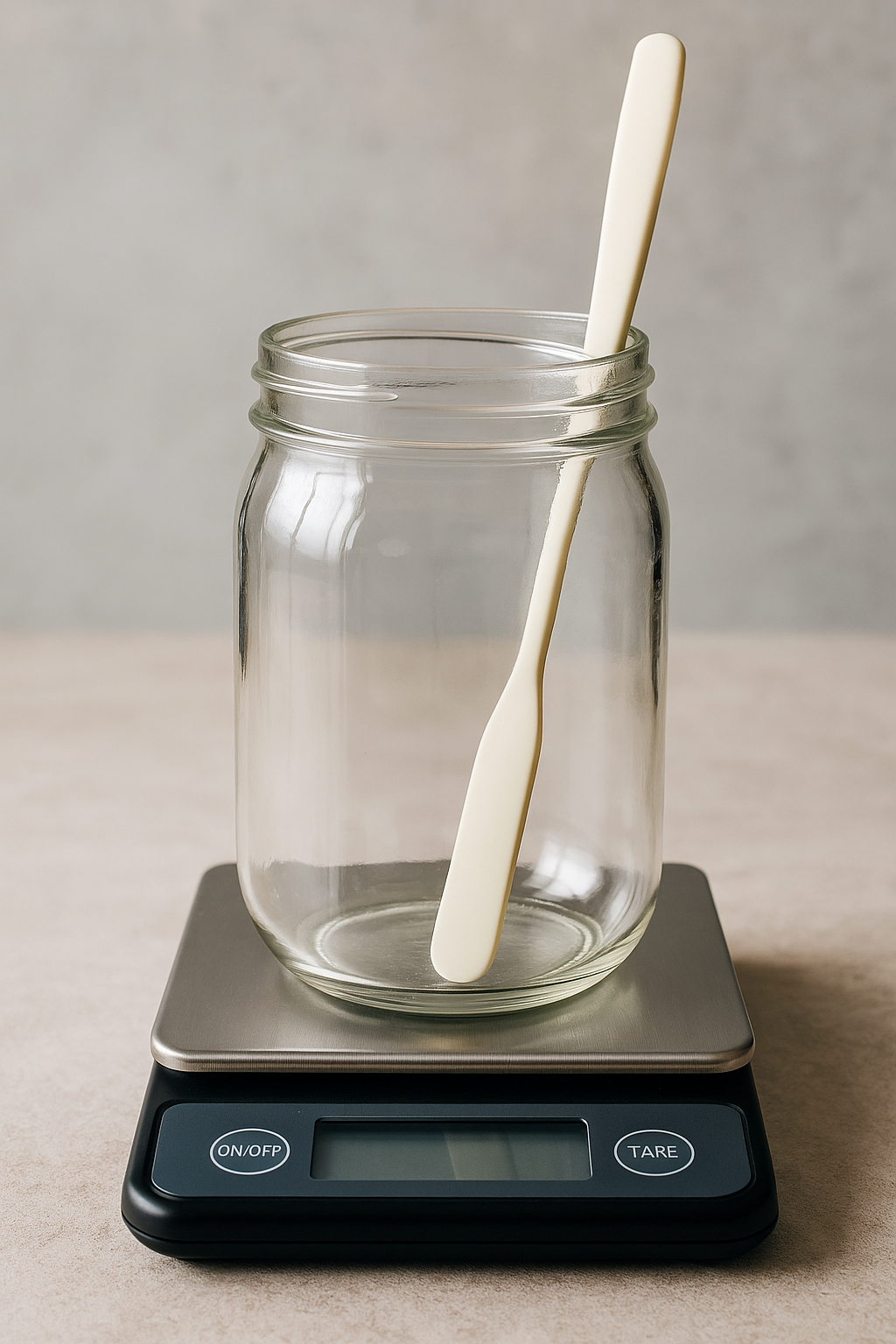
Weigh your empty jar first and note the weight. Each day, mark the level of your starter with a rubber band or sharpie marker. This makes it easy to track whether it’s growing.

đź’§ Water Temperature for Your Starter

Use room temperature water (around 24–26°C / 75–78°F) whenever possible.

If your kitchen is cool (below 21°C / 70°F), warm the water slightly so the mix lands in that 24–26°C sweet spot.

To do this, heat your water gently until it feels just warm to the touch — about 26–30°C (78–86°F) is perfect. I use a digital thermometer instead of guessing. The one I use can be found on Amazon here.

Avoid hot water (over 40°C / 104°F) because it can harm the yeast and bacteria.

Room Temperature: Too cold = slower growth. Try a warm spot like inside the microwave with the door cracked open, or a proofing box.

Consistency tip: Starter should look like thick pancake batter or plain yogurt after mixing. 

Why Do We Discard Starter?

Discarding isn’t wasteful — it’s essential to keep your starter healthy and balanced. If you just kept adding more flour and water without removing some, your jar would grow huge in just a few days and the yeast-to-food ratio would get weaker. By discarding, you give the remaining culture a fresh meal, helping it grow stronger, faster, and more predictable.

👉 Once your starter is active and mature, you can save discard for recipes like waffles, crackers, brownies, and pancakes. But during the first couple of weeks, it’s best to throw it out or compost it until your starter is strong enough for baking.

⚠️ Discard Note: Continue to discard and feed daily. Do not keep the discard for recipes until your starter is strong, predictable, and baking great bread.

Do You Need a Clean Jar Every Day?

While building your starter (first 7–14 days):

Change your jar at every feeding for the first 7 days.

After your starter is established:
You do not need to switch to a fresh jar at every feeding. Just scrape down the sides after you feed and keep using the same jar. This preserves the developing micro-ecosystem and makes it easier to see progress.

Many bakers move their starter into a clean jar every few feedings (some do it weekly) just to keep things tidy. I do it every 2-3 days unless the jar overflows or is too dirty.

When to switch jars:

  • If the jar gets messy with lots of dried starter crusting up the sides
  • If you see any residue that might harbor mold
  • About once every few days, transfer to a clean jar just for freshness

Step-by-Step Instructions

Day 1 – Mix the Starter

  • Mix 60 g flour of choice + 60 g water in a clean jar. Stir well.
  • Cover loosely (lid, cloth, or plastic wrap) and rest at 24–26°C (75–78°F) for 24 hours.

If your home is cool, keep the jar above the fridge, in a proofing box, or on a low-temp warming mat, this is what I bought from Amazon.

⚠️ Warm Spot Warning

If you’re keeping your starter in the oven with the light on, be careful — ovens can get hotter than you realize, and I’ve actually cooked a starter this way before. Always keep the oven door cracked open so the heat doesn’t build up.

Another option is to place the jar in your microwave with the door closed and a mug of warm water inside. This creates a cozy, slightly humid environment without overheating.

👉 Ideal starter temperature: 24–26°C (75–78°F). Anything over 40°C (104°F) can kill your starter.

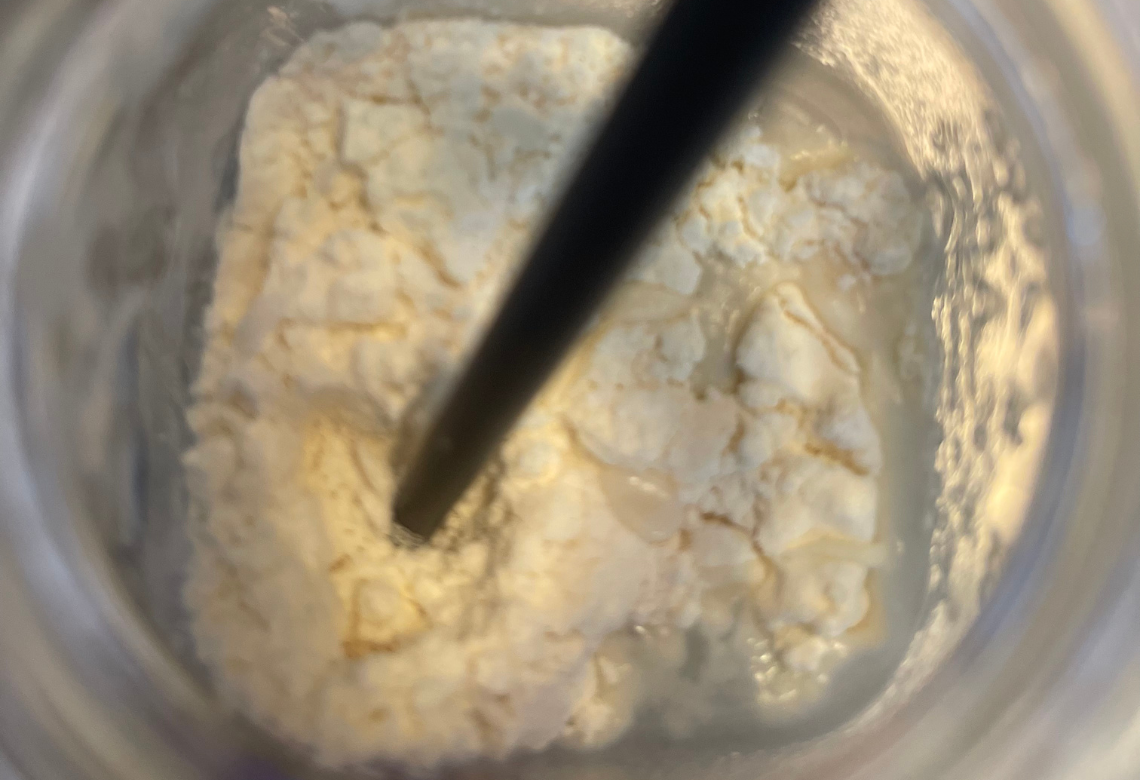
Expect: Thick pancake-batter or yogurt consistency. Neutral flour smell, no bubbles yet.

Flour and water mixture at the beginning of a sourdough starter

Day 2 – Discard and Feed

  • First, transfer to a clean jar: Move 60 g of starter to a new clean jar; discard the rest.
  • Then feed: Add 60 g flour + 60 g water, mix well, and scrape down the sides. Mark the level. 
  • Cover loosely (lid, cloth, or plastic wrap) and rest at 24–26°C (75–78°F) for 24 hours.

Expect: A few small bubbles; light grassy or fruity smell. If you see “hooch” (dark liquid), pour it off before feeding—your starter is hungry.

Day 3 – Discard and Feed

  • Transfer 60 g to a clean jar; discard the rest.
  • Feed: Add 60 g flour + 60 g water, mix, scrape down, and mark the level. 
  • Cover loosely (lid, cloth, or plastic wrap) and rest at 24–26°C (75–78°F) for 24 hours.

Expect: More bubbles; stretchier texture; tangier aroma. A rise and slump is normal.

Day 4 – Keep Feeding

  • Transfer 60 g to a clean jar; discard the rest.
  • Feed: Add 60 g flour + 60 g water, mix, scrape down, and mark the level. 
  • Cover loosely (lid, cloth, or plastic wrap) and rest at 24–26°C (75–78°F) for 24 hours.

Expect: A stronger bubble network, streaks on the glass, yogurt/green-apple notes. If switching toward more white flour, growth may appear to slow briefly—this is normal adjustment.

Day 5 – Building Strength

  • Transfer 60 g to a clean jar; discard the rest.
  • Feed: Add 60 g flour + 60 g water, mix, scrape down, mark the level.
  • Cover loosely (lid, cloth, or plastic wrap) and rest at 24–26°C (75–78°F) for 24 hours.

Expect: A predictable rise, often close to doubling in 6–10 hours; pleasant, clean tang.

👉 Feeding Frequency: If your starter is rising and peaking quickly (within 4–6 hours), it’s time to begin feeding twice per day, about 12 hours apart. This keeps it strong and prevents it from running out of food.

Day 6 – Signs of Life

  • Transfer 60 g to a clean jar; discard the rest.
  • Feed: Add 60 g flour + 60 g water, mix, scrape down sides.
  • Cover loosely (lid, cloth, or plastic wrap) and rest at 24–26°C (75–78°F) for 24 hours.

Expect: Doubling in 4–8 hours; domed top; fine bubbles along the jar wall; fruity-tangy aroma.

If you haven’t increased frequency yet: Start twice-daily feedings (~12 hours apart) once peak occurs in 4–6 hours.

Day 7+ – Approaching Stability

  • Transfer 60 g to a clean jar; discard the rest.
  • Feed: Add 60 g flour + 60 g water, mix, scrape down, mark the level, and cover loosely. Keep at warm room temperature (24–26°C).

Expect: A repeatable rhythm. Once your starter doubles or triples in 4–8 hours after each feeding for 3–4 consecutive days, with a clean, fruity-tangy aroma and a smooth domed top at peak, it’s bake-ready.

👉 Pro Tip: If your starter is sluggish after Day 10–14, use 25–50% whole wheat or rye for a few feedings, and continue 12-hour feedings.

Ready to Bake!

Once your starter is peaking reliably within 4–6 hours after feedings for several days in a row, you’re ready to bake. Continue feeding twice daily to build its strength. To reduce waste, you can switch to small maintenance ratios, e.g., 1:2:2 (5 g starter : 10 g water : 10 g flour). If feeding once per day, increase the ratio to 1:5:5 (5:25:25) or 1:10:10 (5:50:50) to keep it satisfied. You don’t need to change your jar every feeding—every 2–3 days is fine, or sooner if it’s messy. 

A Note About the Float Test

You may have heard of the float test (drop a spoonful of starter in water; if it floats, it’s “ready”). My own starter doesn’t always float — and it still bakes fantastic bread. The float test can give false negatives if the starter is a bit too stiff or wet, just past peak, or recently stirred down.

Trust these signs instead:

  • Consistent doubling in 4–8 hours
  • Smooth domed top at peak
  • Fine bubbles along the jar wall
  • Clean, fruity-tangy aroma

Every Starter Deserves a Name (How to Make It Personal)

One of the best traditions in sourdough baking is giving your starter a name. Think of it as welcoming a quirky new roommate or even a kitchen pet — after all, you’ll be feeding and caring for it daily.

Some bakers go playful with names like “Bubbles,” “Doughy,” or “Crumbelina.” Others choose something sentimental, like naming it after a grandparent, a favorite musician, or even the bakery that inspired them.

👉 Why bother? Because naming your starter makes the process fun, memorable, and helps you connect with the tradition. You’re not just tending flour and water — you’re carrying on something bakers have done for centuries, and giving it personality keeps you engaged.

💡 Tip: If you’re building your starter with kids, let them choose the name. It’s a guaranteed way to make feeding time exciting and get them involved in the baking journey.

So once your starter is bubbly, happy, and showing signs of stability, give it a name that makes you smile every time you grab the jar.

🚨 How to Know If Your Starter Has Gone Bad

Most starters are resilient, but there are a few clear warning signs:

  • Pink or orange streaks → bad bacteria, not safe.
  • Fuzzy mold (white, green, or black) → discard immediately.
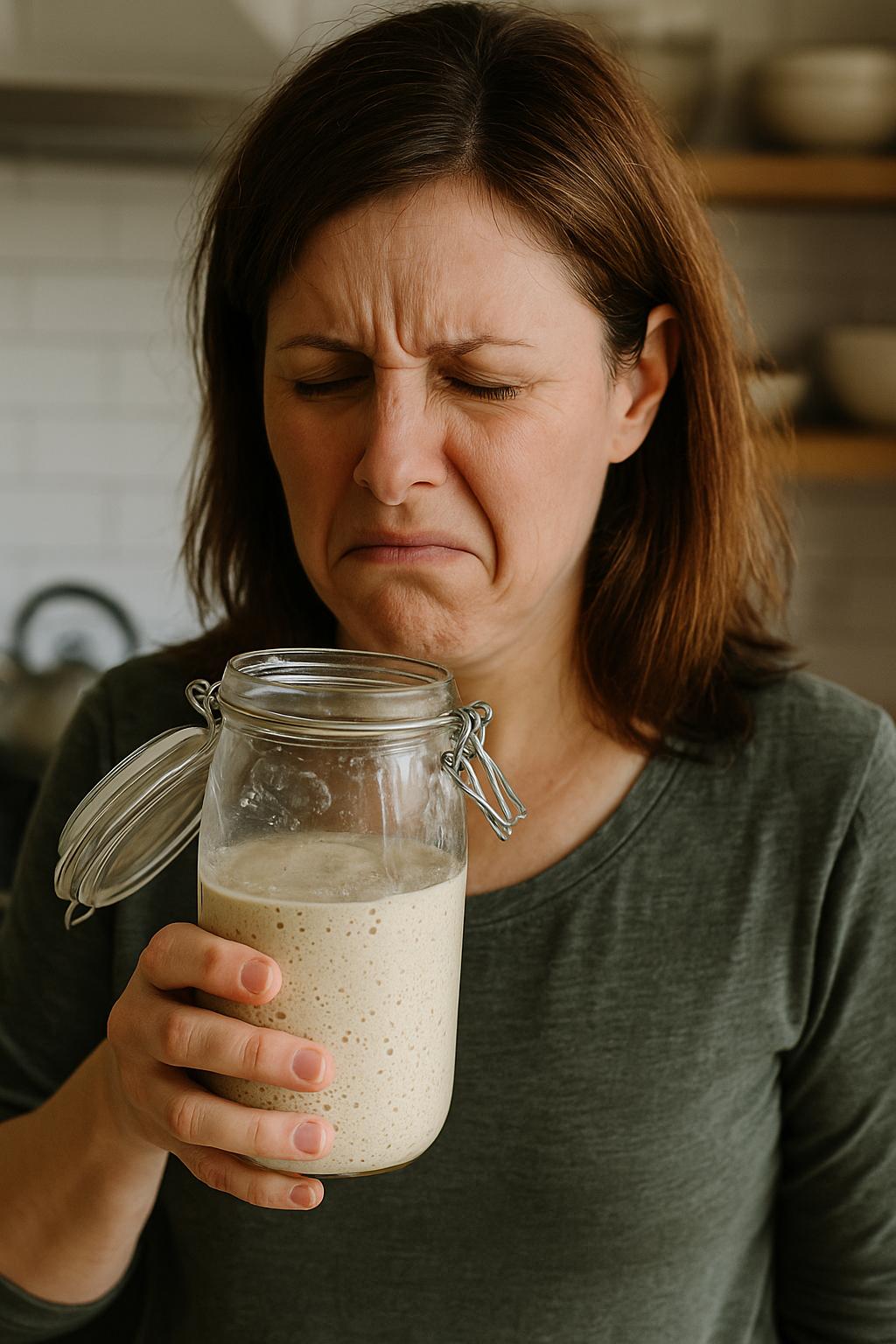
  • Rotten or putrid smell (beyond tangy or cheesy) → unsafe, start over.

If you see any of these, throw it out, clean your jar thoroughly, and begin again.

Troubleshooting (Quick Fixes)

Nail-polish remover smell: Too hungry → feed earlier or more often.

No bubbles by Day 3: Increase warmth; use whole wheat/rye for the next two feedings.

Rises then collapses before you see it: It peaked → feed earlier tomorrow so you catch peak.

Pink/orange spots or fuzzy mold: Contamination → discard, scrub jar, restart.

Too thick to bubble: Add 5–10 g water per feeding until it resembles thick pancake batter.

Starter died suddenly: It may have overheated. If you kept it in the oven with the light on, the temperature could have spiked and cooked your starter. Always crack the oven door, or use the microwave-with-a-warm-mug method instead.

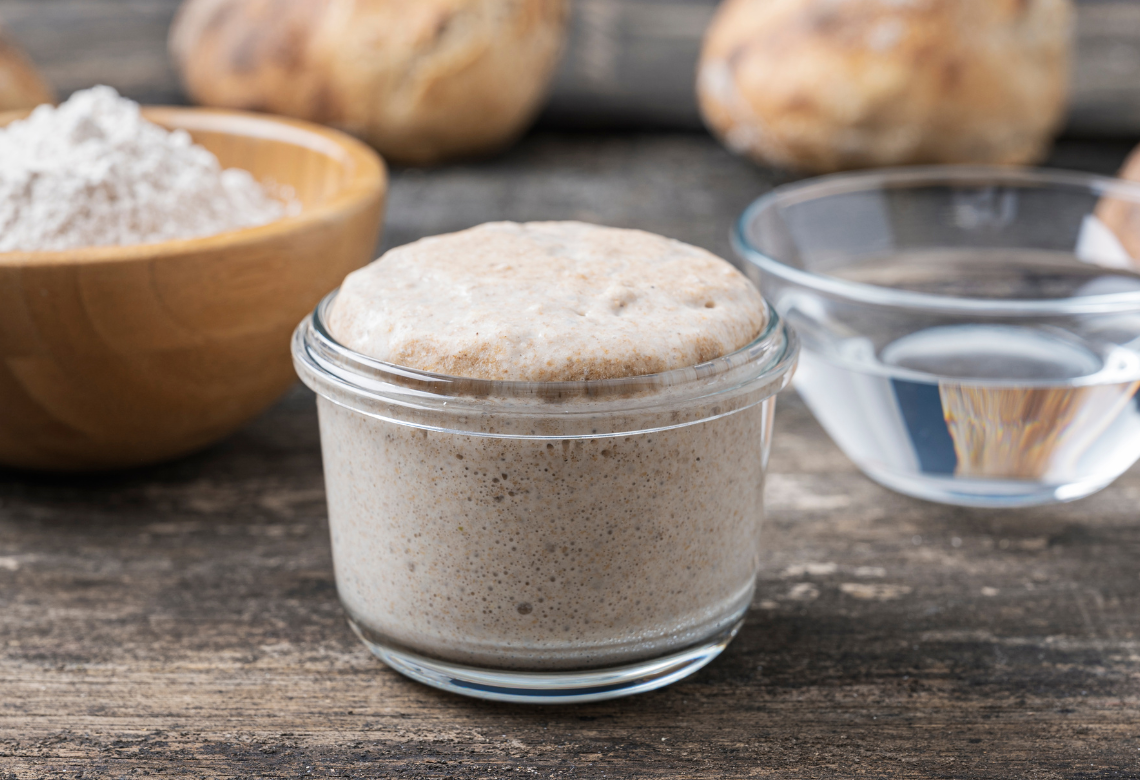
Mature sourdough starter in a jar, doubled in size with bubbles and domed top

How to Store and Maintain Your Starter

If you bake often, the easiest method is to keep your starter at room temperature and feed it once or twice a day to keep it active. If you only plan to bake occasionally, store your starter in the fridge and feed it once a week to maintain its strength. And here’s a simple tip: when storing your starter in the fridge, you don’t need to let it come back to room temperature before feeding. Just give it fresh flour and water, then place it right back in the fridge until you’re ready to bake again.

Make sure your jar has enough room for the starter to triple in size. Not all starters behave the same, but mine regularly triples. Depending on the temperature and where you position it, your starter can still grow a lot, even in the fridge. If there isn’t enough headspace, you could end up with a sticky mess, and yes… I’ve even heard stories of jars cracking in the fridge from pressure buildup. You don’t want a sourdough science experiment in your fridge!

Freezer Backup

Want a safety net in case your jar goes bad? You can freeze your starter for long-term storage.

  1. Feed your starter and let it become nice and bubbly.
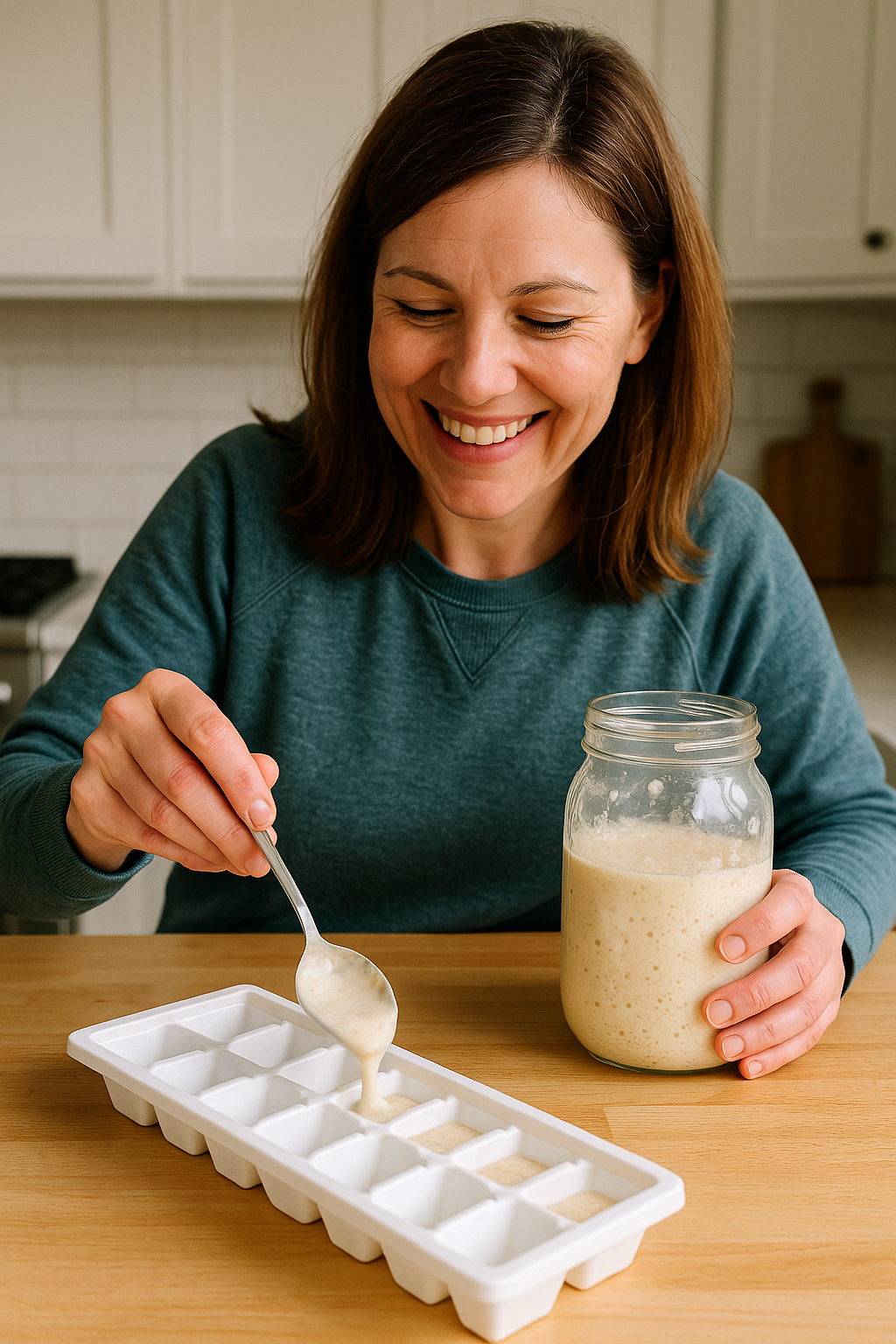
  2. Spoon portions into ice cube trays and freeze until solid.
  3. Pop out the cubes and transfer to a freezer bag or airtight container.

When you’re ready to use it again, thaw one cube and give it 2–3 feedings at room temperature. It should bounce back strong.

freezing sourdough starter in ice cube trays

Dehydrated Starter

Dehydrating is another great way to store a starter long-term or send it to friends.

  1. Feed your starter and let it peak.
  2. Spread a thin layer on parchment paper.
  3. Let it dry completely (this may take 2–3 days depending on humidity).
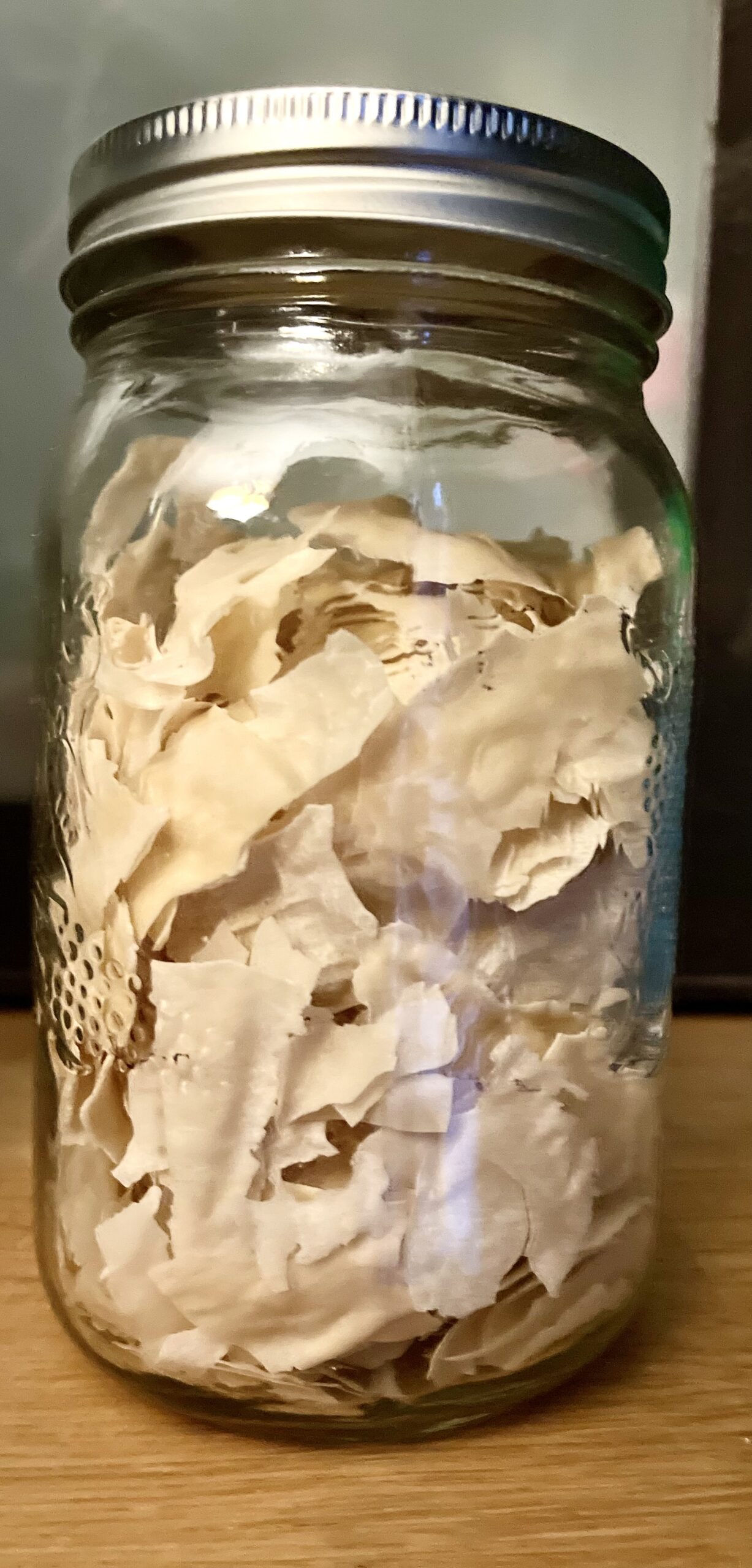
  4. Once crisp, break into flakes or grind in a blender, food processor, or even a dedicated coffee grinder (I bought one just for my starter).
  5. Store the flakes in a glass jar or airtight bag.

To revive, soak a spoonful of flakes in water until soft, then begin regular feedings. In a few days, you’ll have a lively starter again.

Dehydrated Sourdough Starter crumbled up for storage in a glass jar

Have Questions About Making a Sourdough Starter?

Congratulations, now you know exactly how to make a sourdough starter and keep it thriving. Whether you decide to nurture one yourself or adopt a heritage starter, you’ve taken the first step toward baking real, flavorful sourdough bread.

👉 I’d love to hear from you:

Have you tried making your own starter yet?

Did you run into any surprises or struggles along the way?

Do you prefer your sourdough mild or tangy?

Drop your questions or experiences in the comments below. I read every one and will do my best to help you troubleshoot or celebrate your wins.

Once your starter is strong and ready, you’ll want to put it to the test. Start with something simple like my Beginner Sourdough Loaf Recipe.

FAQs

🔹 Is buying a starter cheating?

No. Many bakers adopt a strong culture to save time. Creating your own is rewarding; adopting one is efficient. Both are valid.

🔹 If the float test isn’t reliable, how do I know it’s ready?

Look for reliable doubling in 4–8 hrs, a domed top at peak, fine bubbles on the glass, and a clean fruity-tangy aroma.

🔹 Why start with whole wheat or rye, then switch to white?

Whole grains energize early fermentation; white flour stabilizes once the culture is strong.

🔹 Can I use only one flour from the beginning?

Yes. Whole wheat moves faster; all-purpose is steadier. Choose one and stick with it.

🔹 My kitchen is cool — what now?

At 20–22°C (68–72°F), things move slower. Use a warmer spot (oven light, proofing box) and expect 10–14 days.

🔹 How often should I feed my sourdough starter?

In the beginning, feed your starter once every 24 hours. Once it becomes active and bubbly, you may need to feed it every 12 hours. After it’s mature, you can keep it at room temperature and feed daily, or refrigerate and feed weekly.

🔹 Should I use warm or cold water for sourdough starter?

Room temperature water (24–26°C / 75–78°F) is ideal. If your kitchen is cool, gently warm your water to 26–30°C (78–86°F). Avoid hot water over 40°C (104°F) as it can damage the natural yeast and bacteria.

🔹 Do I need to clean the jar every time I feed my starter?

No. You can keep feeding in the same jar and just scrape down the sides. Transfer to a clean jar only if it gets messy, crusty, or after several days to keep things fresh.

🔹 How long before I can bake with my sourdough starter?

Most starters are strong enough after 10–14 days. Look for 3–4 consecutive days of consistent doubling or tripling after feedings before baking your first loaf.

🔹 Can I change the flour I use in my starter?

Yes. If you want to switch flours, do it gradually: feed 25% new flour on Day 1, 50% on Day 2, then 100% by Day 3. This helps your starter adjust without losing strength.

🔹 What is the best way to store sourdough starter long-term?

For short breaks, store in the fridge and feed weekly. For longer storage, freeze starter in cubes or dehydrate into flakes. Both can be revived with 2–3 feedings.

Beginner Sourdough Bread Recipe (Artisan Loaf)

Beginner Sourdough Bread Recipe (Artisan Loaf)

If you are searching for the best Beginner Sourdough Bread Recipe, you have just found it. This recipe walks you through each step with confidence and gives you a loaf that looks beautiful, tastes incredible, and teaches you the fundamentals of artisan sourdough baking.

When I first started, I had no idea what words like high hydration or low hydration even meant. I followed recipes from influencers that made it look effortless, but all I ended up with was sticky dough clinging to my hands and loaves that never resembled the pictures.

Eventually, I learned the simple truth: hydration is just the ratio of water to flour. Higher hydration doughs are wetter, stickier, and much harder to handle, while lower hydration doughs are easier to shape and far more forgiving for beginners. Once I discovered this lower hydration recipe, it felt like a match made in heaven. The dough finally behaved, shaping became manageable, and for the very first time I pulled a loaf from the oven that looked and tasted like real artisan sourdough.

This recipe is designed to teach you how sourdough behaves, not to rush you or overwhelm you. If something feels unfamiliar at first, that’s normal, you’re learning a skill, not following a script.

Why This Beginner Sourdough Bread Recipe Works

This is the recipe I wish I had when I started. It works because it keeps things simple: just flour, water, salt, and starter. The hydration is low enough (325 g water to 500 g flour) to make the dough easy to handle, yet still high enough for a beautiful open crumb. Strength is built gradually through gentle stretch and folds rather than heavy kneading, which keeps the process beginner-friendly. You also have flexible proofing options — either bake the same day or let it rest overnight in the fridge for more flavor. And by baking in a Dutch oven, you trap steam naturally, which guarantees great oven spring and that signature golden crust.

This dough gives you room to learn because it responds well even if your timing isn’t perfect or your folds aren’t textbook.

Ready to make your sourdough starter? Read my article: How to Make a Sourdough Starter (Step-by-Step Guide From Scratch).

Tools You’ll Need

This post contains affiliate links. If you purchase through these links, I may earn a small commission at no extra cost to you. I only recommend products I personally use and love, and your support helps me keep sharing free sourdough recipes and resources. You can also visit my Amazon store front for all my baking and sourdough essentials.

You do not need every tool listed here to make great sourdough. These simply make the process easier and more consistent as you learn.

Ingredients (One Loaf)

Levain

  • 5 g starter
  • 50 g filtered or spring water
  • 50 g flour

👉 This build makes about 100 g of levain. Use all of the levain in the dough. Any extra few grams usually remain stuck to the jar, and that small difference will not affect the recipe.

Dough

  • 100 g active levain (at peak) 
  • 325 g filtered or spring water at room temperature to slightly warm (75–78°F / 24–26°C). Reserve 25 g for mixing in the salt
  • 500 g bread flour (you can use all-purpose if that’s all you have, but bread flour is more beginner-friendly; once you’re confident, try mixing them for different results — see flour notes below)
  • 10 g fine sea salt 

This recipe uses 325 g water which makes the dough easier to handle. Once you are comfortable, try 350 g for a more open crumb.

👉 Sourdough is flexible. Small variations in water, flour brand, or starter strength will not ruin your bread — they simply change how the dough behaves.

Flour Choice: Bread Flour vs. All-Purpose

For your very first loaves, stick with 100% bread flour. Bread flour has higher protein, which means stronger gluten, more reliable rise, and a structure that is forgiving while you are learning. Read King Arthur’s guide on flour protein content for more details.

Once you’ve mastered this beginner loaf, you can start experimenting with mixing different flours. Such as:

  • Bread flour provides strength and elasticity (helps dough rise and hold shape).
  • All-purpose flour adds extensibility (makes dough stretch more easily, improves shaping, and can lead to a more open crumb).

Ratios to try once you are ready:

  • 75% bread flour / 25% all-purpose → strong yet flexible dough, slightly softer crumb.
  • 50/50 blend bread flour / all-purpose→ lighter crumb, more extensibility, but requires extra folds.
  • Whole grain flours (wheat, rye, spelt) and other flours such as Khorasan, Einkorn, etc.

👉 Once you are comfortable, explore other flours too. Try them in my other sourdough recipes once you have perfected this beginner recipe. I call this recipe beginner but it’s my go-to recipe that I use and everyone loves.

Step-by-Step Instructions

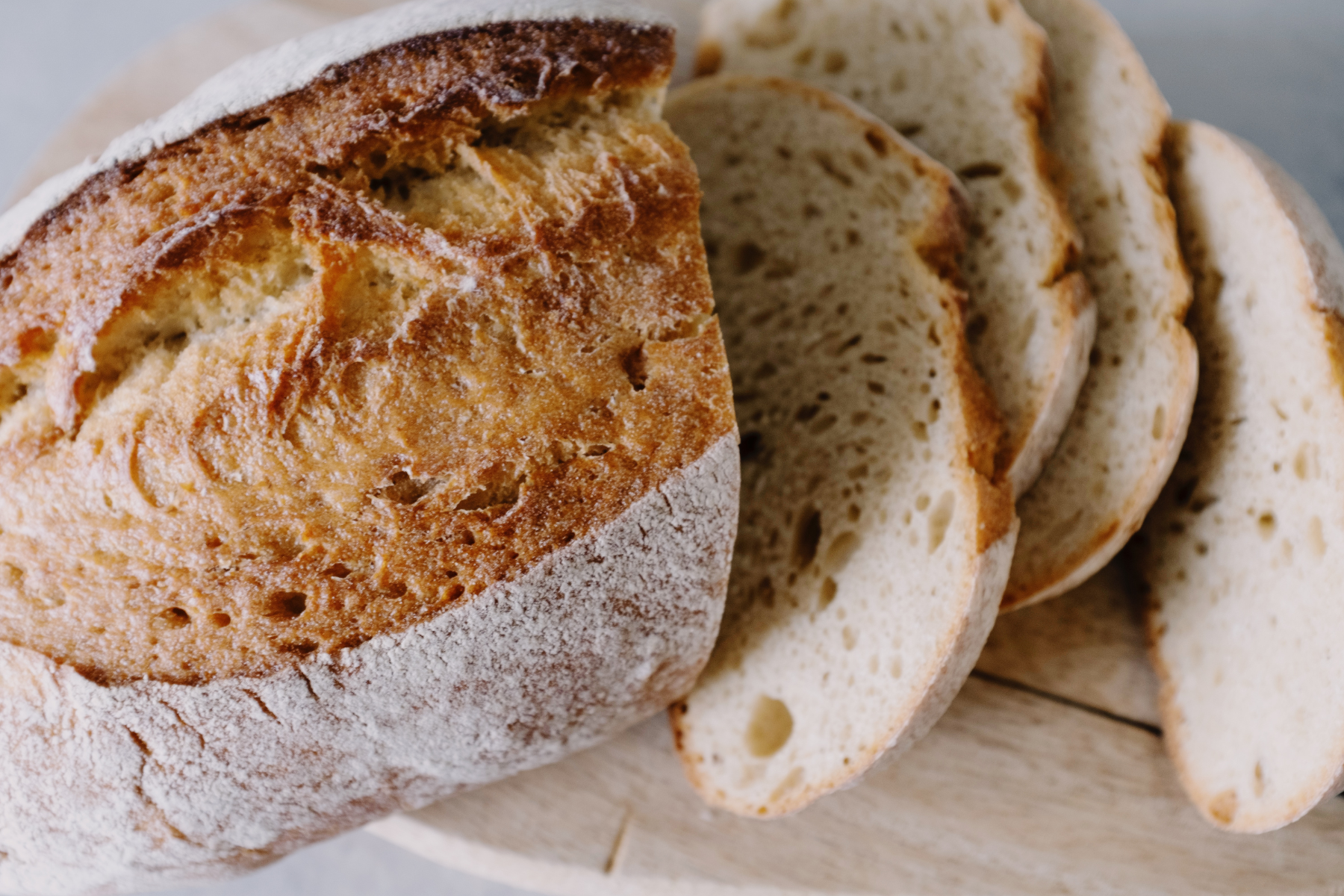
beginner sourdough bread recipe sliced loaf with open crumb

Step 1. Build Your Levain

For this beginner sourdough recipe, we use a simple overnight levain. This method is forgiving, predictable, and easy to plan, making it ideal when you are learning how sourdough behaves.

The night before baking, mix:
5 g active sourdough starter
50 g flour
50 g filtered or spring water

This is a 1:10:10 feeding ratio. Cover loosely and let ferment overnight at room temperature for 12–16 hours.

Once the levain is ready, use all of the levain in the dough.

Levain Readiness Cues

Your levain is ready to use when:

  • It has more than doubled in size (often close to tripled)

  • The surface looks domed with visible bubbles

  • It smells lightly sweet and yeasty, not sharp

  • It feels airy and light when stirred

This higher feeding ratio slows fermentation and reduces excess acidity, giving you a wider, more forgiving window to use your levain without worrying about perfect timing.

If your levain rises faster or slower than expected, that’s completely normal. What matters most is how it looks and smells, not the exact number of hours.

👉 If your levain has collapsed well below its peak or smells sharp or alcoholic, refresh it before baking.

Step 2. Mix Dough (Fermentolyse)

Whisk the levain into 300 g filtered or spring water at room temperature to slightly warm (70–78°F / 21–26°C). Avoid chlorinated tap water, as chlorine can inhibit fermentation and slow starter activity.

Add 500 g flour and mix until no dry flour remains. The dough will look rough and shaggy at this stage, and that’s exactly what you want. This marks the start of bulk fermentation, so note the time. Cover and rest for 30 minutes.

👉 This recipe uses a fermentolyse method, which means flour, water, and starter are mixed first, and the salt is added later. I prefer this approach because it allows me to use the levain right at peak activity without worrying about it falling during a longer rest.

A Quick Note on Mixing Methods (So You’re Not Confused)

Before mixing, it helps to understand these terms:

Autolyse: Flour and water are mixed and rested first, then the starter and salt are added later. This method improves extensibility and flavor.

Fermentolyse (used in this recipe): Mixing flour, water, and starter, resting, then adding salt later. Gluten begins developing while fermentation is already underway. 

All-in Mix (sometimes called straight mix): It’s simple and works well… Add flour, water, starter, and salt all at once, then mix. It’s simple and effective, but you don’t get the same gluten-strengthening benefit of a rest.

 👉 No matter which mixing method you use, you can still make great bread. Fermentolyse simply offers a nice balance of structure, flavor, and flexibility while you’re learning.

Step 3. Add Salt

Sprinkle 10 g salt evenly over the dough along with the reserved 25 g water. Pinch, fold, and squeeze the dough until the salt and water are fully incorporated and no dry or salty spots remain.

By hand:
The dough should feel tacky but cohesive and slightly smoother than before. If it feels messy at first, keep folding — it will come together within a minute or two.

With a mixer:
Mix on low speed until the salt and water are fully incorporated and the dough looks uniform. Transfer the dough to a clear bowl or container so you can easily monitor fermentation during bulk.

Step 4. Strengthen the Dough (Stretch & Folds)

Over the next 2 hours, perform 3–4 sets of folds, every 30 minutes:

    Stretch & Fold:
    With a slightly damp hand, lift one side of the dough, stretch it gently upward, and fold it over itself. Rotate the bowl and repeat on all sides until the dough begins to resist.

    Coil Fold (optional):
    Lift the dough from the center with both hands, allowing the ends to tuck underneath as you set it back down. Rotate the bowl and repeat once or twice.

    What to Look For:
    With each set of folds, the dough should become smoother, stronger, and easier to handle.

    If the dough still feels sticky after the first fold, that’s completely normal. Stickiness does not mean failure — it simply means the gluten is still developing.

    Stop folding when the dough tightens and begins to resist stretching. At that point, it has enough strength and needs time to rest, not more handling.

    Busy baker tip:

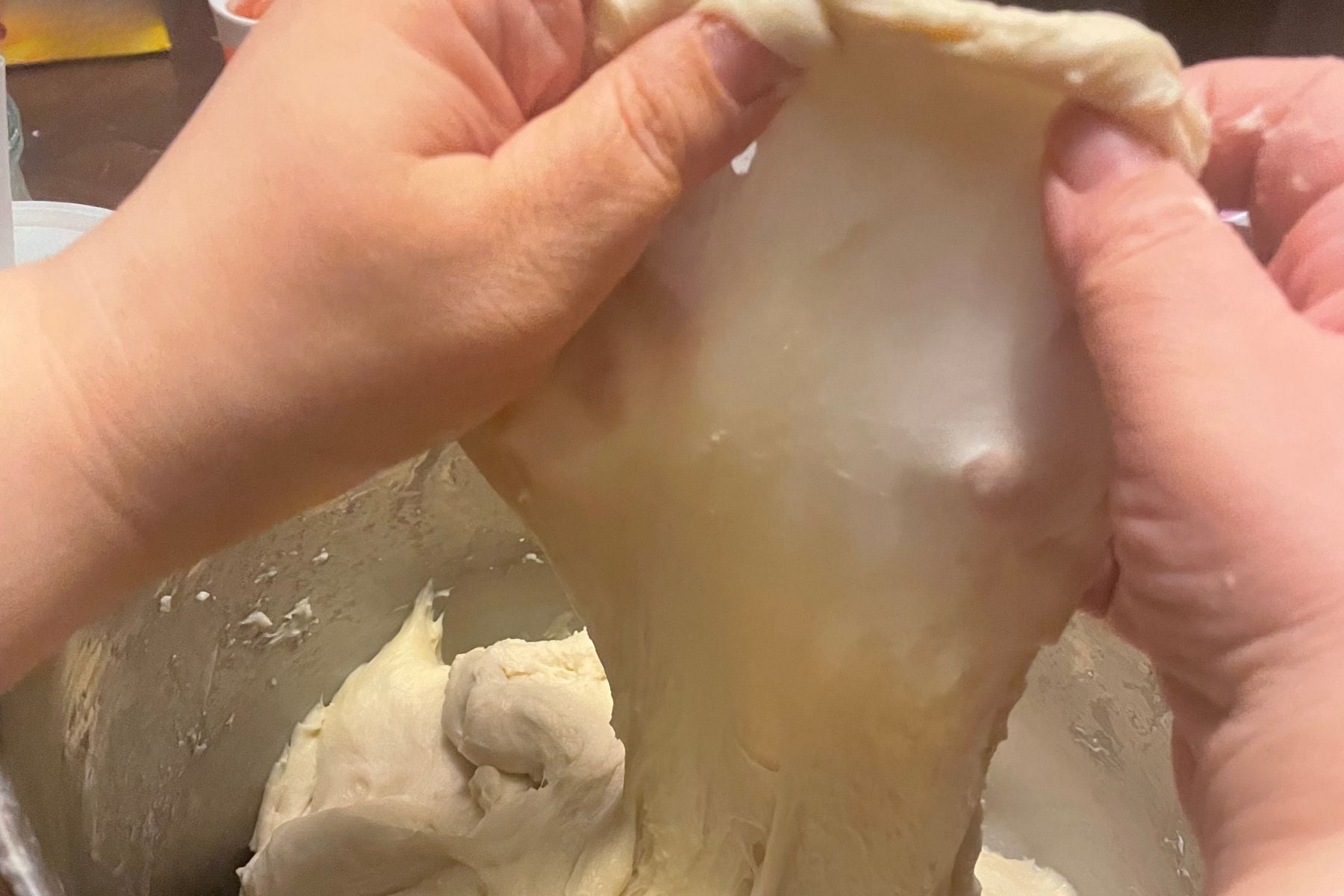
    If you have a busy life, don’t worry — you can absolutely use a stand mixer instead of doing stretch and folds. Mix the dough on low to medium speed for about 10–15 minutes, or until you reach the windowpane stage (when the dough stretches thin without tearing).

    This builds enough gluten strength that you can skip the stretch and folds if needed. While stretch and folds are still the best way to gently strengthen dough and connect with it, you don’t have to let sourdough control your life. Use the method that fits your schedule and still brings you joy in baking.

    Hands stretching sourdough dough to show a clear windowpane, demonstrating gluten strength in a beginner sourdough bread recipe.

    Step 5. Bulk Fermentation (4+ Hours)

    Cover the dough and let it rest at room temperature. This stage develops flavor, gas, and structure.

    Bulk fermentation is the main rise that happens after mixing. No matter which mixing method you use, bulk begins the moment flour and starter come into contact. During this time, the dough grows, bubbles form, acids develop, and flavor builds.

    Cues to Watch For

    • Dough rises about 50–75% in volume
    • Surface looks smooth and slightly domed
    • Small bubbles appear along the sides of the bowl
    • Dough jiggles like Jell-O when the bowl is gently nudged
    • A gentle poke springs back slowly

    If your dough feels like it’s taking forever, you’re not doing anything wrong. Cooler kitchens move slower and warmer ones move faster. Watch for the visual signs above and let the dough finish when it’s ready, not when the clock says so.

    Why This Recipe Uses Fermentolyse

    While autolyse and fermentolyse are often considered ideal for gluten development, they are not required to make great bread. You can mix everything together at once and still get excellent results.

    I prefer fermentolyse because it allows me to use the starter right at peak activity. If I waited through a long autolyse, the starter could begin to fall. Fermentolyse offers a reliable balance of structure, flavor, and flexibility, which makes it especially beginner-friendly. Whichever method you choose, you can still bake a beautiful loaf.

    Step 6. Pre-Shape and Rest

    Turn the dough out onto a lightly floured surface. Gently shape it into a loose round, using just enough tension to bring it together without tightening it too much.

    Let the dough rest uncovered for about 20 minutes. During this rest, the surface will relax and the dough may spread slightly — this is expected and a sign the gluten is loosening and preparing for final shaping.

    Step 7. Final Shape

    Flip the dough seam side up onto a lightly floured surface. Gently stretch the dough into a rough rectangle, then fold the sides inward and roll the dough into a tight round or oval, building surface tension as you go.

    You should feel the outer surface tighten slightly and smooth out. If the dough starts to resist strongly or tear, stop and let it rest for a few minutes before continuing — tension comes from patience, not force.

    Once shaped, place the dough seam side up into a well-floured banneton.

    Step 8. Proof

    Cover the shaped dough and refrigerate for an overnight proof. This is the recommended method for beginners because it improves flavor, makes scoring easier, and helps produce better oven spring.

    Let the dough cold proof in the refrigerator for 8–12 hours. Avoid extending the cold proof beyond 48 hours.

    Optional Same-Day Bake:
    If you need to bake the same day, let the dough proof at room temperature for about 1–2 hours, until it looks slightly puffy and slowly springs back when gently pressed.

    Step 9. Bake

    Preheat the oven with the Dutch oven inside at 450°F (232°C). For best results, letting the Dutch oven heat for 30–60 minutes helps maximize oven spring, but for everyday baking, I often bake as soon as the oven is fully preheated and still get great results.

    Carefully invert the dough onto parchment paper or a bread sling. Score the dough confidently with a sharp knife or bread lame. One clean slash is enough — perfection is not required. Add a couple of ice cubes to the Dutch oven or lightly spray the dough with water to create extra steam.

    1. Bake for 30 minutes covered at 450°F (232°C).
    2. Remove the lid and continue baking for 15 minutes, until the crust is a deep golden brown.

    The bread is done when the internal temperature reaches 205–210°F (96–99°C).

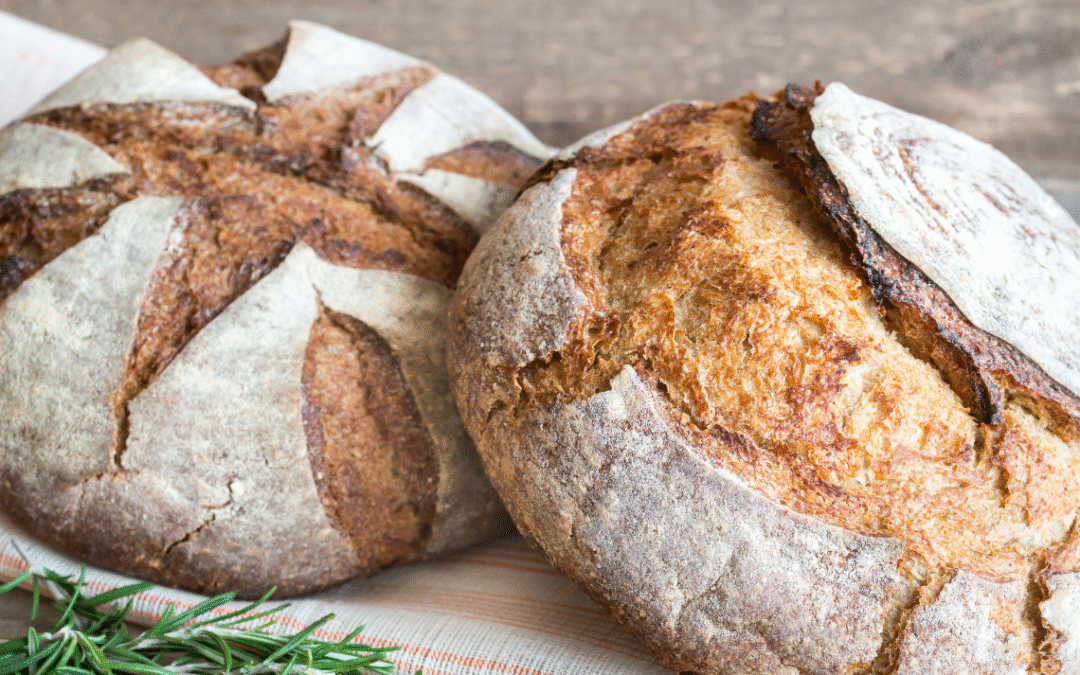
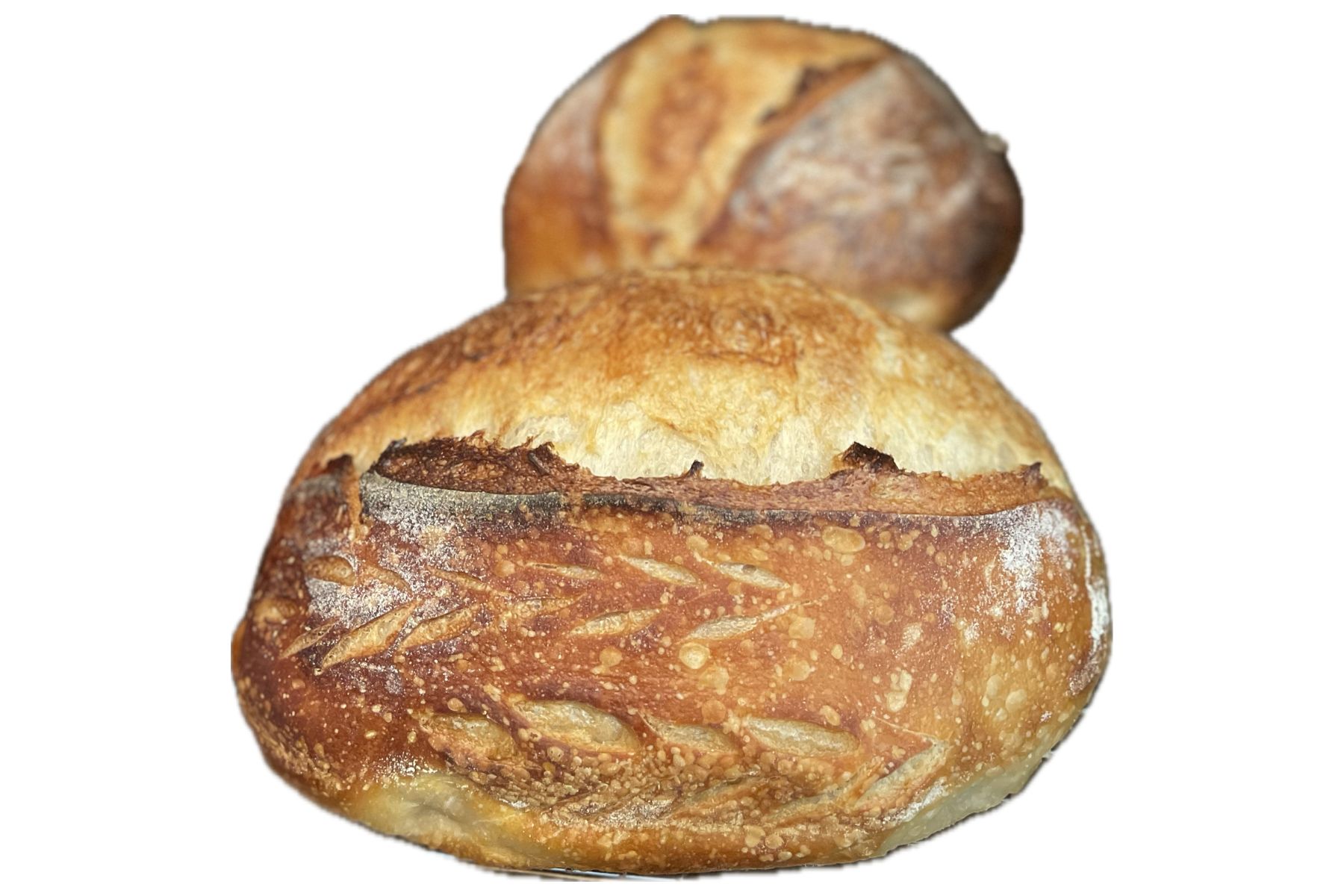
      Two golden brown artisan sourdough loaves with crisp crust and beautiful scoring, showcasing the results of a beginner sourdough bread recipe baked in a Dutch oven.

      Step 10. Cool

      Transfer the loaf to a wire rack and let it cool for at least 1 hour (2 hours is even better) before slicing. Cooling allows the crumb to finish setting and the steam inside the loaf to redistribute.

      Cutting too early traps moisture inside and can lead to a gummy texture — even though the bread smells incredible and the temptation is very real.

        Storage

        Store the loaf at room temperature in a paper bag for several days, or keep it cut side down on a cutting board for 1–2 days. Avoid airtight containers at room temperature, as they can soften the crust.

        For longer storage, slice the bread and freeze it in a freezer-safe bag. Toast slices straight from frozen for the best texture and flavor.

        đź’ˇGood to know: Freezing bread can actually improve its health benefits by lowering its glycemic impact. Read more in my article: Freezing Bread Improves Health Benefits

          Nutrition Information

          This is based on bread flour averages (USDA values). Actual numbers will vary slightly depending on flour brand, bake time (more/less water loss), and slice thickness/density.

          Whole Loaf (about 780 g baked)
          • Calories: ~2002 kcal
          • Protein: ~66 g
          • Carbohydrates: ~418 g
          • Fat: ~5.5 g
          • Fiber: ~16.5 g
          • Sugar: ~1.7 g (naturally from flour)
          • Sodium: ~3930 mg
          Per Slice (55–60 g)
          • Calories: ~143 kcal
          • Protein: ~4.7 g
          • Carbohydrates: ~30 g
          • Fat: ~0.4 g
          • Fiber: ~1.2 g
          • Sugar: ~0.1 g
          • Sodium: ~281 mg

          Troubleshooting

          Dense loaf
          Likely causes include an inactive starter or a bulk fermentation that was too short. Make sure your starter is reliably doubling and continue bulk fermentation until you see bubbles along the sides and a gentle jiggle when the bowl is nudged.

          Flat loaf
          This usually happens when the dough is overproofed or shaped too loosely. Try stopping bulk fermentation a bit earlier and focus on building more surface tension during final shaping.

          Gummy crumb
          Most often caused by slicing the bread too soon or underbaking. Let the loaf cool fully before cutting and ensure it reaches a full bake.

          Pale crust
          The oven may not have been hot enough, or the uncovered portion of the bake was too short. Allow the bread to bake uncovered until the crust reaches a deep golden brown.

          Burnt bottom
          This can happen with thinner or overly conductive Dutch ovens. Using a heavier Dutch oven (like Krustic) helps, or place a baking sheet on the rack below to diffuse heat. You can also add a layer of uncooked rice or pie weights to the bottom of the Dutch oven under the parchment paper.

          Your First Artisan Sourdough Loaf Is a Win

          If this is your first sourdough loaf, take a moment to appreciate what you just did. You built a levain, learned how dough behaves, practiced patience, and baked real artisan bread from scratch. That alone puts you ahead of where most people ever start.

          No sourdough loaf is perfect, and it’s not supposed to be. Every bake teaches you something new about timing, texture, and fermentation. Even loaves that aren’t picture-perfect still taste incredible, and they’re all part of the learning process.

          This beginner sourdough recipe is one you can return to again and again. As you get more comfortable, you can experiment with hydration, flour blends, shaping styles, or longer cold ferments. But there’s no rush. Mastering the fundamentals is what builds confidence.

          If you’re ready to keep going, explore my other sourdough guides and recipes here on Sourdoughpedia. I’m baking right alongside you, and I’ll guide you through every next step.

          Happy baking.

          Beginner Sourdough Bread Recipe – Easy Artisan Loaf

          This is the beginner sourdough bread recipe I wish I had when I first started. It’s simple, reliable, and designed to teach you how sourdough behaves without overwhelm. Follow the cues, trust the process, and you’ll bake a beautiful artisan loaf.
          Prep Time2 hours
          Cook Time45 minutes
          Bulk Fermentation and Proofing4 days 12 hours
          Total Time15 hours
          Course: Sourdough Artisan Loaf
          Cuisine: Worldwide
          Keyword: Sourdough Artisan Loaf, Sourdough Bread
          Servings: 1 Loaf
          Calories: 143kcal
          Author: Serena Carcasole

          Equipment

          Ingredients

          LEVAIN (Overnight Build – Use All)

          • 5 grams starter
          • 50 grams water (75–78°F / 24–26°C)
          • 50 grams flour All Purpose or Bread Flour
          • This build yields about 100 g of levain. Use all of it. Any extra grams usually stay stuck to the jar and won’t affect the recipe.

          DOUGH

          • 100 grams Active Levain (at peak)
          • 325 grams Warm Water (75–78°F / 24–26°C) filtered or spring water, room temperature to slightly warm (75–78°F / 24–26°C), reserve 25 g for salt
          • 500 grams Bread Flour (or substitute all-purpose; see blog notes)
          • 10 grams Fine Sea Salt

          Instructions

          Build the levain (night before):

          • Mix starter, flour, and water. Cover loosely and ferment overnight at room temperature for 12–16 hours, until domed, bubbly, and airy.

          Mix dough (fermentolyse):

          • Whisk levain into 300 g water. Add flour and mix until no dry flour remains. Cover and rest 30 minutes.

          Add salt:

          • Sprinkle salt over the dough with the reserved 25 g water. Pinch and fold until fully incorporated.

          Strengthen the dough:

          • Over the next 2 hours, perform 3–4 sets of stretch and folds every 30 minutes, until the dough becomes smoother and stronger.

          Bulk fermentation:

          • Let dough rest until it rises about 50–75%, shows bubbles along the sides, and jiggles when the bowl is nudged

          Pre-shape:

          • Turn dough onto a lightly floured surface. Shape loosely into a round and rest 20 minutes.

          Final shape:

          • Shape into a tight round or oval and place seam side up in a floured banneton. Cover.

          Bake:

          • Preheat oven with Dutch oven inside to 450°F (232°C).
            Score dough and transfer to the pot. Add steam if desired.
            Bake 30 minutes covered, then 15 minutes uncovered until deep golden brown.

          Cool

          • Cool on a wire rack for at least 1 hour (preferably 2) before slicing.

          Notes

          • Internal bread temperature should reach 205–210°F (96–99°C)
          • Overnight cold proofing improves flavor and scoring ease
          • Store bread in a paper bag or cut-side down for 1–2 days
          • Slice and freeze for longer storage
          • Read the full blog post above for visual cues, shaping tips, and troubleshooting

          Nutrition

          Serving: 1slice | Calories: 143kcal | Carbohydrates: 30g | Protein: 4.7g | Fat: 0.4g | Sodium: 281mg | Fiber: 1.2g | Sugar: 0.01g

          Frequently Asked Questions

          Can I use all-purpose flour instead of bread flour?

          Yes, but reduce water slightly and build more dough strength with folds. Bread flour gives better rise, AP gives more tenderness.

          How long does bulk fermentation take?

          At 75°F, usually 4–5 hours. Cooler kitchens may need 6–8 hours. Always watch the dough, not the clock.

          Do I have to cold proof overnight?

          No. You can proof same-day for 1–2 hours, but cold proofing makes scoring easier and improves flavor.

          Why is my bread dense?

          Your starter may not be active or bulk was too short. Make sure starter doubles consistently and dough shows signs of fermentation.

          How sour will my bread be?

          Same-day loaves are mild. Cold proofing 12–24 hours adds tang. Do not exceed 48 hours.

          What oven temperature is best?

          Preheat Dutch oven at 450°F. Bake 30 minutes covered, 15 minutes uncovered until deep golden.

          Affiliate Disclaimer: This post contains affiliate links. If you purchase through these links, I may earn a small commission at no extra cost to you. I only recommend products I personally use and love, and your support helps me keep sharing free sourdough recipes and resources.

          Health Benefits of Frozen Bread: Why It’s Actually Better for You

          Health Benefits of Frozen Bread: Why It’s Actually Better for You

          Most people freeze bread to stop it going stale. What many don’t know is the real health benefits of frozen bread go far beyond storage. Freezing changes the starches in bread in a way that can improve digestion, support your gut, and even lower blood sugar spikes. This isn’t foodie folklore, it’s backed by science.  And when you combine freezing with sourdough, you get a powerful duo that helps digestion, blood sugar, and flavor all at once.

          The Science Behind Freezing Bread 

          When bread is fresh out of the oven, its starches are soft and swollen from baking. As the loaf cools, those starches begin to reorganize in a process called retrogradation. This is where the health benefits of frozen bread start to shine. When you chill or freeze bread, retrogradation happens even more, transforming some of the starches into resistant starch that supports gut health and steadier blood sugar.

          Why does that matter? Resistant starch doesn’t behave like regular starch. Instead of breaking down quickly into glucose, it moves slowly through your digestive system, acting a lot like fiber. As a result, you get a gentler rise in blood sugar, fewer energy crashes, and bonus food for your gut bacteria. Those bacteria ferment resistant starch into short-chain fatty acids, which support both gut and metabolic health. In other words, freezing bread helps your body handle carbs in a smarter way.

          What Studies Reveal About Frozen Bread and Glycemic Response

          Researchers have actually tested whether freezing bread changes how your body responds. A 2008 study in the European Journal of Clinical Nutrition compared four conditions of homemade bread: fresh, toasted, frozen then thawed, and frozen-thawed-then-toasted.

          Here’s what they found:

          • Toasting alone lowered the blood sugar spike compared to fresh bread.
          • Freezing + thawing alone also helped.
          • But freezing + thawing + toasting had the biggest effect, cutting the blood sugar rise by nearly 40%.

          More recent studies confirm the same trend. Bread that has been frozen or chilled and then reheated produces a lower glycemic response than bread eaten fresh. So if you’ve ever wondered does freezing bread lower GI? — the answer is yes, and toasting makes it even better.

          Why Freezing Bread Supports Blood Sugar and Gut Health

          Freezing bread isn’t just a storage trick. It’s a way to make bread work harder for your body.

          • Steadier blood sugar: Resistant starch slows digestion, meaning a more balanced glucose response.
          • Happier gut: Resistant starch acts as prebiotic fiber, feeding healthy bacteria in your colon.
          • Less carb stress: If you’re managing insulin resistance, diabetes, or carb sensitivity, freezing bread gives you an extra layer of support.

          And remember, none of this replaces your clinician’s advice, but it’s a simple, evidence-backed step that can help make bread a healthier part of your meals.

          Why Sourdough + Frozen Bread Are the Dream Team for Your Health

          Sourdough is already special. Thanks to long fermentation with wild yeasts and lactic acid bacteria, sourdough bread naturally digests more slowly, lowers phytic acid (which blocks mineral absorption), and often produces a lower glucose response than commercial yeast breads.

          Now add the freezing effect. When sourdough is frozen and then toasted, you’re stacking two benefits:

          • Fermentation: breaks down gluten and makes nutrients more bioavailable.
          • Freezing: boosts resistant starch for steadier blood sugar and better gut health.

          That’s why sourdough + freezing bread is the dream team. You get incredible flavor, a longer shelf life, and bread that loves your body back.

          How to Freeze Bread the Right Way

          The good news is that freezing bread for health doesn’t require anything complicated. In fact, it’s the same process you’d use to keep bread tasting fresh, just done with purpose.

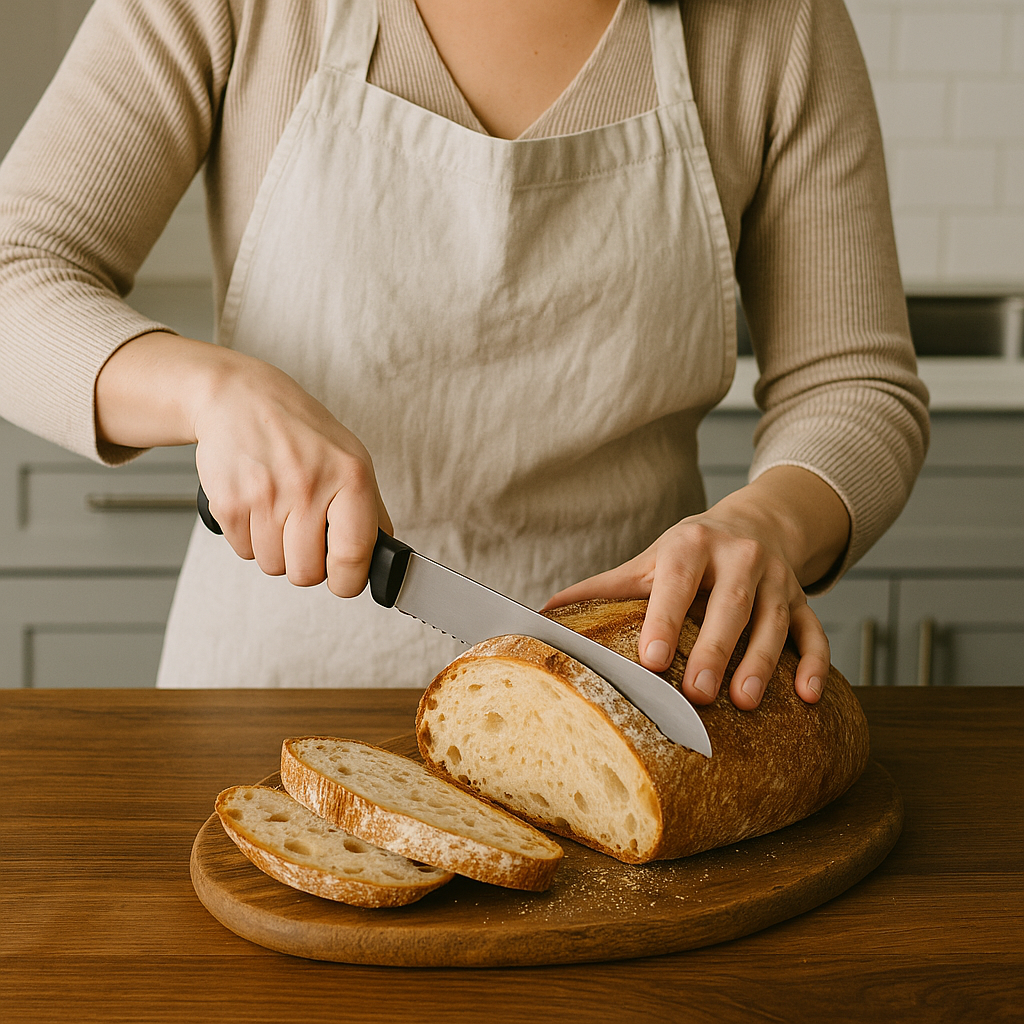
          1. Slice before freezing: This lets you grab only what you need. (I use this deli slicer I brought from Amazon).
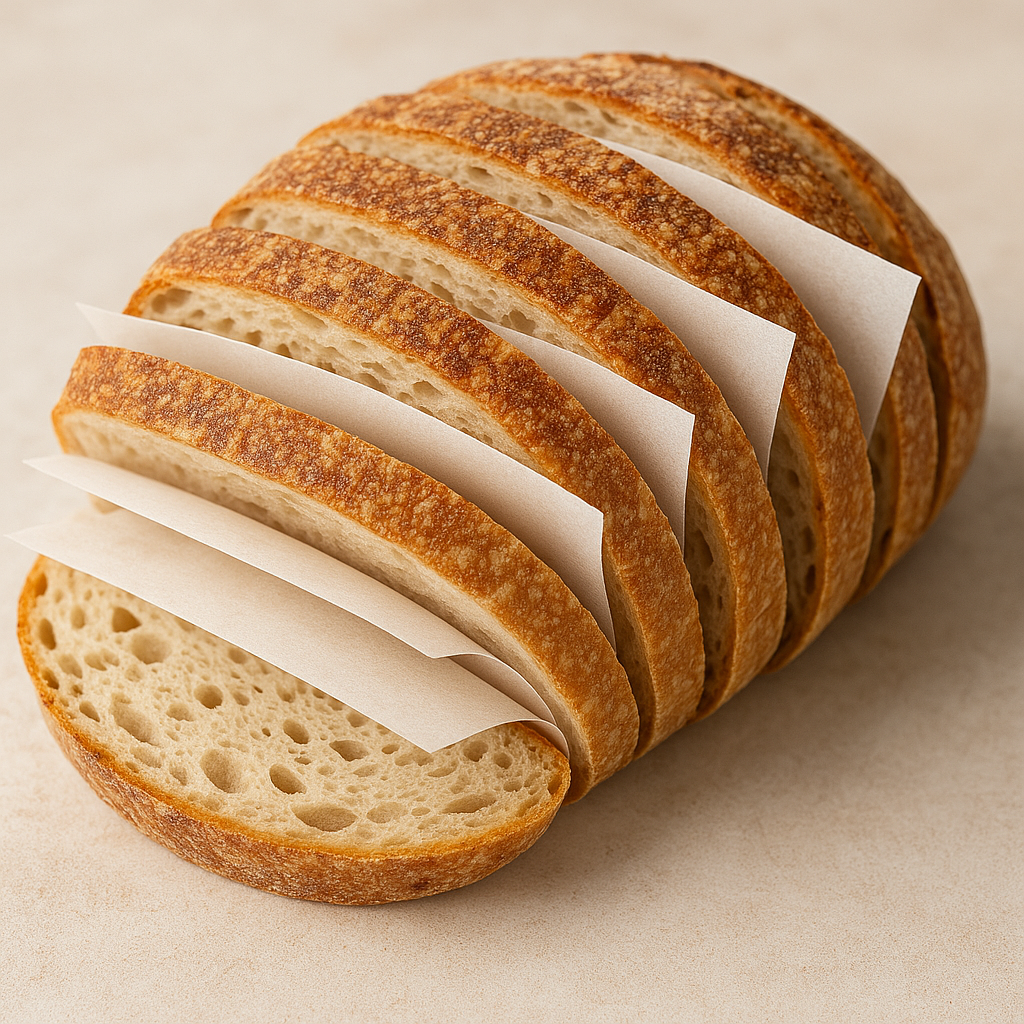
          2. Layer parchment between slices: Prevents slices from sticking together. ( I actually don’t do this step since I have no problems separating. However, it may depend on the bread, how it’s sliced, and hydration, etc. 
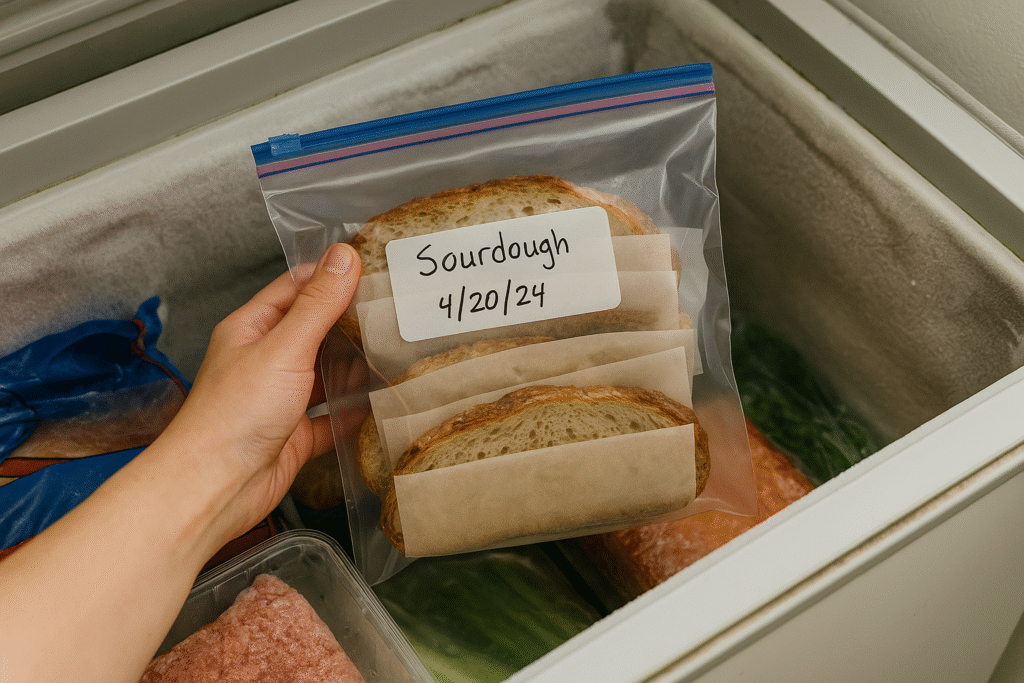
          3. Wrap airtight: Use freezer-safe bags or reusable silicone bags. For whole loaves, wrap in parchment, then foil, then bag.
          4. Label and date: Bread is best within 2–3 months for flavor and texture.
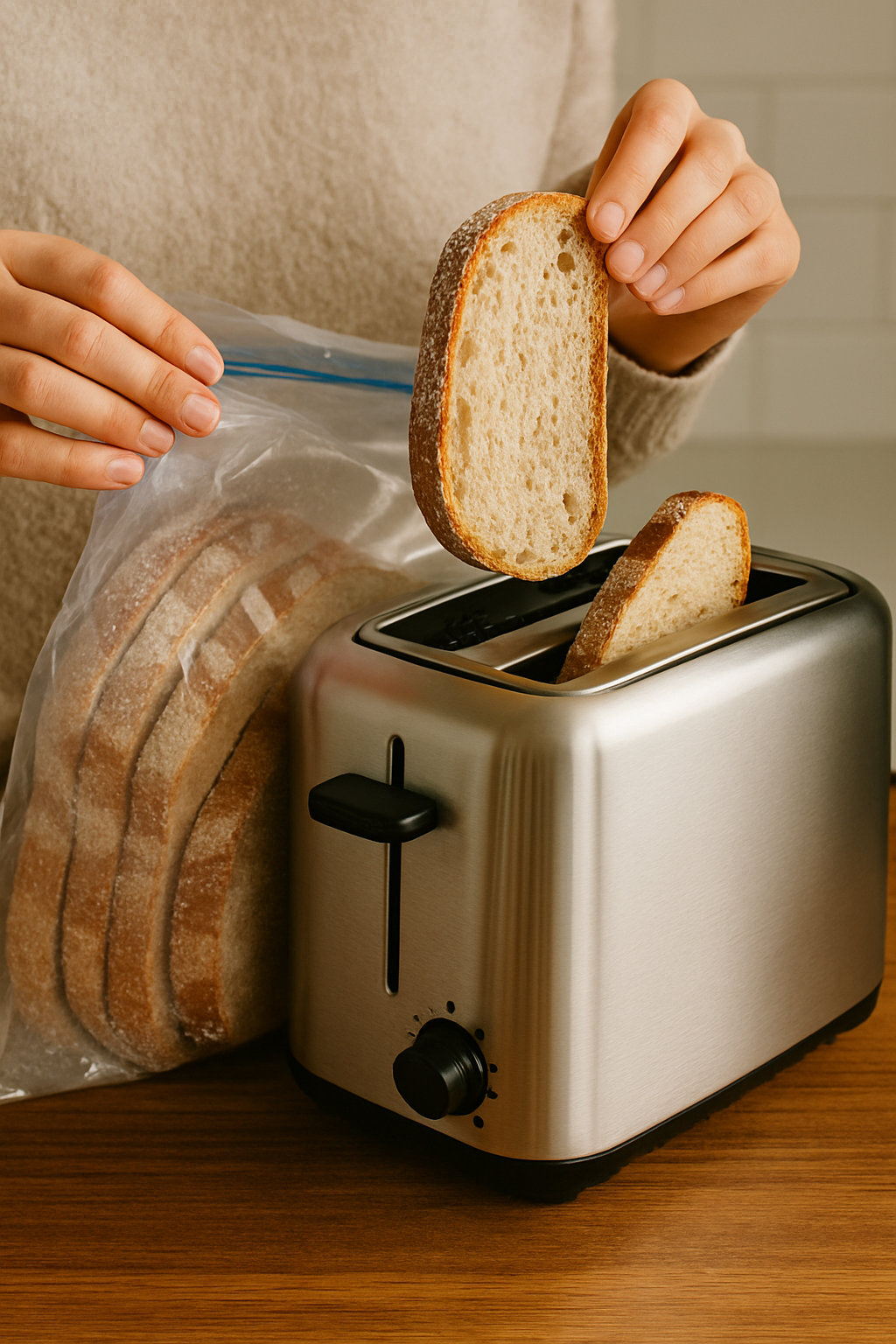
          5. Toast from frozen: Skip thawing. Toasting straight from frozen keeps the starch structure intact and brings back fresh-baked taste.

          These simple steps help lock in the the health benefits of frozen bread while making your loaf last longer.

          Slicing a sourdough loaf before freezing to maximize health benefits and resistant starch
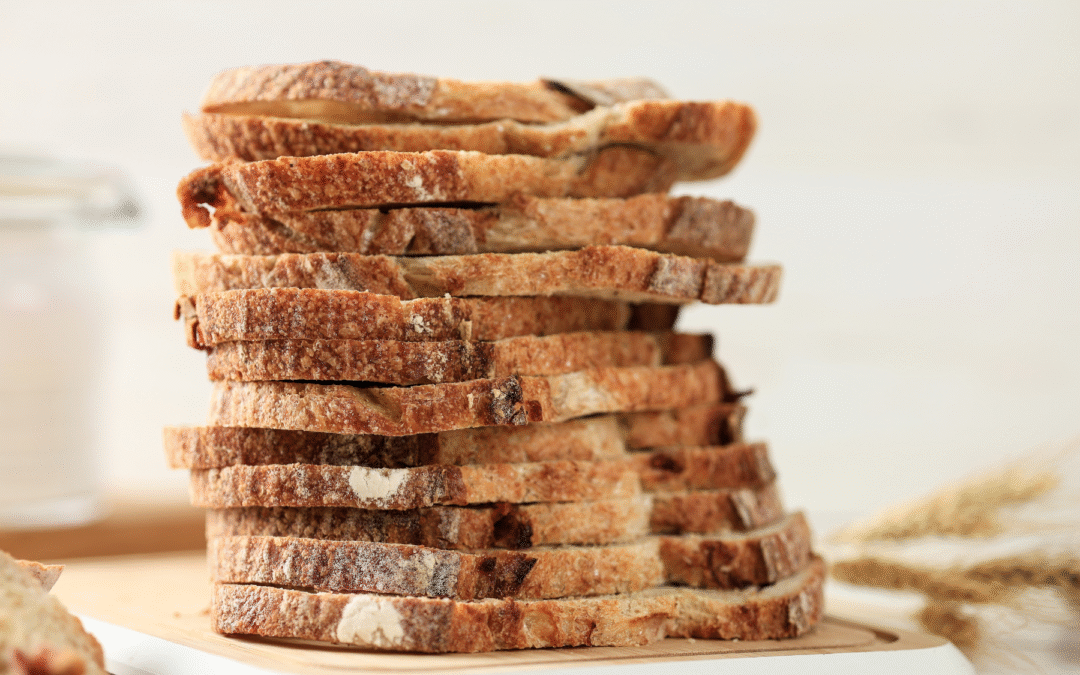
          Sliced sourdough bread with parchment paper between slices ready for freezing to improve health benefits
          Frozen sourdough bread slice being toasted for added resistant starch and lower blood sugar impact
          Artisan sourdough bread stored in a labeled freezer bag to capture freezing bread health benefits

          Frozen Bread Facts vs Myths

          Some people worry that frozen bread is less nutritious. It isn’t. Freezing doesn’t destroy nutrients, it simply pauses the loaf where it’s at. Others say frozen bread tastes stale, but staling is more about air and moisture than cold. If you wrap it well and toast before eating, frozen bread can taste as fresh as the day it was baked. And while the landmark study was done with white bread, the chemistry is about starch, not color. Whole grain breads, and especially sourdough, still benefit.

          Is frozen bread healthy?

          Yes. Freezing doesn’t damage nutrients, it preserves them. In fact, freezing actually increases resistant starch, which makes bread healthier than when it’s fresh.

          PMC

          Does freezing bread make it stale?

          Not if you store it properly. Staling comes from moisture loss, not freezing itself. Wrap it tightly and toast from frozen, and it will taste like it just came out of the oven.
          ScienceDirect

          Does freezing bread only help white bread?

          White bread is what most studies tested, but the mechanism is starch chemistry, not color. Whole wheat and sourdough bring their own advantages and can still benefit from cooling.
          PubMed

          Freezing Bread as a Health Hack

          Bread often gets blamed for blood sugar spikes, but science shows there are simple ways to enjoy it without the crash. Freezing bread creates more resistant starch. Toasting frozen slices brings back flavor and texture. And when you choose sourdough, you’re stacking the benefits of natural fermentation with the freezer’s magic.

          So the next time you bake or buy a loaf, don’t just think of the freezer as storage. Think of it as part of the recipe for unlocking the full potential health benefits of frozen bread your body deserves.

          👉 Ready to experience it for yourself? Start baking your first loaf today: Learn how to create your first sourdough starter here or try our Beginner-Friendly Sourdough Bread Recipe.

          Have you tried freezing and toasting your sourdough yet? Did you notice a difference in taste or how you felt after eating it? Share your experience in the comments below, your story might inspire someone else to give it a try.