
Milk in Bread: Your Guide to Softer Loaves, Better Flavor, and Tender Crumb

Milk in Bread: Your Guide to Softer Loaves, Better Flavor, and Tender Crumb

My love for milk-based breads started long before sourdough ever entered my kitchen. Back when my husband and I bought our first bread machine, nearly every recipe called for milk or milk powder — and every loaf came out soft, golden, and dangerously easy to eat. You know when you cut “just one slice” and somehow half the loaf disappears? Yeah… that happened a lot.

Eventually the bread machine gave up on us (probably for the best), and bread took a back seat for a while.

Fast-forward to 2024, when sourdough found me. I fell in love with the slow pace, the ritual, the smell of fermenting dough. And when I started adding milk and milk powder to sourdough, something clicked. It felt like revisiting those bread machine days — only better. The loaves were silkier, softer, and unmistakably bakery-style.

Milk in bread isn’t just a swap. It changes how dough feels, bakes, and tastes — and once you understand why, you can use it with confidence.

Let’s walk through it together.

Liquid Milk vs Milk Powder

They sound similar… but they behave like entirely different ingredients.

Most bakers don’t realize how differently these two enrich bread — and knowing the difference is one of those tiny skills that quietly unlocks better loaves.

Liquid milk brings hydration, gentle sweetness, natural fats, and protein. It softens the crumb, deepens browning, and slows fermentation in a way that produces a more tender, cozy loaf.

Milk powder adds richness without changing hydration at all. It strengthens the dough, intensifies aroma and flavor, and gives your crust that deep golden color that feels unmistakably “bakery-made.” It’s especially helpful in sourdough, where hydration matters.

And when you use both together, you get something special.

• Milk changes structure and tenderness.
• Milk powder deepens flavor, softness, and color.

Together, they give you that nostalgic, silky bakery crumb — the one that makes people ask,
“Wait… YOU made this?”
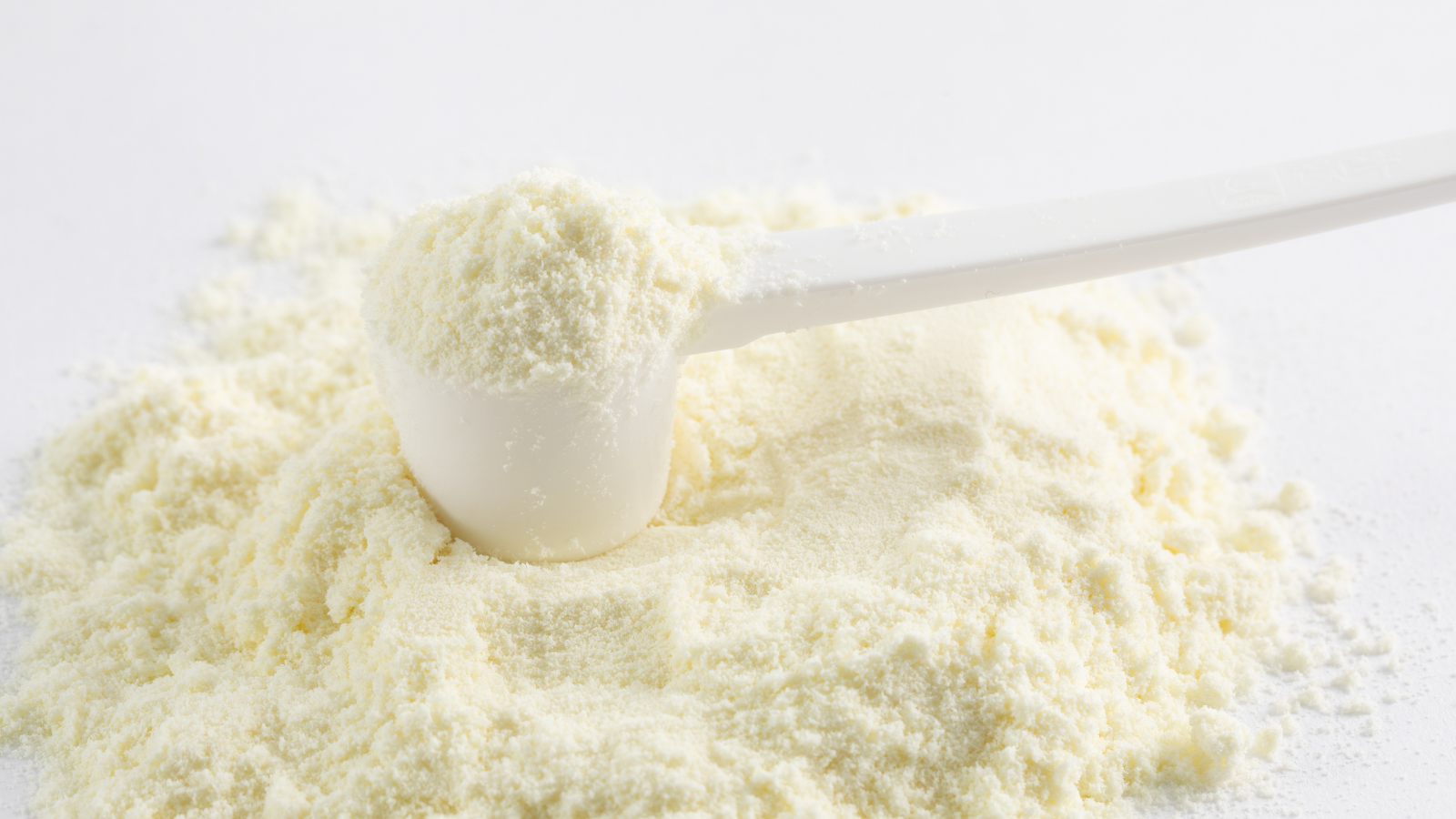
A scoop of milk powder on a white surface, showing the fine texture used to enrich bread dough and improve flavor, browning, and softness.

What Milk Does Inside the Dough

Milk changes bread from the inside out — not dramatically, but in all the right little ways.

When milk hydrates the flour, the fats gently coat the gluten strands. This keeps them from tightening too firmly, which is why milk breads feel soft and tender instead of chewy. You can literally feel the dough relax in your hands.

Milk also naturally softens acidity. In sourdough, this is beautiful. That bold tang turns mellow and rounded, creating a smoother, more balanced flavor.

Milk’s lactose caramelizes quickly in the oven, giving your loaf a deep golden crust long before it’s fully baked. And the smell? That warm, sweet, bakery aroma almost feels nostalgic — like the bread aisle of a grocery store, but better.

And perhaps the best part:

Milk helps bread stay soft longer. Milk solids hold onto moisture, giving you slices that stay tender for days instead of drying out overnight.

If you enjoy digging into the science behind baking, these are excellent starting points:

Dairy protein interactions – dairyscience.info
Maillard browning reaction –seriouseats.com
Open Library – ecampusontario.pressbooks.pub

What Water Does in Dough

(And why it still matters just as much.)

Water is the foundation of most bread. It hydrates flour cleanly and simply, without bringing any extra elements to the party. This gives gluten the freedom to link together tightly, forming strong strands that create structure and height.

This is why water-based doughs tend to:

  • rise tall and airy
  • create open, irregular crumb
  • develop crisp, rustic crusts
  • highlight the wheat and sourdough tang
  • ferment quickly and efficiently

With water, nothing interferes with the grain or the fermentation. You taste the wheat. You taste the fermentation. You taste the tang exactly as it is.

Milk brings softness and comfort.
Water brings structure and character.
Both have their place in a baker’s world.

Milk vs Water in Bread:

The Real Differences

🥛 vs 💧

Both liquids hydrate flour, but the results are dramatically different.
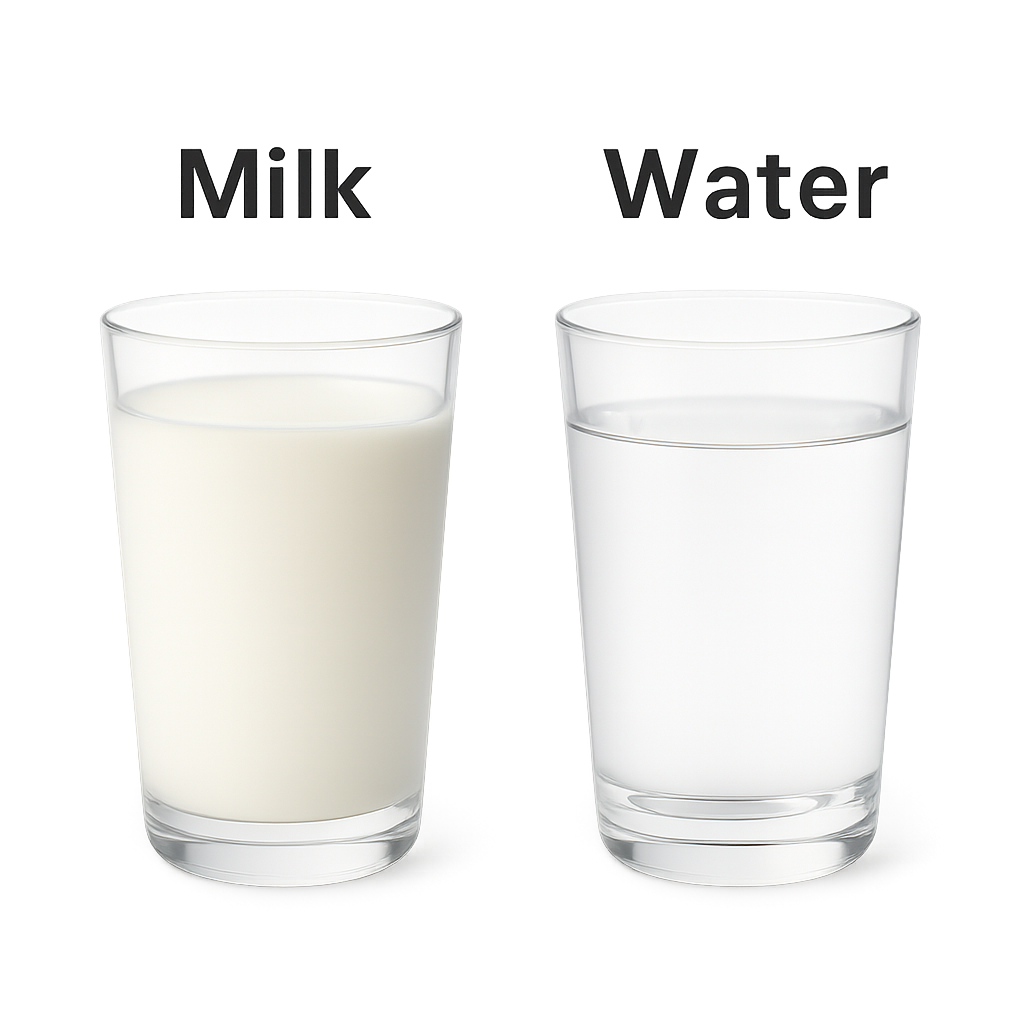
Two clear glasses side by side, one filled with milk and the other with water, demonstrating the difference between using milk and water in sourdough bread baking

Structure
đź’§ Water strengthens gluten, giving the dough elasticity.
🥛 Milk softens gluten because its fats and proteins gently interfere with gluten bonding.

Crumb
đź’§ Water produces open, irregular holes.
🥛 Milk creates a uniform, silky, tighter crumb.

Browning
đź’§ Water browns slowly.
🥛 Milk browns deeply and quickly thanks to lactose.

Rise
đź’§ Water doughs rise tall and airy with more oven spring.
🥛 Milk doughs rise slower but bake tender and even.

Flavor
đź’§ Water highlights wheat flavor and sourdough tang.
🥛 Milk softens acidity and adds gentle sweetness.

Shelf Life
đź’§ Water breads stale faster.
🥛 Milk breads stay soft longer because milk solids retain moisture.

Fermentation
đź’§ Water encourages faster fermentation.
🥛 Milk slows fermentation slightly.

Aroma
đź’§ Water gives a clean, fresh wheat aroma.
🥛 Milk creates a warm, nostalgic bakery scent.

Crust
đź’§ Water yields a crisp, rustic crust.
🥛 Milk makes a soft, thin, tender crust.

Dough Handling
đź’§ Water doughs feel strong and elastic.
🥛 Milk doughs feel relaxed, soft, and supple.

Milk vs Water in Bread:

The Real Differences

🥛 vs 💧

Both liquids hydrate flour, but the results are dramatically different.

Two clear glasses side by side, one filled with milk and the other with water, demonstrating the difference between using milk and water in sourdough bread baking

Structure
đź’§ Water strengthens gluten, giving the dough elasticity.
🥛 Milk softens gluten because its fats and proteins gently interfere with gluten bonding.

Crumb
đź’§ Water produces open, irregular holes.
🥛 Milk creates a uniform, silky, tighter crumb.

Browning
đź’§ Water browns slowly.
🥛 Milk browns deeply and quickly thanks to lactose.

Rise
đź’§ Water doughs rise tall and airy with more oven spring.
🥛 Milk doughs rise slower but bake tender and even.

Flavor
đź’§ Water highlights wheat flavor and sourdough tang.
🥛 Milk softens acidity and adds gentle sweetness.

Shelf Life
đź’§ Water breads stale faster.
🥛 Milk breads stay soft longer because milk solids retain moisture.

Fermentation
đź’§ Water encourages faster fermentation.
🥛 Milk slows fermentation slightly.

Aroma
đź’§ Water gives a clean, fresh wheat aroma.
🥛 Milk creates a warm, nostalgic bakery scent.

Crust
đź’§ Water yields a crisp, rustic crust.
🥛 Milk makes a soft, thin, tender crust.

Dough Handling
đź’§ Water doughs feel strong and elastic.
🥛 Milk doughs feel relaxed, soft, and supple.

When Milk In Bread Is the Best Choice

Milk is the best choice when your goal is softness, tenderness, and a fine, even crumb. It’s ideal for breads meant to feel comforting, slice cleanly, and stay soft for days.

Use milk when the dough is designed to be soft-first, not structure-first.

Milk works best when:

  • You want a soft sandwich loaf or enriched bread
  • The dough includes eggs or tangzhong/yudane, which help support structure
  • The crumb should be tight, silky, and uniform, not open and rustic
  • You’re baking pan loaves, rolls, buns, or sweet breads
  • You want gentler sourdough flavor and richer browning

Milk adds tenderness, warmth, and that unmistakable bakery aroma. When the dough already has enough structure built in, milk doesn’t weaken it — it completes it.

When Water Is the Better Choice

Water is the better choice when you want strength, lift, and a bold sourdough character. It supports strong gluten development and allows fermentation to shine.

Use water when structure and openness matter more than softness.

Water works best when:

  • You want a rustic or artisan-style loaf
  • You’re aiming for an open, irregular crumb
  • The dough needs to rise tall with strong oven spring
  • You want a crisp, crackly crust
  • You want the wheat flavor and sourdough tang to stand out
  • The dough is high-hydration and relies on gluten strength

Water keeps the dough clean and responsive. Nothing interferes with gluten development or fermentation, which is why water-based breads feel bold, structured, and expressive.

What “Enriched” Means

Lightly enriched doughs include a small amount of fat or sweetener (like oil or honey) but no eggs or tangzhong.
Enriched doughs include eggs, tangzhong, or multiple enrichments working together to support a soft crumb.

When to Use Milk and Water Together

If dough doesn’t have anything built in to support structure — like eggs or a tangzhong — using 100% milk can make it too relaxed. Adding some water keeps the dough balanced.

Use milk and water together when:

  • You want a soft sandwich loaf
  • The dough has no eggs
  • There is no tangzhong or yudane
  • The dough is lightly enriched (for example, oil or honey, but not both in large amounts)
  • You want good rise without sacrificing softness

A reliable rule that works

When in doubt, use: 75% milk + 25% water

This blend gives you:

  • the tenderness and browning of milk
  • the strength and lift of water

It’s especially useful for simple sandwich breads and lightly enriched sourdough loaves where you want the bread to feel soft but still rise nicely.

Easy way to remember

  • Eggs or tangzhong in the dough? Full milk usually works well.
  • No eggs and no tangzhong? Use milk and water together.

Milk adds comfort.
Water adds lift.
Using both helps your bread do both.

Can You Swap Milk and Water?

You can, but the swap is not 1:1. Milk makes dough softer and slows fermentation, so you may need slightly less hydration and a bit more patience during rising. Water makes dough stronger and more open, so if you replace milk with water, your crumb may open up and your crust may brown more gently.

The important thing is to adjust with intention instead of guessing.

If replacing water with milk: If replacing milk with water:
  • reduce hydration slightly
  • dough will be softer
  • fermentation slows a bit
  • crust browns deeper
  • flavor becomes sweeter
  • increase hydration
  • crumb opens up
  • flavor becomes tangier
  • crust may be lighter
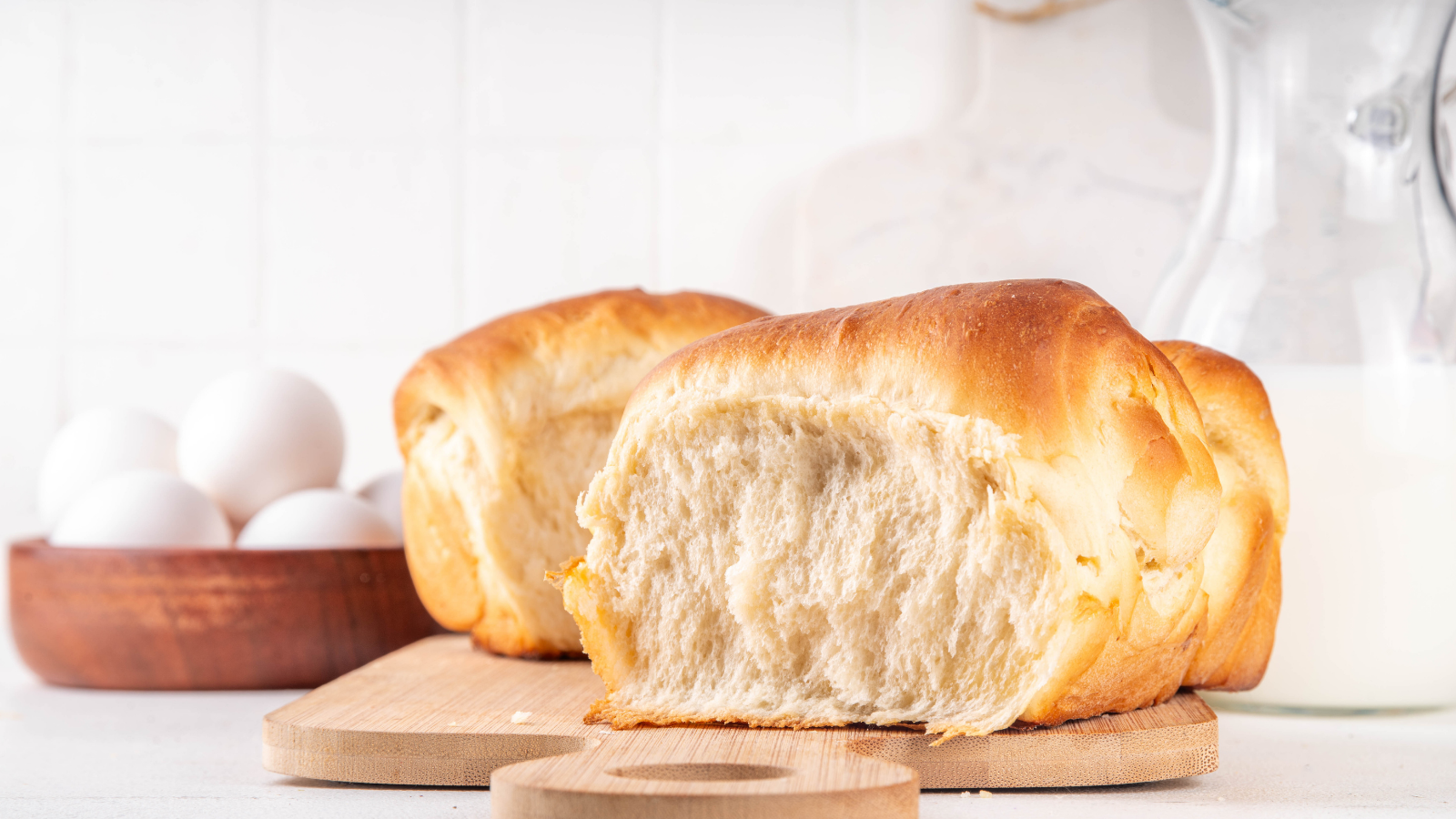
Soft milk bread loaf with a tender, fluffy crumb demonstrating how milk creates a rich, bakery-style texture

Milk in Sourdough

(This is where the magic really happens.)

Milk interacts with wild yeast and bacteria differently than it does with commercial yeast. In sourdough, milk gently tempers acidity, slows fermentation just enough to create structure, and produces a beautifully custard-like crumb that feels luxurious. The browning becomes richer, the aroma warmer, and the loaf stays soft longer — especially after a long cold proof.

If you’ve ever sliced into a milk-enriched sourdough and wondered why it feels almost “silky,” this is why.

If you’re curious to see how this shows up in real loaves, a few of my recipes highlight exactly what milk brings to sourdough:

  • Sourdough Honey Wheat Bread – shows how milk creates softness while still letting the grain shine. Recipe coming soon.
  • Cinnamon Raisin Swirl Sourdough – milk gives this loaf its tender crumb and gentle sweetness. Recipe coming soon.
  • Honeycloud Sourdough Loaf – the best example of that silky, enriched sourdough texture milk makes possible.


Troubleshooting Milk-Based Doughs

Gentle guidance from someone who has made all the mistakes for you.

  • If your dough feels sticky → reduce hydration slightly.
  • If it browns too fast → lower the oven temperature or tent with foil.
  • If it rises slowly → relax. Milk naturally slows fermentation.
  • If your crumb feels tight → strengthen gluten early with mixing or folds.
  • If the flavor is too mellow or soft → reduce milk slightly or add a touch of whole grain.

Everything is fixable — once you know what milk is actually doing.

What Milk In Bread Really Means 

Baking with milk is one of those little choices that doesn’t look like much on paper but completely transforms what comes out of your oven. It softens the tough edges, rounds out the flavor, and adds this quiet warmth that you can feel in every bite. Once you understand what it’s doing inside your dough, it becomes one of those tools you reach for with confidence.

Whether you’re making a cozy loaf for your family or experimenting with your own enriched sourdough creations, I hope this guide helps you see milk not as a “maybe,” but as a beautiful way to shape the kind of bread you love.

If you try baking with milk or milk powder, come back and tell me how your loaf turned out. I love hearing your stories and seeing what’s happening in your kitchen. I am here to answer your questions.

Frequently Asked Questions

Can I replace water with milk in any bread recipe?

You can, but it’s best to do it with intention. Replacing water with milk will soften the crumb, slow fermentation slightly, and cause the bread to brown faster. For rustic or high-hydration artisan breads, milk may make the loaf too soft. For sandwich loaves, enriched doughs, and soft sourdough, milk works beautifully.

Does milk make bread softer?

Yes — very noticeably. Milk fats and proteins interfere slightly with gluten development, which prevents the dough from becoming too tight or chewy. The result is a softer, more tender crumb that feels plush instead of elastic.

Why does bread made with milk brown faster?

Milk contains lactose, a natural sugar that caramelizes more readily than the sugars found in flour. This leads to deeper browning, a shinier crust, and that warm bakery aroma many people associate with enriched breads.

Can I use milk in sourdough bread?

Absolutely. Milk works especially well in enriched sourdough breads. It softens acidity, slows fermentation just enough to improve texture, and creates a smooth, custardy crumb. Many bakers love milk in sourdough sandwich loaves, honey wheat, cinnamon raisin, and milk bread–style doughs. Check out my enriched sourdough recipes. 

Does milk affect sourdough fermentation?

Yes, slightly. Milk slows fermentation because fats and proteins interfere a bit with yeast activity. This isn’t a bad thing — it often leads to better structure and a more even crumb. You may just need to allow a little extra time for bulk fermentation or proofing.

Is milk powder better than liquid milk for bread?

They serve different purposes. Milk powder adds flavor, color, and softness without changing hydration, making it very useful in sourdough baking. Liquid milk changes both hydration and structure. Many professional bakers use both together for the best results.

Can I use non-dairy milk instead of milk?

You can, but results will vary. Unsweetened soy milk behaves most similarly to dairy milk due to its protein content. Almond, oat, or coconut milk may add flavor but won’t provide the same softening or browning effects unless they contain added sugars or fats.

Does milk make bread last longer?

Yes. Milk solids help retain moisture and slow down starch retrogradation, the process that causes bread to go stale. Milk-based breads typically stay soft and fresh longer than water-based loaves.

Why does milk bread taste less sour?

Milk naturally buffers acidity, which softens the sharp tang of sourdough. This is why milk-based sourdough breads often taste more mellow, rounded, and gently sweet rather than boldly sour.

When should I avoid using milk in bread?

Milk isn’t ideal for breads where you want a crisp crust, open crumb, and strong chew — such as rustic boules, baguettes, or high-hydration artisan sourdough. In those cases, water allows the gluten and fermentation to shine.
Health Benefits of Frozen Bread: Why It’s Actually Better for You

Health Benefits of Frozen Bread: Why It’s Actually Better for You

Most people freeze bread to stop it going stale. What many don’t know is the real health benefits of frozen bread go far beyond storage. Freezing changes the starches in bread in a way that can improve digestion, support your gut, and even lower blood sugar spikes. This isn’t foodie folklore, it’s backed by science.  And when you combine freezing with sourdough, you get a powerful duo that helps digestion, blood sugar, and flavor all at once.

The Science Behind Freezing Bread 

When bread is fresh out of the oven, its starches are soft and swollen from baking. As the loaf cools, those starches begin to reorganize in a process called retrogradation. This is where the health benefits of frozen bread start to shine. When you chill or freeze bread, retrogradation happens even more, transforming some of the starches into resistant starch that supports gut health and steadier blood sugar.

Why does that matter? Resistant starch doesn’t behave like regular starch. Instead of breaking down quickly into glucose, it moves slowly through your digestive system, acting a lot like fiber. As a result, you get a gentler rise in blood sugar, fewer energy crashes, and bonus food for your gut bacteria. Those bacteria ferment resistant starch into short-chain fatty acids, which support both gut and metabolic health. In other words, freezing bread helps your body handle carbs in a smarter way.

What Studies Reveal About Frozen Bread and Glycemic Response

Researchers have actually tested whether freezing bread changes how your body responds. A 2008 study in the European Journal of Clinical Nutrition compared four conditions of homemade bread: fresh, toasted, frozen then thawed, and frozen-thawed-then-toasted.

Here’s what they found:

  • Toasting alone lowered the blood sugar spike compared to fresh bread.
  • Freezing + thawing alone also helped.
  • But freezing + thawing + toasting had the biggest effect, cutting the blood sugar rise by nearly 40%.

More recent studies confirm the same trend. Bread that has been frozen or chilled and then reheated produces a lower glycemic response than bread eaten fresh. So if you’ve ever wondered does freezing bread lower GI? — the answer is yes, and toasting makes it even better.

Why Freezing Bread Supports Blood Sugar and Gut Health

Freezing bread isn’t just a storage trick. It’s a way to make bread work harder for your body.

  • Steadier blood sugar: Resistant starch slows digestion, meaning a more balanced glucose response.
  • Happier gut: Resistant starch acts as prebiotic fiber, feeding healthy bacteria in your colon.
  • Less carb stress: If you’re managing insulin resistance, diabetes, or carb sensitivity, freezing bread gives you an extra layer of support.

And remember, none of this replaces your clinician’s advice, but it’s a simple, evidence-backed step that can help make bread a healthier part of your meals.

Why Sourdough + Frozen Bread Are the Dream Team for Your Health

Sourdough is already special. Thanks to long fermentation with wild yeasts and lactic acid bacteria, sourdough bread naturally digests more slowly, lowers phytic acid (which blocks mineral absorption), and often produces a lower glucose response than commercial yeast breads.

Now add the freezing effect. When sourdough is frozen and then toasted, you’re stacking two benefits:

  • Fermentation: breaks down gluten and makes nutrients more bioavailable.
  • Freezing: boosts resistant starch for steadier blood sugar and better gut health.

That’s why sourdough + freezing bread is the dream team. You get incredible flavor, a longer shelf life, and bread that loves your body back.

How to Freeze Bread the Right Way

The good news is that freezing bread for health doesn’t require anything complicated. In fact, it’s the same process you’d use to keep bread tasting fresh, just done with purpose.

  1. Slice before freezing: This lets you grab only what you need. (I use this deli slicer I brought from Amazon).
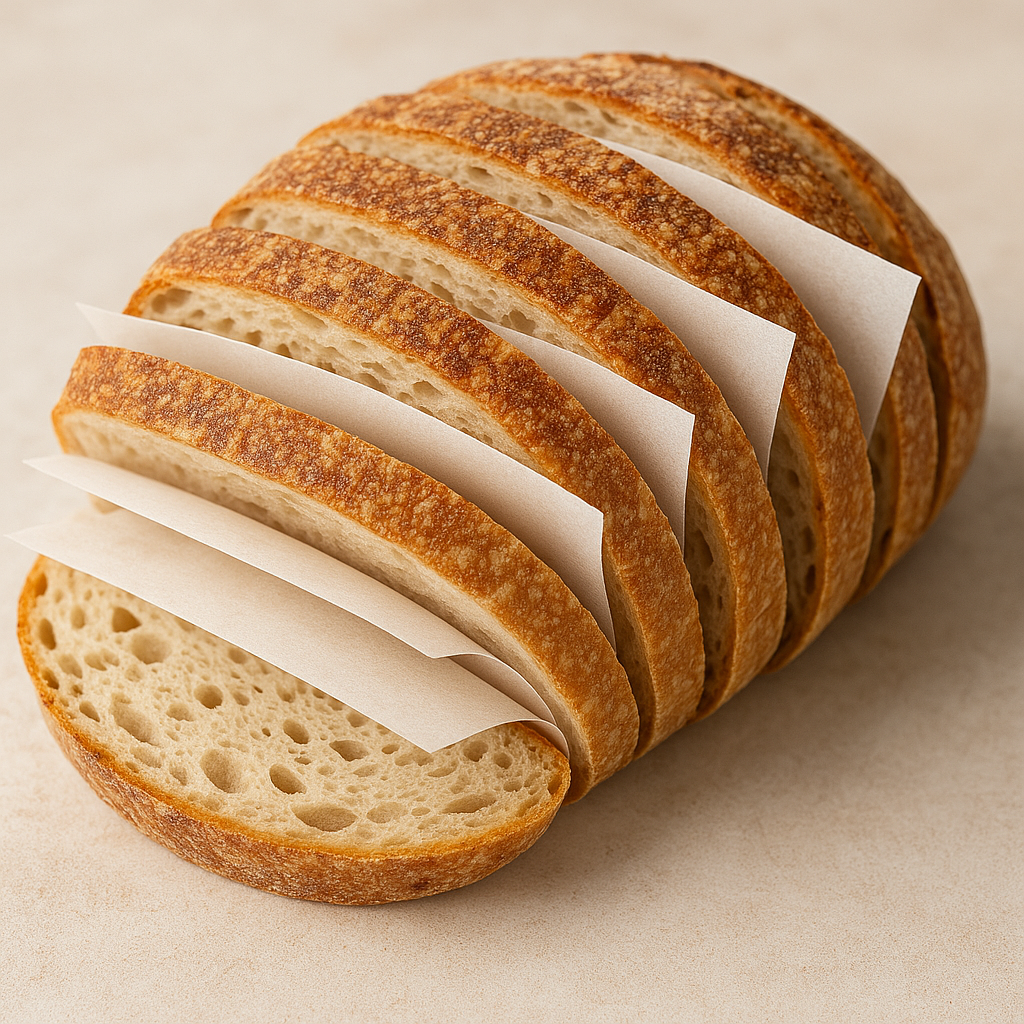
  2. Layer parchment between slices: Prevents slices from sticking together. ( I actually don’t do this step since I have no problems separating. However, it may depend on the bread, how it’s sliced, and hydration, etc. 
  3. Wrap airtight: Use freezer-safe bags or reusable silicone bags. For whole loaves, wrap in parchment, then foil, then bag.
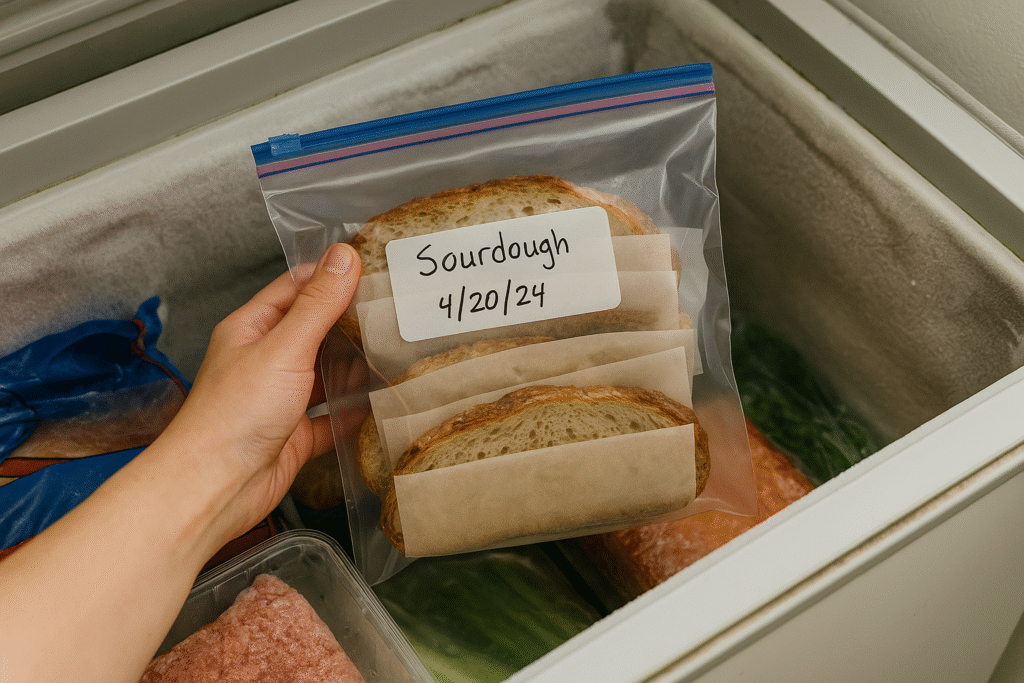
  4. Label and date: Bread is best within 2–3 months for flavor and texture.
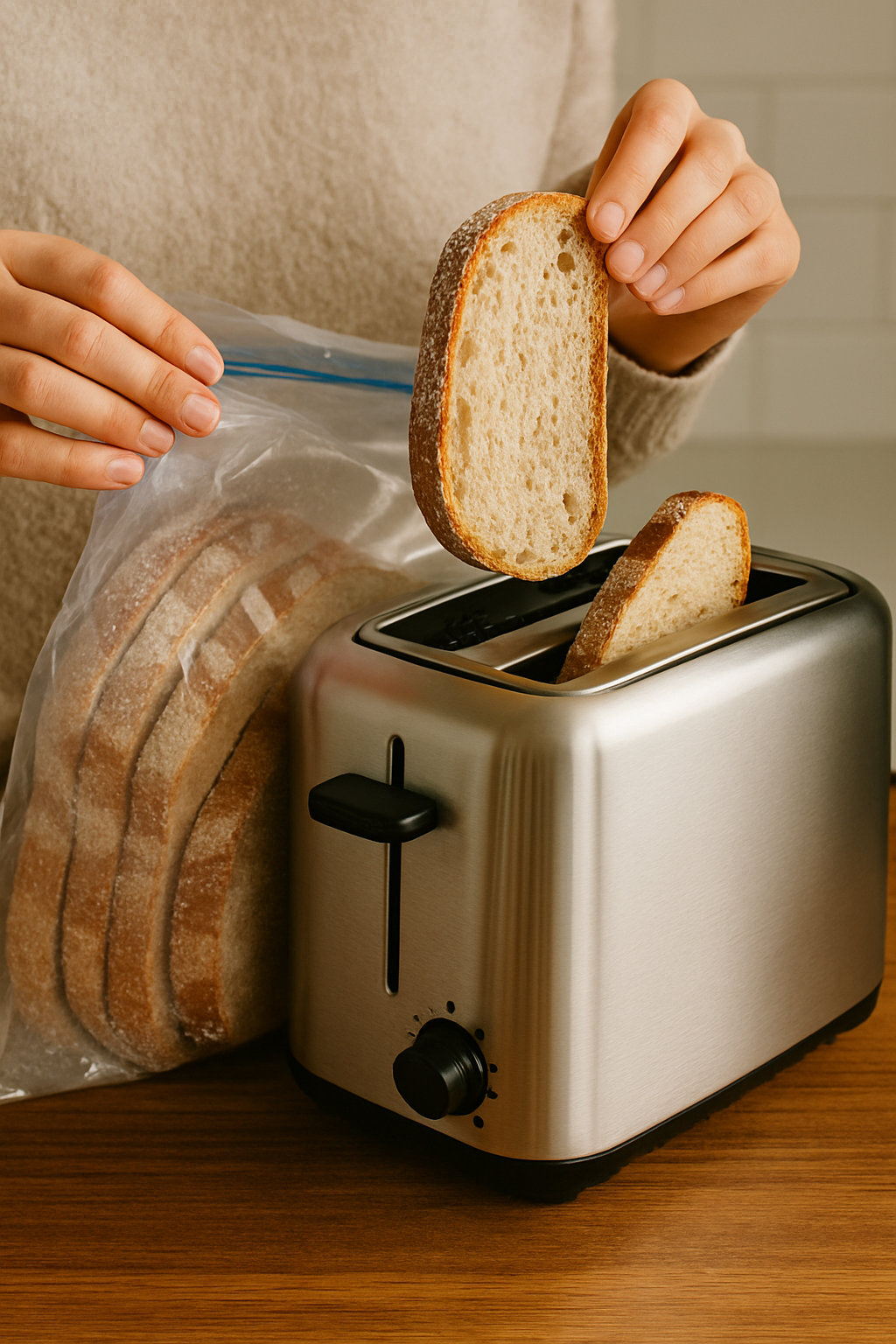
  5. Toast from frozen: Skip thawing. Toasting straight from frozen keeps the starch structure intact and brings back fresh-baked taste.

These simple steps help lock in the the health benefits of frozen bread while making your loaf last longer.

Slicing a sourdough loaf before freezing to maximize health benefits and resistant starch
Sliced sourdough bread with parchment paper between slices ready for freezing to improve health benefits
Frozen sourdough bread slice being toasted for added resistant starch and lower blood sugar impact
Artisan sourdough bread stored in a labeled freezer bag to capture freezing bread health benefits

Frozen Bread Facts vs Myths

Some people worry that frozen bread is less nutritious. It isn’t. Freezing doesn’t destroy nutrients, it simply pauses the loaf where it’s at. Others say frozen bread tastes stale, but staling is more about air and moisture than cold. If you wrap it well and toast before eating, frozen bread can taste as fresh as the day it was baked. And while the landmark study was done with white bread, the chemistry is about starch, not color. Whole grain breads, and especially sourdough, still benefit.

Is frozen bread healthy?

Yes. Freezing doesn’t damage nutrients, it preserves them. In fact, freezing actually increases resistant starch, which makes bread healthier than when it’s fresh.

PMC

Does freezing bread make it stale?

Not if you store it properly. Staling comes from moisture loss, not freezing itself. Wrap it tightly and toast from frozen, and it will taste like it just came out of the oven.
ScienceDirect

Does freezing bread only help white bread?

White bread is what most studies tested, but the mechanism is starch chemistry, not color. Whole wheat and sourdough bring their own advantages and can still benefit from cooling.
PubMed

Freezing Bread as a Health Hack

Bread often gets blamed for blood sugar spikes, but science shows there are simple ways to enjoy it without the crash. Freezing bread creates more resistant starch. Toasting frozen slices brings back flavor and texture. And when you choose sourdough, you’re stacking the benefits of natural fermentation with the freezer’s magic.

So the next time you bake or buy a loaf, don’t just think of the freezer as storage. Think of it as part of the recipe for unlocking the full potential health benefits of frozen bread your body deserves.

👉 Ready to experience it for yourself? Start baking your first loaf today: Learn how to create your first sourdough starter here or try our Beginner-Friendly Sourdough Bread Recipe.

Have you tried freezing and toasting your sourdough yet? Did you notice a difference in taste or how you felt after eating it? Share your experience in the comments below, your story might inspire someone else to give it a try.

Baker’s Percentages Explained: Unlock the Secret Language of Great Baking

Baker’s Percentages Explained: Unlock the Secret Language of Great Baking

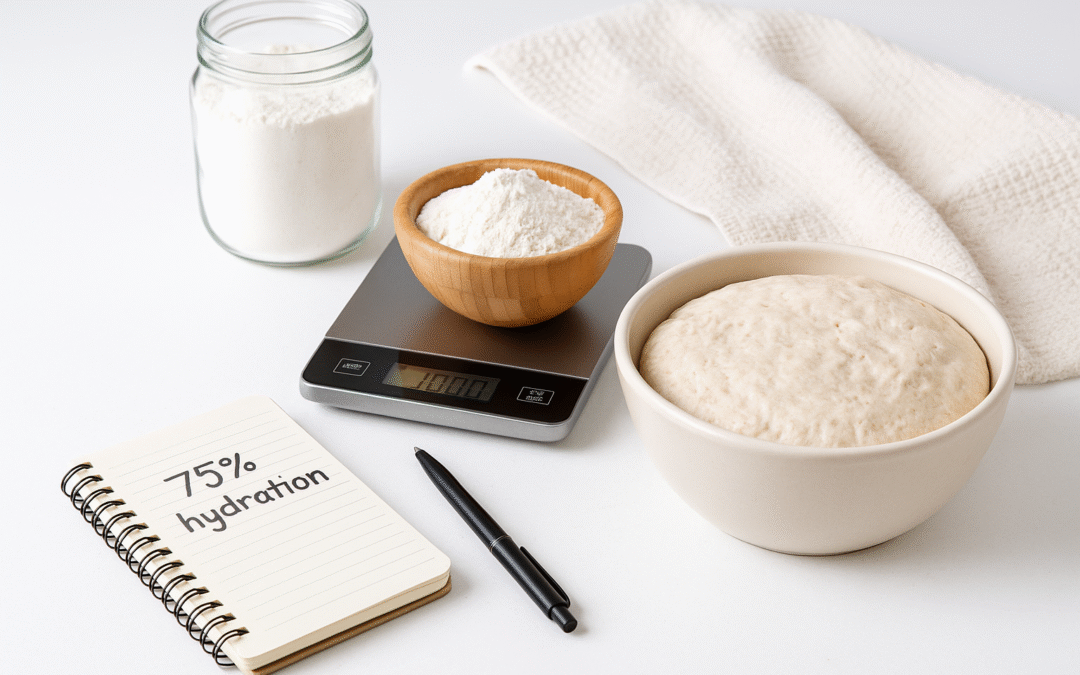
I remember the first time I saw a sourdough formula that said “75 % hydration.” I blinked. Then blinked again. Was this algebra? A secret code? I didn’t know it yet, but I was looking at my first example of baker’s percentages, the secret language that every great sourdough baker eventually learns to speak.

Turns out, that little number changed everything.
Once I understood baker’s percentages, I stopped guessing and started baking with confidence. Suddenly my loaves weren’t surprises — they were consistent, balanced, and exactly how I wanted them to be.

So grab a cup of coffee and your scale. Let’s decode this together.

What Are Baker’s Percentages and Why They Matter

Baker’s percentages (or “baker’s math”) express every ingredient as a percentage of the flour weight, not the total dough weight.

Flour is always 100 %, and everything else — water, salt, starter, honey, or butter — is compared to that number. This simple “baker’s math” keeps every bread formula consistent, whether you’re making one loaf or ten. In other words, flour sets the standard for every calculation.

👉 A Simple Example of Baker’s Math 

Example:
If you use 1000 g flour and 750 g water, your dough is 75 % hydration because
750 Ă· 1000 = 0.75.

It’s that simple. From that moment on, the entire bread world starts to click into place.

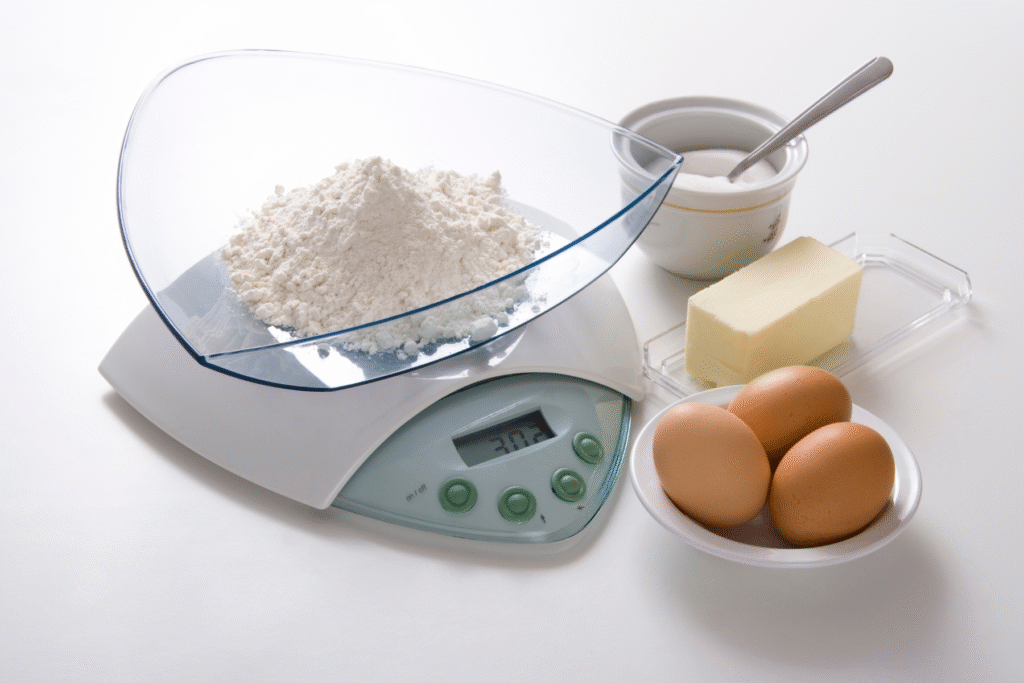
close up of flour being weighed in grams on digital kitchen scale for baker’s percentages

Why You’ll Fall in Love with Baker’s Math

It lets you:

  • Scale any recipe up or down perfectly
  • Compare formulas from different bakers instantly
  • Adjust hydration for texture and crumb
  • Balance flavor and fermentation time
  • Create your own signature recipes

It’s the difference between copying a song and composing your own.

Baker’s Percentage Formula Explained

Once you understand this baker’s percentage chart,
you can quickly scale or modify any recipe without guesswork.

Ingredient % = (Ingredient Weight ÷ Flour Weight) × 100.  Example:

Ingredient Weight (g)

Baker’s %

Bread Flour 800 80% Total Flour
Whole Wheat Flour 200 20%
Water 750 75%
Starter 200 20%
Salt 20 2%

Add the flour weights together to get your 100 %. Everything else is relative to that.

💦 Understanding Hydration in Baker’s Percentages

Hydration percentage — the ratio of water to flour — determines how your dough feels and bakes. Understanding this part of baker’s math is key to mastering texture.

Hydration Texture

Perfect For

60–65 % Tight crumb, firm structure Sandwich loaves, enriched breads
70–75 % Balanced, open crumb Boules, batards
80 % + Loose, glossy, holey Ciabatta, focaccia

A 70 % dough feels like smooth play-dough. By contrast, at 80 %, it’s alive — soft, elastic, and slightly sticky, like a marshmallow that wants to stretch forever.

Typical Baker’s Percentages in Sourdough

Ingredient Common Range What It Does 
Starter 10–30 % Controls fermentation speed and flavor
Water 65–85 % Determines crumb and texture
Salt 1.8–2.5 % Balances flavor, slows fermentation
Honey / Sugar 2–10 % Adds sweetness and crust color
Fat (Butter / Oil) 1–15 % Tenderness and richness
Milk 10–30 % Softens and Enriches
Eggs 10–25 % Color, structure, flavor

These numbers form the backbone of every sourdough ratio you’ll ever use, from crusty boules to soft sandwich loaves.

How to Build Your Own Baker’s Percentage Formula

This kind of baker’s math lets you design new recipes confidently — adjusting your sourdough ratios to match your taste or texture goals.

Say you want:
1000 g flour
75 % hydration
20 % starter
2 % salt

Ingredient % Grams
Flour  100% 1000
Water 75% 750
Starter 20% 200
Salt 2% 20

Need half the batch?
Just cut the flour to 500 g and apply the same percentages, math magic,
no guessing, or just cut the ingredients in half.

Tools for Working With Baker’s Percentages

Disclosure: This article includes affiliate links. If you click and make a purchase, I may earn a small commission at no cost to you. As an Amazon Associate I earn from qualifying purchase. All opinions and product recommendations are my own.

Digital Kitchen Scale – accuracy is everything. I love this OXO Precision Scale

Baking Notebook – jot down every experiment and hydration tweak.

Baker’s Percentage App – A simple baker’s percentage calculator (or any bread formula app) can save time and prevent scaling mistakes.

Dough Thermometer – remember, time + temperature + ratios = consistent bread.

💡 Don’t Forget the Starter’s Hydration

If your starter is 100 % hydration (equal parts flour and water), it already contributes to both totals.

So:
Starter = 200 g → 100 g flour + 100 g water.
Your total flour and total water both increase by those amounts.

This tiny detail explains why two “identical” recipes can feel different. Ultimately, it’s all in the math.

Quick Style Comparison

Style Flour (g) Water (g) Starter (g) Salt (g) Hydration % Texture
Rustic Country Loaf 1000 780 200 20 78% Open, chewy
Sandwich Loaf 1000 650 150 20 65% Light, bubbly
Focaccia 1000 850 100 25 85% Light, bubbly
Brioche 1000 500 200 20 50% Rich, tender

How to Experiment (Without Fear)

  • Add 2–3 % more water for a looser, more open crumb.
  • Increase the starter to 20–25 % for faster, milder fermentation.
  • Lower the starter to 10–15 % for slower fermentation and a tangier flavor.
  • Keep notes — over time, they’ll become your personal bread diary.

Did you know?
More starter doesn’t just make your dough rise faster, it also limits the time acids can develop, giving you a softer, sweeter flavor profile. Less starter slows things down, deepening the sourness.

Every tweak teaches you how your dough thinks.

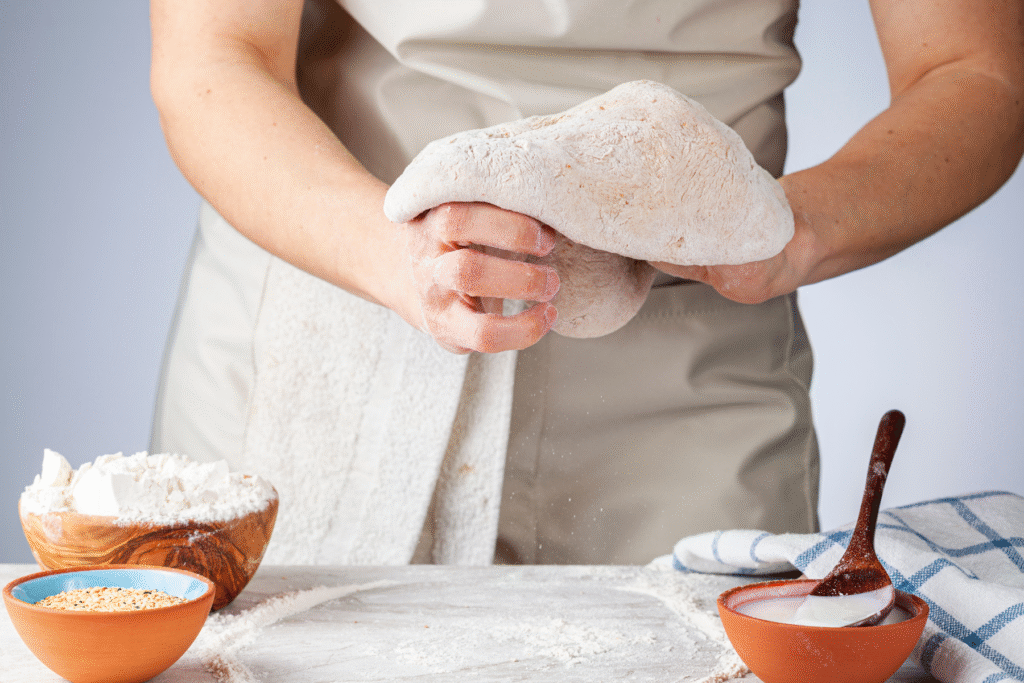
baker shaping and working sourdough dough by hand on a floured counter with bowls of flour and seeds nearby

A Quick Reality Check

When I started baking, I tossed ingredients together and hoped for magic. Some loaves were miracles; others… flat and dense.
Learning baker’s percentages felt like unlocking the language my dough had been trying to speak all along.

Now, every time I mix flour and water, I know exactly what I’m creating — not guessing, not hoping. Just baking on purpose.

Advanced Baker’s Percentages

Once you’ve mastered the basics of baker’s percentages, you can explore more advanced topics like:

  • Prefermented Flour (PFF) — how much of your total flour comes from your levain
  • Adjusting for mix-ins (nuts, seeds, dried fruit) without unbalancing your dough
  • Spreadsheet tracking for scaling formulas and managing large batches

For a deeper technical dive, visit The Perfect Loaf: Introduction to Baker’s Percentages
Maurizio’s guide is one of the clearest step-by-step explanations out there.

Baker’s percentages — or baker’s math — are more than numbers; they’re a language. 

When you understand your hydration percentage and ratios, you bake with intuition and confidence. No more mystery, no more guessing, just dough that behaves exactly how you want it to.

And trust me, nothing feels better than pulling a perfect loaf from the oven and knowing… you did the math and the magic.

Next, read:

Hydration Explained — How to Fix Sticky or Dry Dough → 
Beginner Sourdough Bread Recipe (Artisan Loaf) →

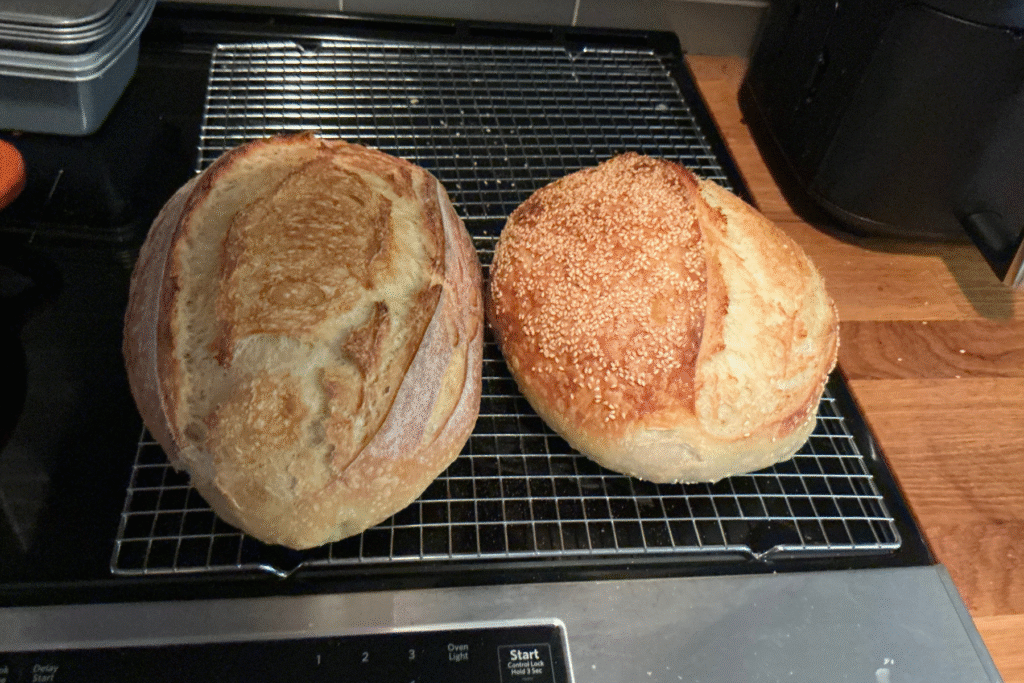
two golden sourdough loaves cooling on a wire rack after baking with balanced baker’s percentages

Baker’s Percentages FAQ
Real Questions Bakers Ask

1. Do I count the flour in my starter?

Absolutely. All flour = 100 %, including the flour inside your starter or levain.

2. What if I mix different flours?

Combine them to total 100 %. For instance, a bread formula that’s 70 % bread flour and 30 % spelt still follows the same baker’s math principles.

3. Is wetter dough always better?

Not unless you enjoy chasing slime across your counter. Each style has its own sweet spot.

4. Do milk and eggs count as water?

Partly. They contain moisture, so advanced bakers sometimes include them in total hydration.

5. Where should I start?

Try 70 % hydration. It’s forgiving, easy to handle, and makes gorgeous loaves.

How to Fix Sticky or Dry Dough (And What Your Dough Is Really Trying to Tell You)

How to Fix Sticky or Dry Dough (And What Your Dough Is Really Trying to Tell You)

If your hands have ever been glued to a sticky or dry dough ball, you know the feeling — messy, frustrating, and confusing. On the other hand, when dough feels dry and stiff, shaping can feel like wrestling clay.

The truth is, both sticky and dry dough are completely normal in sourdough baking. They’re not failures — they’re signals. Sticky dough might mean your hydration is high or fermentation is moving fast. Dry dough often means your flour hasn’t absorbed enough water.

By learning how to fix sticky or dry dough, you’ll understand what your dough is saying and adjust confidently for perfect texture every time.

What Sticky Dough Means (and When It’s Normal)

Sticky dough isn’t always bad. In fact, it’s part of the process when you’re working with sourdough. The key is knowing when stickiness is expected and when it signals trouble.

Sticky Dough Early On

When dough feels sticky during mixing, that’s completely normal. Your flour is still hydrating and the gluten hasn’t developed yet. Give it time, folds, and rest.

Sticky Dough During Bulk Fermentation

If your dough feels slightly tacky mid-bulk, it’s still on track. High-hydration recipes or whole-grain flours naturally feel stickier. Keep folding and let time do its job.

Sticky Dough After Bulk or During Shaping

When the dough feels loose, soupy, or stretchy like glue, it’s a red flag. That means overfermentation — the gluten network has broken down. Yeast and bacteria have used up the sugars, leaving weak structure.
To fix it, shorten your fermentation or refrigerate halfway through bulk.

Perfectly hydrated dough during bulk fermentation

Two Types of Stickiness in Dough

Type Feels Like Cause Fix
Hydration Sticky Smooth and tacky High hydration or underdeveloped gluten Mix longer or fold more
Fermentation Sticky Loose, glue-like Overfermentation or weak gluten Shorten fermentation
or cool the dough

How to Fix Sticky Dough

If you’re dealing with sticky dough, don’t panic. Try these simple fixes:

  1. Avoid adding too much flour. Sprinkle lightly; extra flour can dry the dough and stiffen the crumb.
  2. Strengthen the gluten. Add a few stretch-and-folds or a brief mix. Stronger gluten reduces stickiness.
  3. Cool it down. Warm dough ferments faster and gets sticky. Keep bulk around 75–78°F.
  4. Use wet or oiled hands. Water or olive oil prevents sticking without changing hydration.
  5. Check your salt timing. Salt tightens gluten and regulates fermentation. Add it at the right stage to keep dough stable.
  6. Feed your starter regularly. A weak or acidic starter breaks down gluten and increases stickiness.

How Flour Type Affects Sticky or Dry Dough

Flour choice plays a major role in how your dough behaves. Different flours absorb water differently and develop gluten to varying degrees — which directly affects whether your dough feels sticky or dry.

  • Bread Flour (12–13% protein): High protein content builds strong gluten. Feels sticky at first but becomes smooth and elastic with proper mixing.
  • All-Purpose Flour: Moderate protein and softer texture. Tends to feel slightly tackier during handling, especially in higher-hydration doughs.
  • 00 Flour: Finely milled, low-protein flour with lower absorption. Dough made with 00 flour often feels soft and sticky unless hydration is reduced by 2–3%.
  • Whole Grain and Rye Flour: Whole grain and rye flours retain more water due to higher bran and mineral content (technically known as ash content, a measure of how much of the whole grain is present in the flour). These doughs tend to stay tackier even when perfectly developed.. They also ferment faster due to enzyme and mineral activity.
  • Ancient Grains (Einkorn, Spelt, Kamut/Khorasan): Naturally lower in gluten strength. Dough made with these flours often feels stickier and looser, even at moderate hydration.
    • Important: This stickiness is not a flaw. Einkorn and Kamut don’t form strong gluten networks, so their dough will always feel more fragile and wet. Reduce hydration slightly and handle gently — less is more with ancient grain doughs.

💡 Pro Tip: When switching flours, especially to heritage grains, reduce hydration by 5–10% and expect a stickier texture even when the dough is well developed.

Note: Ash content refers to the mineral residue left after flour is incinerated — the more bran/germ present, the higher the ash. More ash = more absorption.

Temperature and Enzyme Activity

Temperature affects dough stickiness more than you might think.

  • Warm rooms (80°F+): Enzymes break down gluten faster, creating sticky, slack dough.
  • Cooler rooms (72–76°F): Fermentation slows down, allowing gluten to strengthen.

If your dough is sticky late in bulk, try lowering fermentation temperature or refrigerating mid-bulk.

🧂 Salt’s Role in Gluten Strength

Salt is more than a flavor booster. It tightens gluten bonds, making dough stronger and less sticky. If you forget salt during the autolyse, the dough may feel loose and tacky until you add it.

Why Dough Feels Dry

Dry or crumbly dough usually means your flour hasn’t absorbed enough water — or the environment has pulled moisture away.

Common Causes of Dry Dough

  • Too little water or too much flour
  • Cold ingredients that slow hydration
  • Overmixing before resting
  • Weak starter or low fermentation activity
  • Air exposure during rest

How to Fix Dry Dough

You can easily bring dry dough back to life:

  1. Add water gradually. Mix in a teaspoon at a time until the dough softens.
  2. Use warm water (around 80°F). Warm water improves absorption.
  3. Let it rest. Even 30 minutes of autolyse helps flour hydrate.
  4. Cover it tightly. Prevent moisture loss by sealing the bowl or using a damp towel.
  5. Adjust humidity. Add slightly more water in dry climates or less in humid ones.
Dry sourdough dough lacking hydration

Starter Strength and Acidity

If your dough feels sticky and weak, your starter might be too acidic. High acidity breaks down gluten. To fix it:

  • Feed your starter more frequently.
  • Keep it at consistent temperature.
  • Use it at its peak, not after collapse.

A healthy, balanced starter gives your dough strength and structure.

Recognizing Dough Stage Cues

Stage Texture Meaning Action
Early mix Shaggy and sticky Flour hydrating Keep mixing
Mid-bulk Smooth and tacky Ideal gluten Maintain folds
End bulk Loose and soupy Overfermented Reduce time or temperature
Post-mix Crumbly and stiff Underhydrated Add water or rest longer

Bread Science Corner

When it comes to understanding sticky or dry dough, the world’s leading baking experts all agree on one thing: texture is feedback. Your dough’s feel reveals what’s happening inside the gluten network, hydration, fermentation, and strength.

1. The Perfect Loaf

Maurizio Leo emphasizes that a weak, wet, or collapsing dough after bulk fermentation usually points to overhydration or insufficient gluten strength. In his shaping guide, he explains:

“If the dough feels weak and fails to smooth and hold its shape by the end of bulk fermentation, it is either over-hydrated or under-strengthened.”
Source: The Perfect Loaf – How to Shape a Boule

He also notes that excessive hydration or weak gluten creates a dough that appears “wet and soupy”:

“An over-hydrated bread dough will shred apart and look wet and soupy.”
Source: The Perfect Loaf – Mixing Bread Dough

2. Modernist Bread

The team behind Modernist Bread explains how gluten structure weakens as fermentation progresses beyond its ideal point:

“When carbon dioxide exerts more pressure than a proofed dough can withstand, the gluten structure weakens, releasing the gas and deflating the overproofed dough.”
Source: Modernist Bread – Gluten Up Close

While they describe it in terms of gas pressure and structural collapse rather than “stickiness,” this same breakdown results in dough that feels loose, wet, and difficult to shape, identical to the experience of overfermented sourdough.

3. King Arthur Baking Company

King Arthur Baking highlights that high-hydration and whole-grain doughs naturally feel stickier and require gentler handling:

“Sometimes sticky, these doughs benefit from a delicate touch and may require new techniques: like folding rather than kneading and loose shaping.”
Source: King Arthur Baking – With Bread, Is Wetter Better?

They also note that even very sticky doughs can develop strength through proper mixing:

“By cutting the dough … a loose, shapeless dough turns into a more tautly formed mass.”
Source: King Arthur Baking – To Knead Sticky Bread Dough, Adopt the Chop

Across these professional sources:

  • Sticky dough early in mixing is normal and expected due to high hydration or developing gluten.
  • Sticky or soupy dough after bulk fermentation indicates structural weakening or overfermentation.
  • High-hydration doughs (especially whole-grain or rye) are inherently tackier but not “wrong.”
  • Dry or cracked dough generally signals low hydration or air exposure — a point acknowledged by King Arthur and Modernist Bread in their texture troubleshooting guides.

In other words, if your dough feels sticky, you’re witnessing fermentation and hydration in action. The goal is to learn whether that stickiness means life, or overwork.

Close-up of sticky sourdough dough stretching between hands on a white countertop, showing the elastic texture and early hydration stage during mixing.

Troubleshooting Chart for Sticky or Dry Dough

Problem Likely Cause Quick Fix
Sticky during mix High hydration Mix longer or fold more
Sticky after bulk Overfermented Shorten fermentation or chill mid-bulk
Sticky after shaping Weak gluten Use cold dough or lower hydration
Crumbly texture Low hydration Add small amounts of water
Tears when stretching Weak gluten Rest or strengthen folds
Dry cracked top Lost moisture Cover the dough properly
Feels tight and dense Too much flour Extend rest period

Humidity and Climate Adjustments

Flour naturally absorbs moisture from the air. In humid climates, reduce hydration slightly. In dry climates, add 2–3% more water. This small change keeps your dough balanced and prevents extremes.

Recommended Tools

This post contains affiliate links, including Amazon links. As an Amazon Associate, I earn from qualifying purchases. If you click through and buy something, I may receive a small commission, at no additional cost to you. I only recommend tools I personally use and love in my sourdough baking.

Sticky or dry dough doesn’t mean you failed

Sticky or dry dough doesn’t mean you failed — it means your dough is communicating. Every batch reveals something about hydration, timing, and environment.

Sticky dough shows life and activity. Dry dough simply needs a little more care. Once you start reading these cues, baking becomes intuitive — a conversation between your hands and your starter.

So next time the dough clings or cracks, pause, adjust, and trust yourself. You’re learning to listen — and that’s where every great baker begins

Related Articles


Frequently Asked Questions

1. Should I flour my hands or wet them?

Wet or oil your hands. Flour changes hydration; water or oil prevents sticking naturally.

2. Why is my dough sticky after bulk?

It’s overfermented. Reduce fermentation time or refrigerate during bulk.

3. Can I fix overhydrated dough?

Yes. Add folds and cool it slightly to firm up the structure.

4. Why does my dough dry out during proofing?

Uncovered dough loses moisture quickly. Keep it sealed.

5. Can olive oil help sticky dough?

Yes. Oil creates a thin barrier and improves handling.

6. Why is my dough sticky and tearing?

That mix of signs means overfermentation. Gluten has broken down.

7. What’s the ideal dough feel?

Soft, supple, and slightly tacky. It should stretch smoothly without tearing.

8. How can I fix dry dough before bulk?

Add a little water and rest the dough. Autolyse helps rehydrate flour evenly.