Sourdough Champagne Bread with Golden Raisins

Sourdough Champagne Bread with Golden Raisins

Champagne bread wasn’t something I planned to make — I didn’t even know it was a real thing.

I was feeding my sourdough starter at the kitchen table when I noticed a bottle of champagne nearby. My sister had bought it for New Year’s Eve the next day, and without overthinking it, the question popped into my head: what would happen if I used champagne in my sourdough bread for New Year’s Eve?

So I did what I always do when an idea sticks. I started researching.

What I Found (and What I Didn’t)

There wasn’t much out there on champagne bread made with sourdough. I did come across a few yeasted bread recipes that use champagne in a similar way to how beer is sometimes used in dough — for aroma, acidity, and character — but I couldn’t find anything that explored the idea using a natural sourdough starter.

In that search, I also came across pain de campagne, a traditional French country bread made with flour, water, salt, and natural leavening — not champagne. King Arthur Baking has a classic pain de campagne recipe on their site and I also found a yeasted Champagne French Bread recipe that uses champagne in place of some of the liquid. What I didn’t find was anyone approaching the idea through sourdough fermentation.

That gap was enough for me.

Turning Champagne Into a Sourdough Ingredient

I wasn’t trying to recreate a traditional recipe — I wanted to see if champagne could behave in sourdough the way beer does in some breads, fermenting properly, building structure, and producing a loaf that felt intentional and repeatable.

I treated the champagne like an ingredient, not a novelty. I degassed it, adjusted hydration, and watched fermentation closely until the dough behaved like dough, not a science experiment.

What Champagne Bread Actually Tastes Like

The result was a sourdough champagne bread that actually tastes like champagne when freshly baked, with a soft, aromatic crumb.

I added raisins soaked in champagne and a touch of vanilla powder to bring in a bit of sweetness, but nothing overpowering. The bread still tastes like real sourdough, just a little more special.

This isn’t a “you can barely taste it” situation. The champagne flavor is unmistakable on day one, then softens overnight into a lightly sweet, well-rounded loaf that’s incredible toasted with good-quality butter or whipped honey butter.

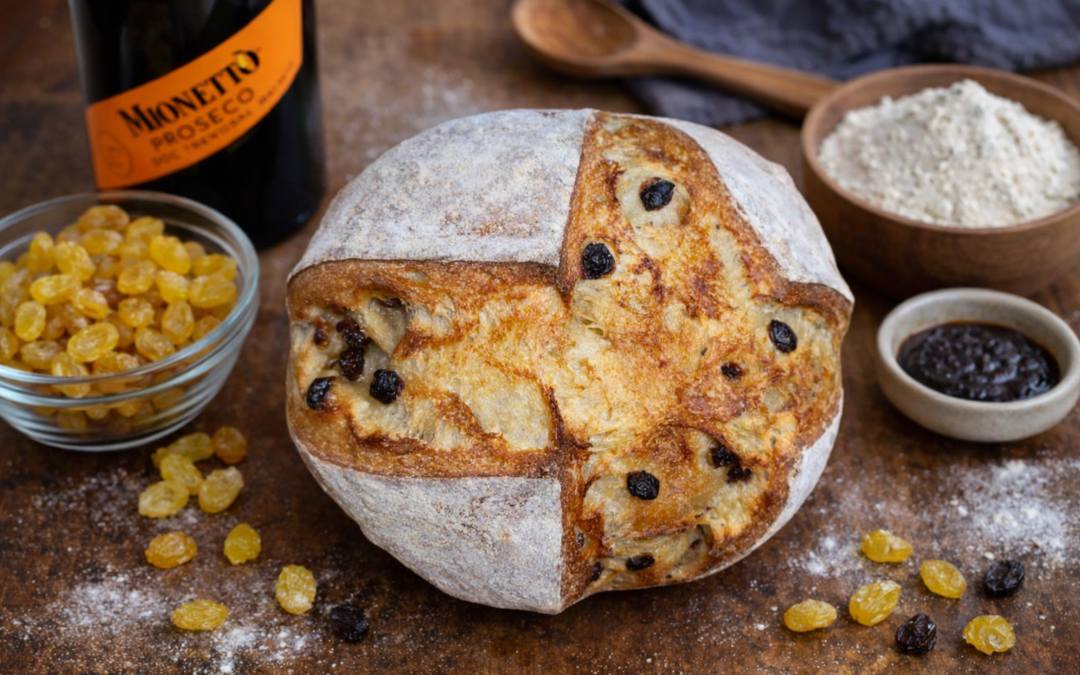
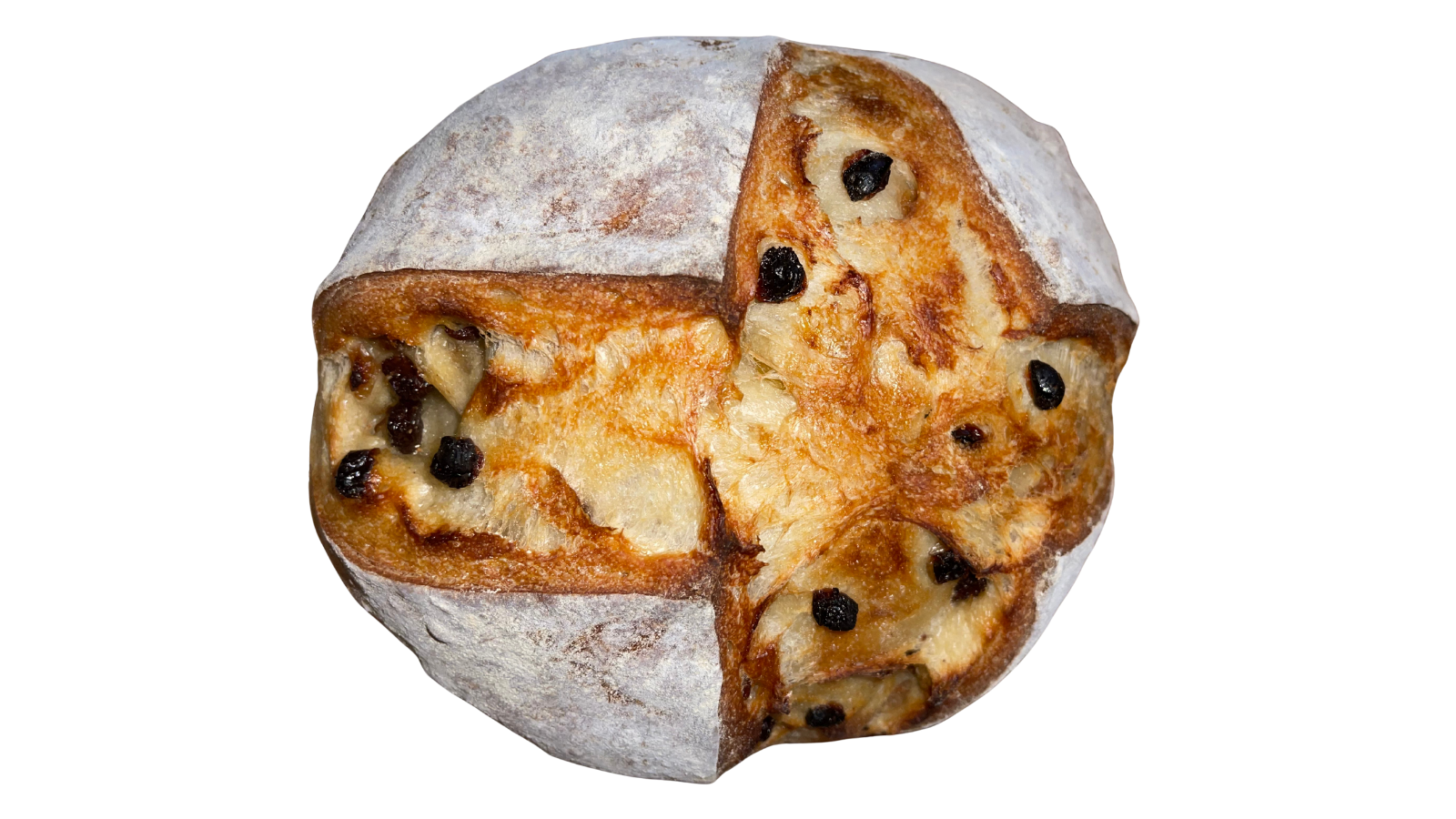
Finished champagne sourdough bread baked in a Dutch oven, featuring a rustic cross score, golden crust, and visible raisins baked into the crumb.

Can You Get Intoxicated From Champagne Bread?

Alcohol doesn’t instantly cook off. How much remains depends on heat and cooking time. This loaf baked for about 45 minutes and reached an internal temperature of 205–206°F.

Sourdough fermentation naturally produces small amounts of alcohol, much of which escapes before and during baking. Any alcohol already present in the champagne is further reduced by the heat of the oven, leaving only trace amounts.

I’m not a doctor or a scientist, and this is shared for general information only. If you are pregnant, taking medication, avoiding alcohol, or planning to serve this bread to children, please do your own research or check with your healthcare provider before making or serving it.

A Message to Beginner Sourdough Bakers

This champagne bread recipe is best suited for bakers who already have a few sourdough loaves under their belt.

You’ll enjoy this recipe if you:

  • Are comfortable reading dough instead of chasing strict timelines
  • Understand stretch and folds and cold fermentation
  • Want an artisan loaf that feels elevated but not sweet
  • Prefer balance and structure over aggressive sourness

If you’re brand new to sourdough, start with a simple country loaf first. This champagne bread rewards intuition and restraint more than rigid rules.

Choosing the Sparkling Wine for This Recipe

For this recipe, I used a dry Brut Prosecco, which behaves similarly to Champagne in dough and is more affordable.

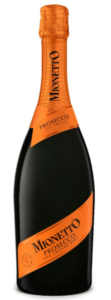
Bottle of champagne used in place of water to make champagne sourdough breadBest options:

  • Brut Champagne
  • Brut Prosecco (what I used)
  • Brut Cava

Avoid:

  • Demi-sec or sweet sparkling wine
  • Flavored sparkling wine

Tip: Expensive champagne is not necessary. Dry and crisp is what matters.

Why I Degas the Champagne First

Because champagne is carbonated, I chose to degas it before mixing. Using it while still fizzy can make dough behave unpredictably, and I wanted the fermentation and gluten development to stay calm and controlled from the start.

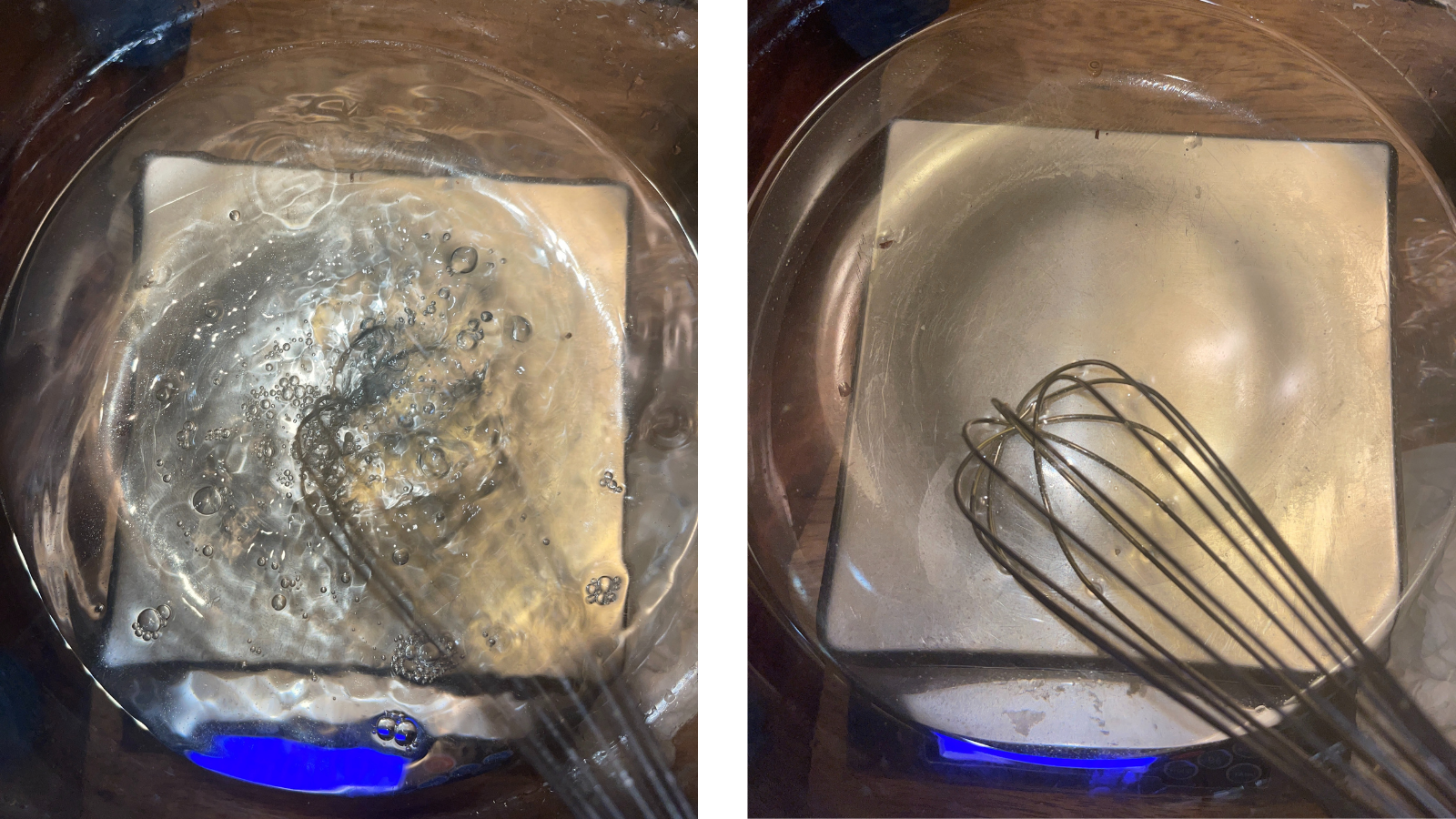
Quick tip: Pour the champagne into a bowl or measuring jug and whisk gently for 2–3 minutes, then let it rest briefly before using. In the photo below, the image on the left shows the champagne during degassing, while the image on the right shows it after 2–3 minutes once the carbonation has settled. 

Degassing Champagne Before Using It in Sourdough Bread

Why I Used Vanilla Powder and Which Raisins Work Best

This champagne bread is not meant to taste sweet, so every add-in needs to stay subtle and intentional.

For vanilla, I use vanilla powder or vanilla paste, not liquid vanilla extract. Liquid extract is fully liquid and alcohol-based, which can slightly affect hydration and fermentation timing in sourdough. Powder or paste adds warmth and aroma without changing the dough’s structure in any meaningful way, especially since it’s used in such a small amount.

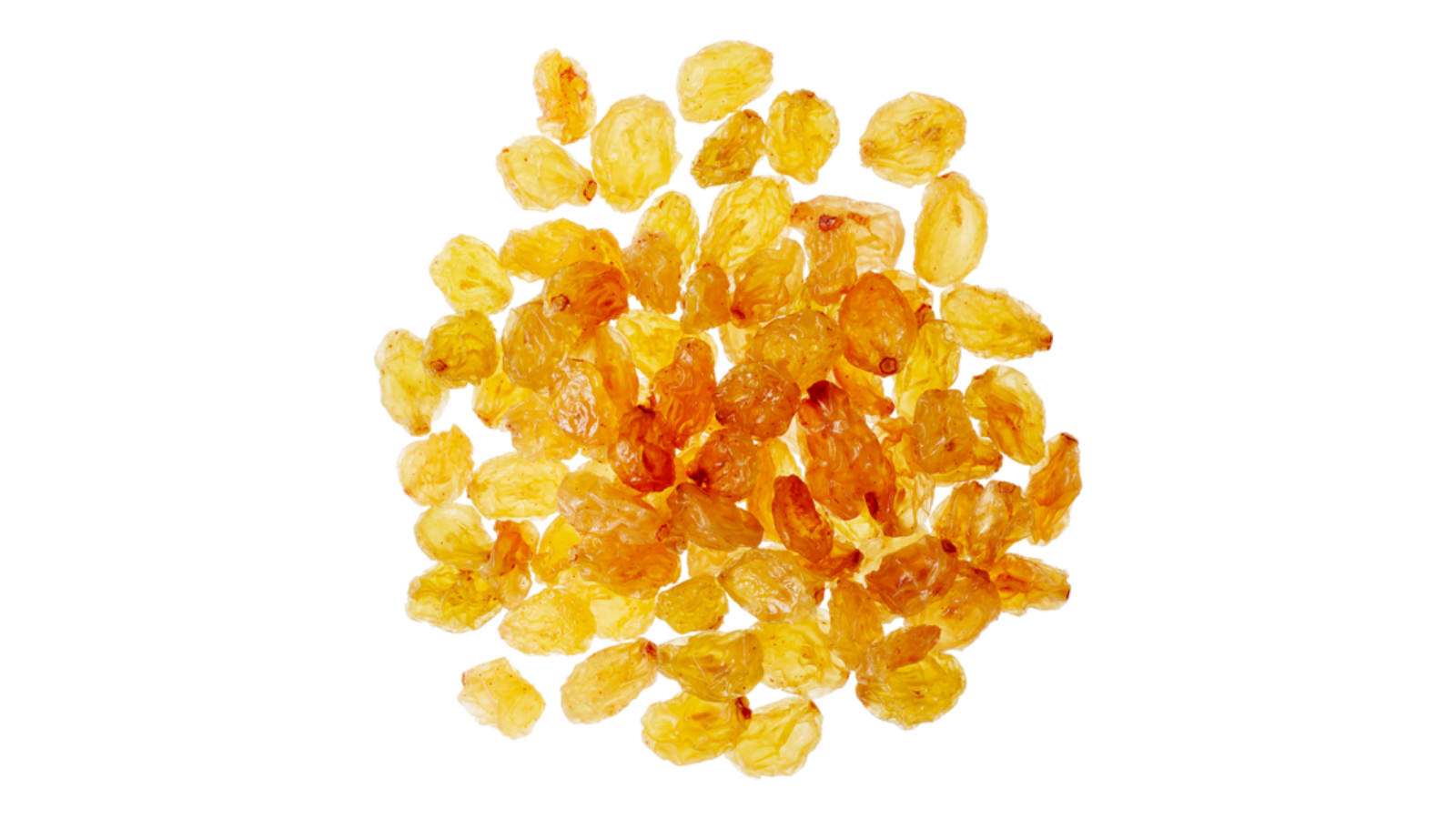
When it comes to raisins, golden raisins are my first choice. They’re softer, lighter, and slightly more floral, which pairs especially well with champagne. They also blend into the crumb more gently, both in flavor and appearance.

For this batch, I didn’t have enough golden raisins on hand, so I mixed in some darker raisins as well. The bread still turned out great, but next time I’ll stick with all golden raisins for a cleaner flavor and more consistent look.

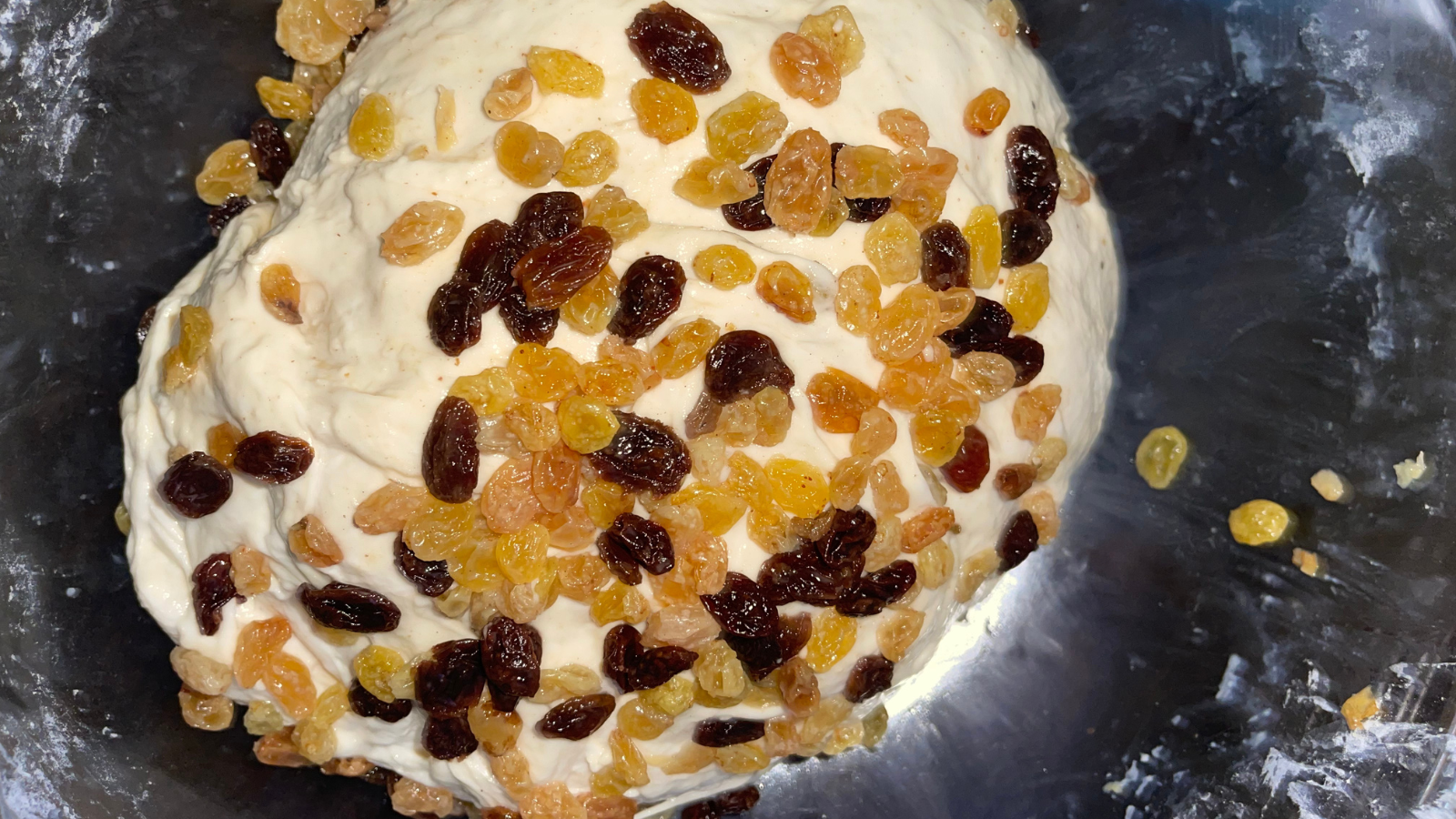
Raisins are added once the dough has started to build strength. I like to fold in half during the second stretch and fold, then add the remaining raisins during the third stretch and fold. Adding inclusions too early can weaken gluten, while spacing them out helps maintain structure and an open crumb.

Ingredient Swap Notes

  • No vanilla powder or paste? You can skip the vanilla entirely. Avoid liquid vanilla extract if possible.
  • Only dark raisins available? They work, but the flavor will be richer and less delicate than golden raisins.
  • Mixed raisins: Totally fine if that’s what you have — just know golden raisins give the cleanest result with champagne. I didn’t have enough golden raisins so I had to mix with darker raisins too. 
Golden raisins used as an inclusion in champagne sourdough bread for natural sweetness and flavor

What This Dough Feels Like (and Why That’s Normal)

One important thing to know before you get your hands in this dough: it may feel a bit different than your typical country loaf.

Because champagne contains dissolved CO₂ and organic acids, the dough can feel slightly more structured than a simple water-and-flour dough. However, the biggest factor in how the dough feels comes down to temperature and timing.

In my case, I mixed this dough late at night. Honestly, I was too tired to wait for the bulk fermentation to finish properly, so I improvised. Instead of shaping the loaves and putting them in the fridge (which is what I recommend in the recipe below), I put the entire bowl of dough into the fridge to finish its bulk fermentation overnight.

The next morning, I shaped the dough straight from cold, then let it proof on the counter for about 90 minutes before baking.

Why Cold Shaping & Counter Proofing Matters

If you follow my lead and shape cold dough, it will feel much tighter in your hands. The seams take a bit more effort to stick together, and they may want to relax open slightly as they sit on the counter. During that 90-minute proofing period, the dough slowly warms up and the structure softens.

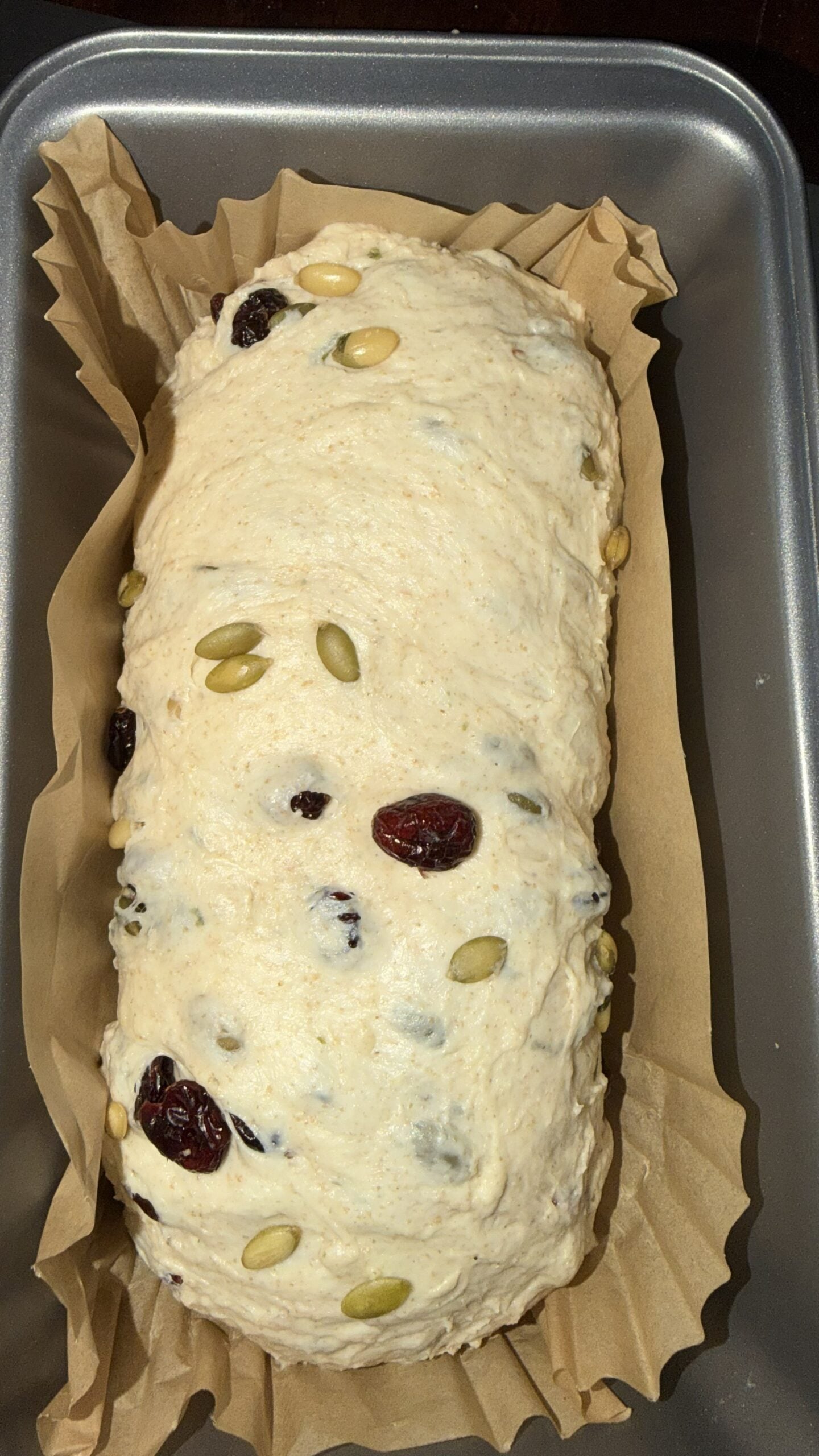
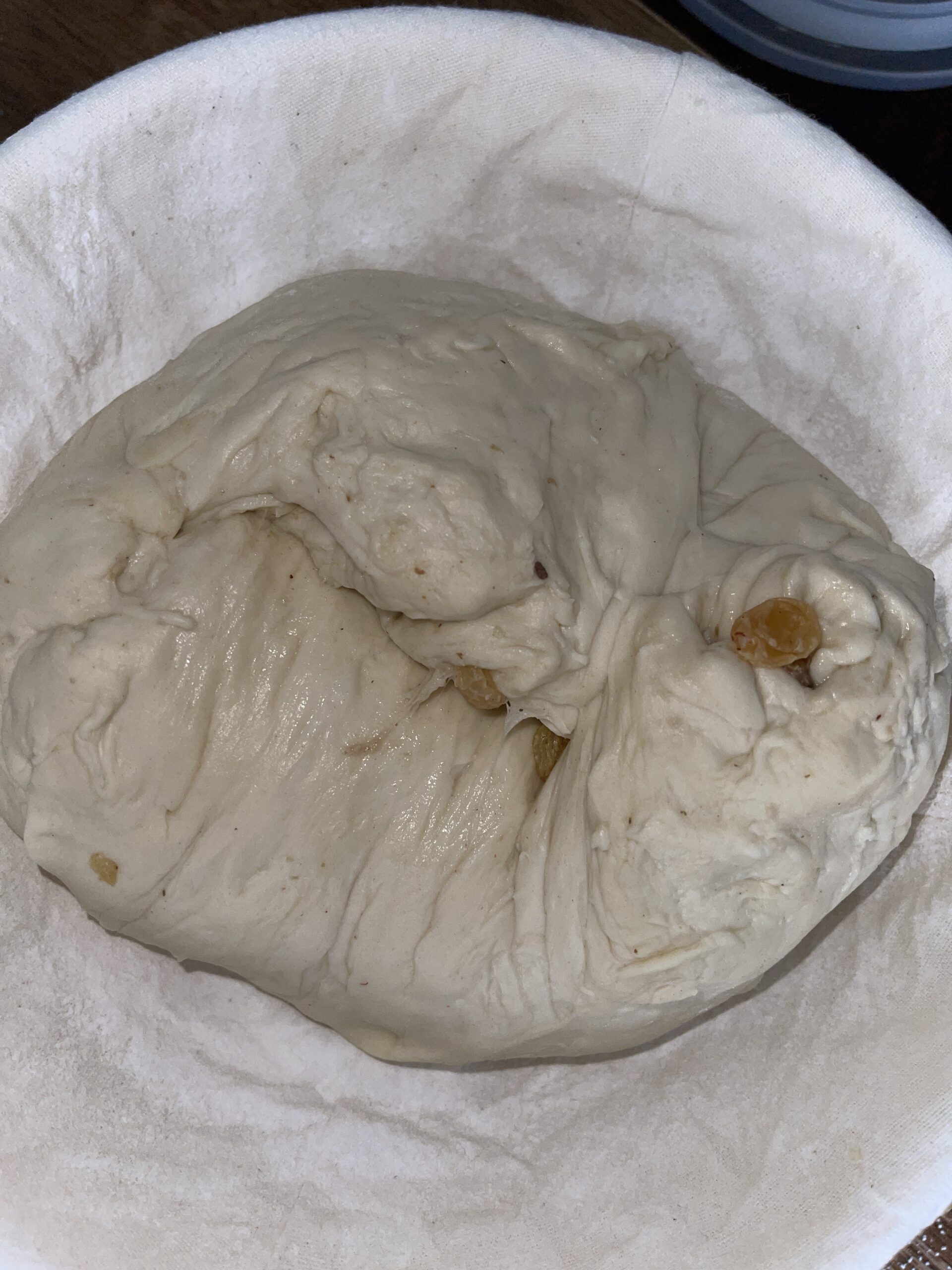
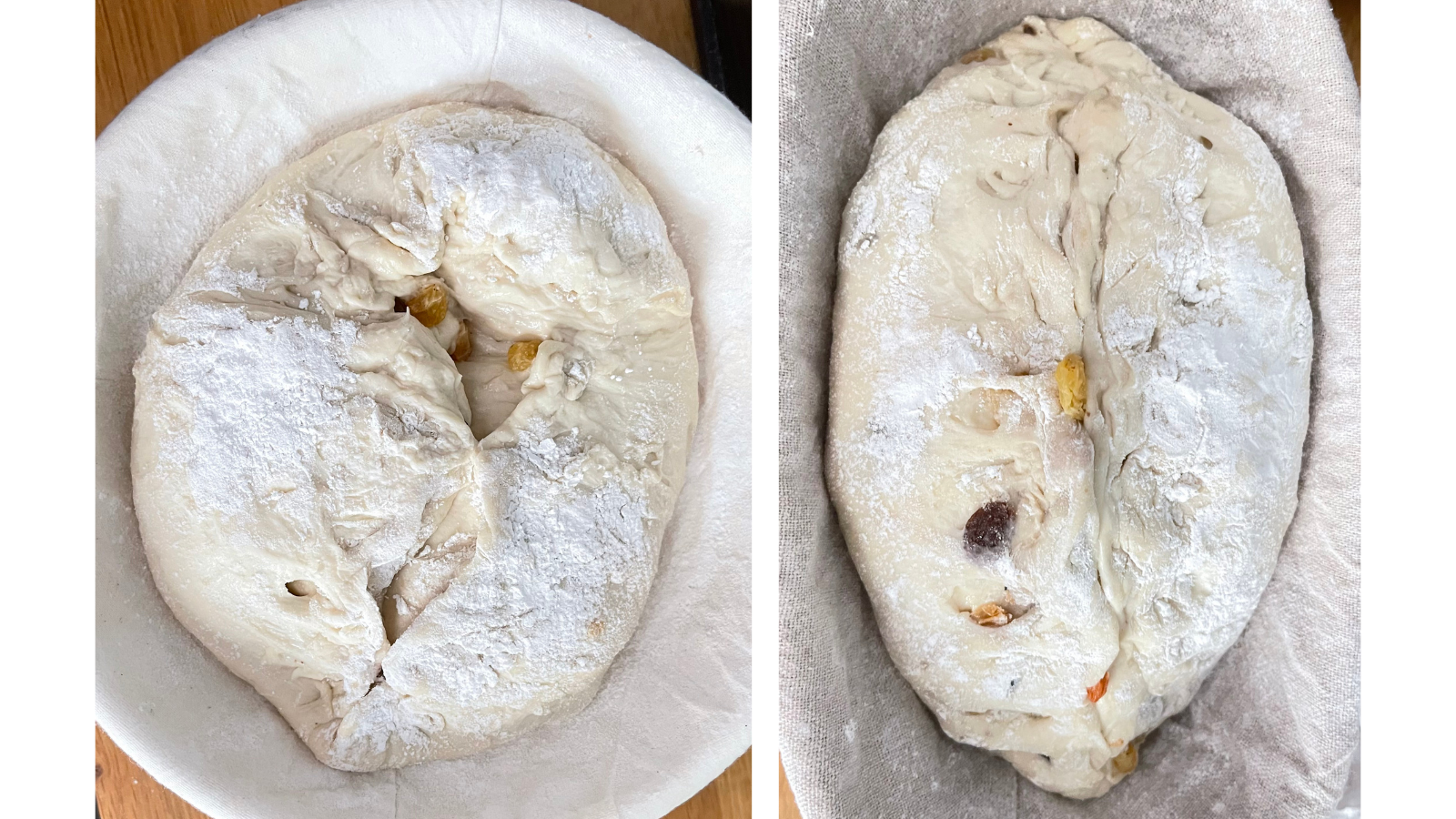
In this photo, the dough doesn’t look especially pretty after I tried stitching the seam together—and it continued to relax and open as it proofed. But just before baking, I was able to gently close the seam again, transfer it onto parchment, and score it.

Once the loaves hit the Krustic Dutch ovens, everything settled beautifully. The enclosed steam and strong oven spring did their job. The seams held, the structure set properly, and the bread baked up with a clean finish and excellent crumb.

The Takeaway: The recipe below is written for a standard Cold Proof (shaping then refrigerating), which is the most common way to get that great sourdough flavor. But if you get stuck late at night like I did, know that you can put the bulk container in the fridge, shape it cold the next day, and give it a nice long proof on the counter before baking.

Cold-shaped champagne sourdough bread dough resting in a floured banneton, showing tighter structure and seam placement before final proof and baking.

Tools I Used

You don’t need anything fancy to make this champagne sourdough bread, but having the right tools makes the process smoother and more enjoyable.

Affiliate Disclaimer: This post may contain affiliate links. If you click through and make a purchase, I may earn a small commission at no extra cost to you. I only recommend tools and products I personally use and genuinely love. Thank you for supporting my work and helping keep Sourdoughpedia going.

Digital kitchen scale
Essential for accuracy, especially when working with hydration and inclusions.

Large mixing bowl
For mixing, resting, and bulk fermentation.

Dough scraper (bench scraper)
Helpful for handling and shaping slightly stiffer dough.

Bannetons
Used for shaping and proofing the dough before baking.

Parchment paper
Makes transferring the dough into the Dutch oven much easier, especially when seams are a bit stubborn.

Bread lame or sharp blade
For scoring just before baking.

Krustic Dutch Oven
This is the Dutch oven I used, and it baked these loaves beautifully. The heat retention and steam environment helped the dough open properly and set structure, even though the seams were a little tricky to close. And I never burn the bottom of my loaves. It’s awesome.

Wire cooling rack
Important for allowing the crumb to fully set after baking.

Champagne Sourdough Bread Recipe (1 Loaf)

The recipe below reflects my preferred method, even though the photos show a slightly different workflow.

Ingredients

Levain

5 g sourdough starter
50 g flour
50 g water

Dough

  • 450 g bread flour
  • 50 g all purpose flour
  • 265 g degassed champagne or sparkling wine
  • 65 g water
  • 100 g active sourdough starter (100% hydration)
  • 10 g fine sea salt

Raisin Inclusion

  • 100 g golden raisins
  • Champagne for soaking (discard soaking liquid)
  • ½ teaspoon vanilla powder or vanilla paste

METHOD

A

1. Mix the Levain

You’ll need 100 g active levain (100% hydration) at peak for this recipe.

Overnight Levain (What I Used)

  • 5 g mature sourdough starter
  • 50 g flour (bread flour or all-purpose)
  • 50 g water

Mix until smooth, cover loosely, and let ferment overnight at room temperature (around 70–75°F / 21–24°C).
The levain is ready when it has doubled or slightly domed, smells lightly sweet and fermented, and shows bubbles throughout.

Use 100 g in the dough.

Same-Day Levain Option

If you prefer a same-day bake:

Build the levain using 1:2:2 ratio (20 g starter, 40 g flour, 40 g water).

Keep it in a warmer spot if possible (around 78–80°F / 25–27°C).

At warmer temperatures, this levain typically reaches peak in about 3–5 hours.

Levain Tip:
Use the levain at or just after peak — when it looks airy and domed, not collapsed. A strong, well-timed levain is especially important for this dough since champagne behaves differently than water.

A

2. Degas the Champagne

Pour the champagne into a bowl or measuring jug. Whisk gently for 2–3 minutes to release excess carbonation, then let it sit briefly until most of the bubbles have settled. This step stabilizes the liquid so it behaves like water in the dough while keeping the aroma and acidity of the champagne.

A

3. Soak the Raisins

In a small bowl, combine the raisins with enough champagne to cover. Add the vanilla powder or vanilla paste and stir gently to coat.

  • Let the raisins soak for 20 minutes, then drain thoroughly and discard the soaking liquid.
  • Pat the raisins dry with a paper towel to remove any excess moisture.

Set aside. The raisins will be added later during the stretch and folds, once the dough has developed strength.

A

4. Mix (Fermentolyse)

In a large bowl, combine the flour, degassed champagne, water, and sourdough starter. Mix until no dry flour remains and the dough looks shaggy and fully hydrated.

Cover and let rest for 30 minutes.
This fermentolyse allows the flour to hydrate fully and jump-starts fermentation without salt, helping the dough develop extensibility and flavor early on.

A

5. Add Salt

Sprinkle the salt evenly over the dough. Using wet hands, gently pinch and fold until the salt is fully incorporated. The dough will feel slightly tighter at this stage.

Cover and rest for 30 minutes to allow the gluten to relax before strengthening.

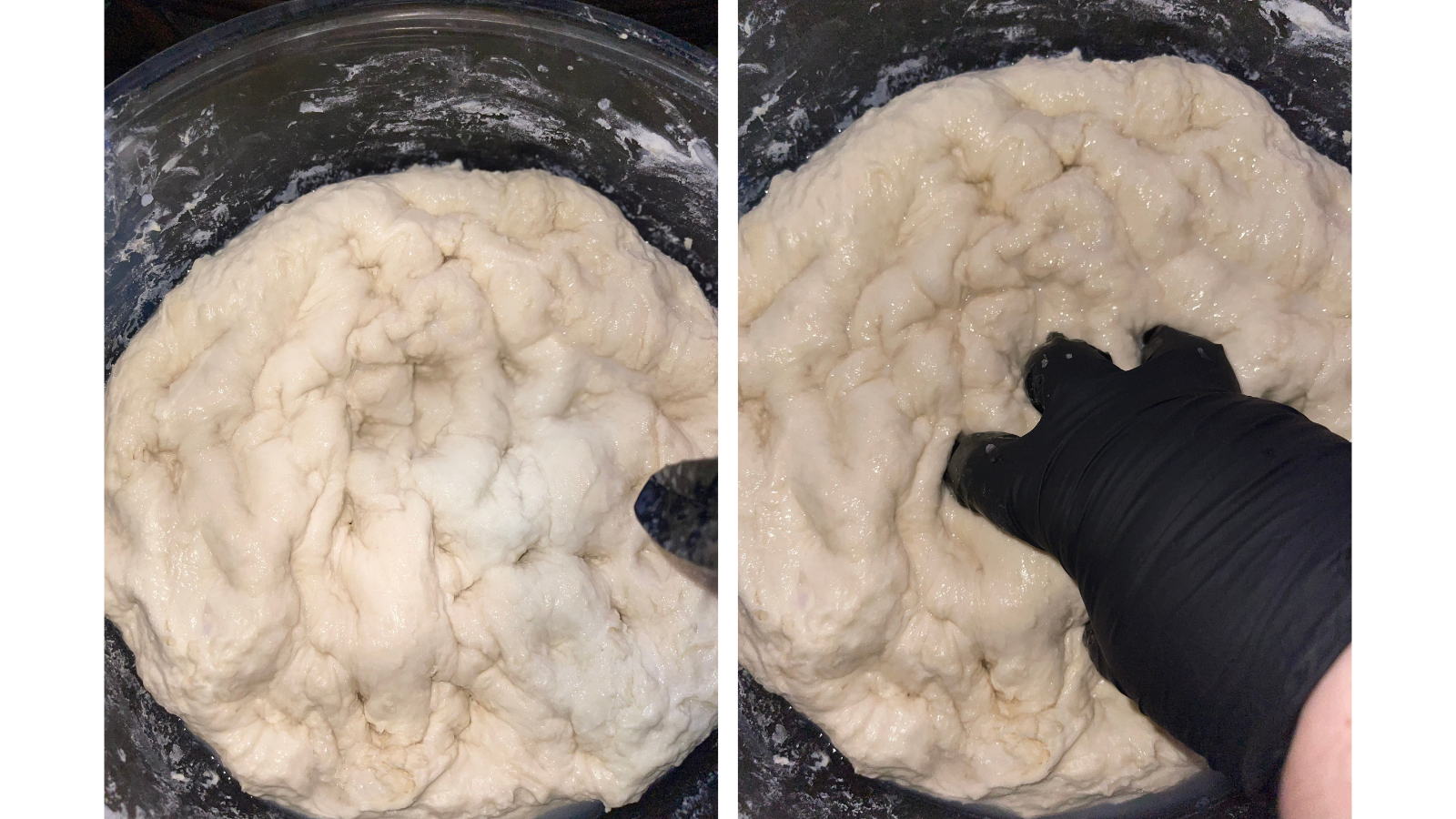
Salt being added to champagne sourdough dough by hand after fermentolyse, showing dough texture before stretch and folds
A

6. Strengthen the Dough (Stretch & Folds)

Perform 3–4 sets of stretch and folds, spaced 30 minutes apart.

With each set, the dough should feel progressively smoother, stronger, and more elastic. By the final fold, it should hold its shape between folds and feel cohesive rather than slack.

A

7. Add the Raisins (Gradually)

Once the dough has clearly developed strength, begin adding the raisins.

  • Fold in half of the drained raisins during the second stretch and fold
  • Add the remaining raisins during the third stretch and fold

Adding inclusions gradually prevents the gluten from tearing and helps distribute the raisins evenly without deflating the dough.

Raisins being folded into champagne sourdough dough during the third stretch and fold to preserve gluten strength and ensure even distribution
A

8. Bulk Fermentation

After the final stretch and fold, let the dough continue bulk fermenting. Bulk fermentation usually takes 3.5–5+ hours total from the start of mixing, depending on your starter strength, dough temperature, and room temperature.

Instead of watching the clock, focus on how the dough looks and feels.

Signs Bulk Fermentation Is Complete

Your dough is ready to move on when it shows most of the following:

  • Noticeable but not doubled volume increase (about 30–50%)
  • A slightly domed surface with a relaxed, aerated feel
  • Dough feels lighter and pillowy, not dense or tight
  • Small bubbles visible along the sides or bottom of the dough
  • When gently shaken, the dough has a soft, subtle jiggle

If the dough feels tight, flat, or resistant, it needs more time. If it feels overly loose or fragile, bulk has gone too far.

A

9. What to Do Next: Same-Day vs Overnight Cold Proofing

Once bulk fermentation is complete, you have two good paths forward depending on timing, flavor, and digestion.

Option 1: Same-Day Bake (Faster, Lighter Flavor)

  • Pre-shape the dough
  • Rest 20 minutes
  • Final shape
  • Proof on the counter for 60–90 minutes, 2 hours max
  • Bake once the dough slowly springs back when gently pressed

This option keeps the flavor bright and subtle, with a softer champagne note on day one.

Option 2: Overnight Cold Proof (Deeper Flavor + Better Digestion)

For deeper flavor development and added gut-friendly benefits, refrigerate the dough after shaping.

  • Pre-shape and final shape
  • Place in a floured banneton
  • Cover and refrigerate 8–16 hours
  • Bake straight from the fridge the next day

Cold fermentation slows yeast activity while allowing bacteria to continue working. This enhances flavor complexity, improves digestibility, and often results in better structure and scoring.

Which Option I Prefer

For this champagne bread, I recommend shaping and then the overnight cold proof. The extra time allows the champagne aroma to mellow and integrate, while the raisins and vanilla become more rounded and balanced.

Both methods work — choose based on your schedule and preference.

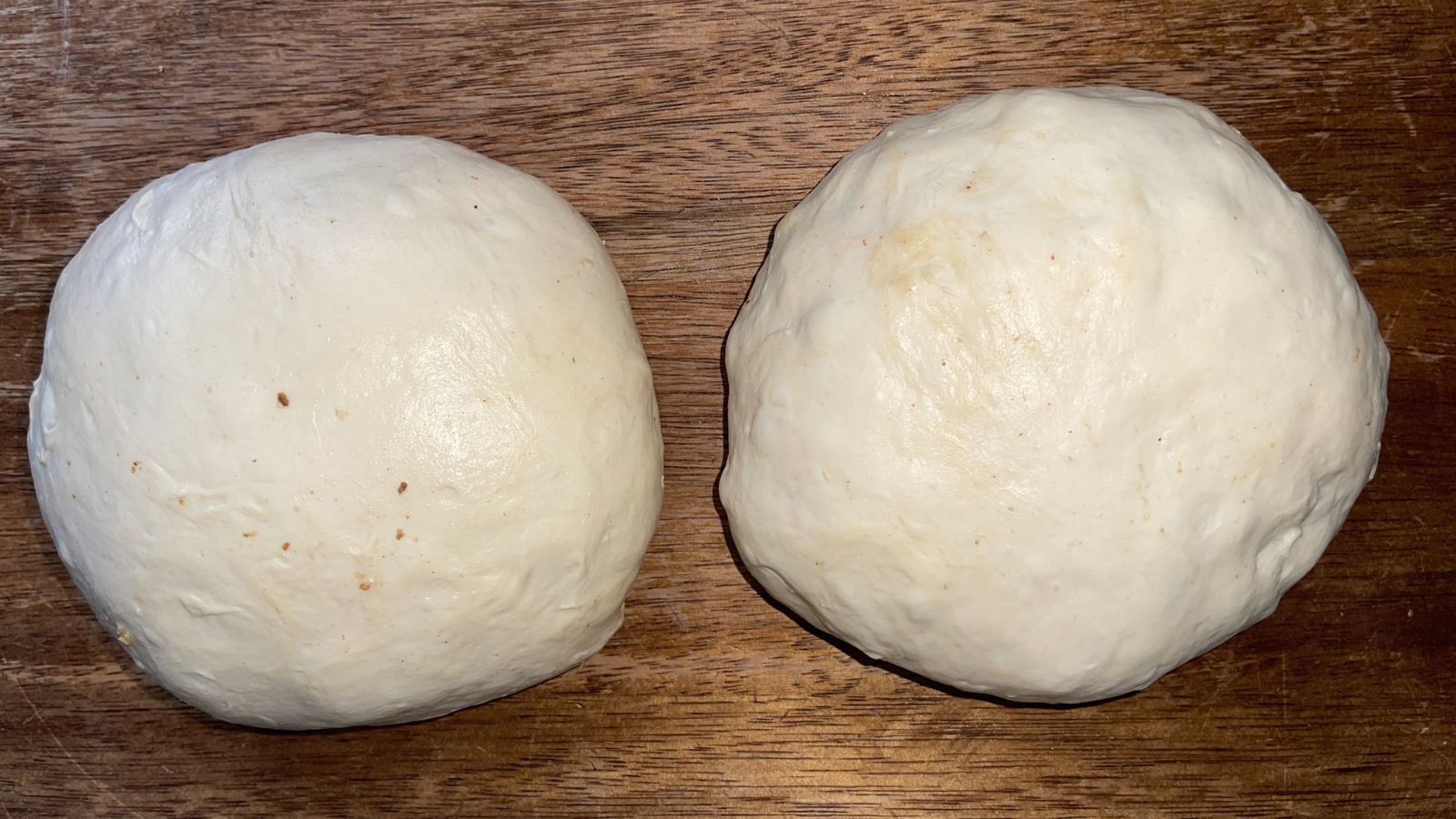
Pre-shaped champagne raisin sourdough dough resting on a wooden surface after bulk fermentation, showing smooth surface and gentle structure before final shaping.
Shaped champagne sourdough bread with raisins resting in a floured banneton, fully shaped and ready for proofing and baking.
A

10. Bake

Preheat a Dutch oven to 450°F (232°C).

Carefully transfer the dough to parchment, score, and load into the hot Dutch oven.

  • Bake 30 minutes covered
  • Remove lid, then bake 15-18 minutes uncovered until deeply golden

The loaf is done when the internal temperature reaches 205–206°F (96–97°C).

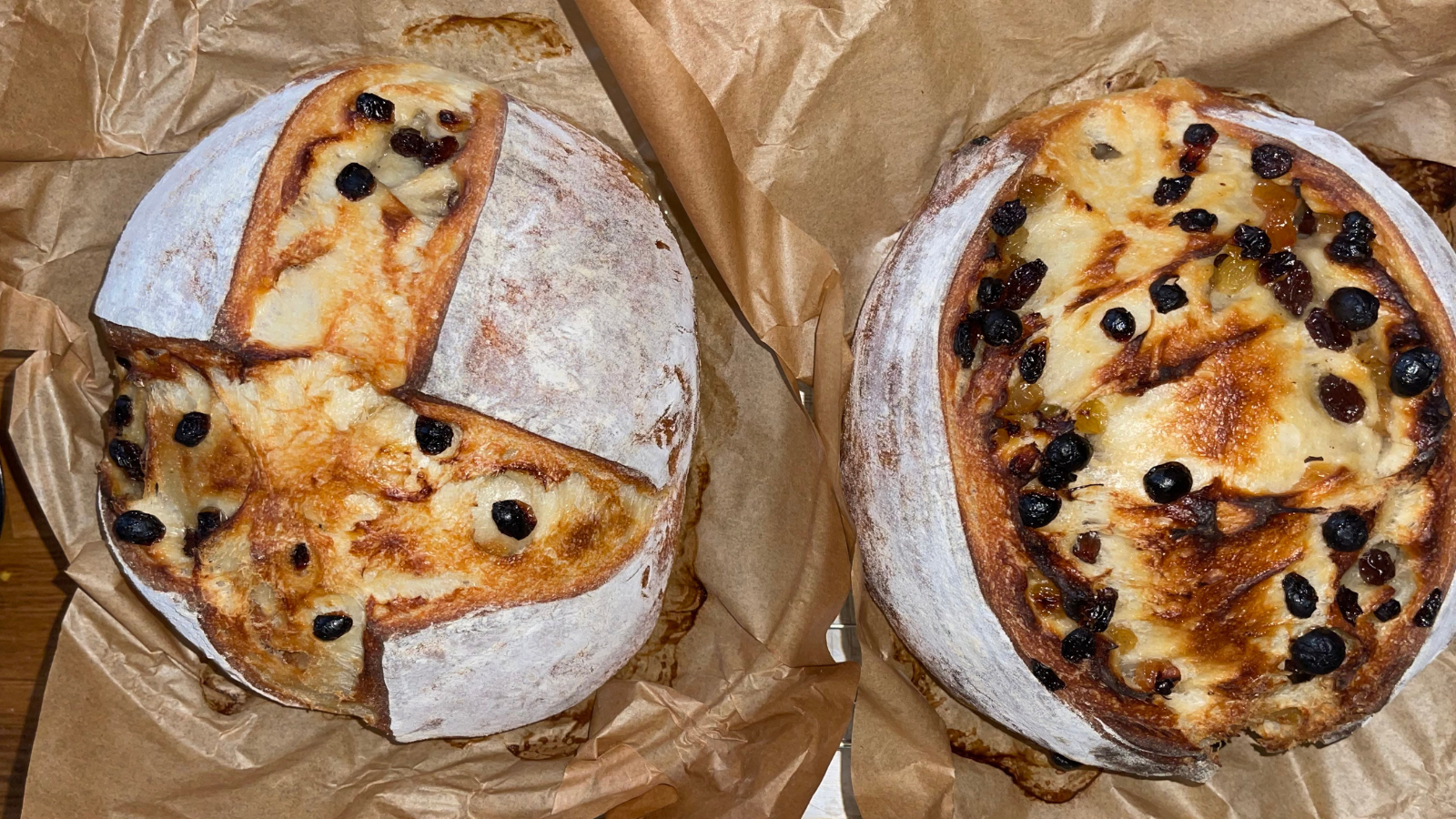
Two freshly baked sourdough champagne bread loaves with raisins, rustic scoring and golden crust on parchment paper
A

11. Cool

Transfer the bread to a wire rack and let cool for at least 60+ minutes before slicing. This allows the crumb to fully set and the flavors to stabilize. I was in a rush and ended up cutting it half hour in. Still great but a little longer would have been better.

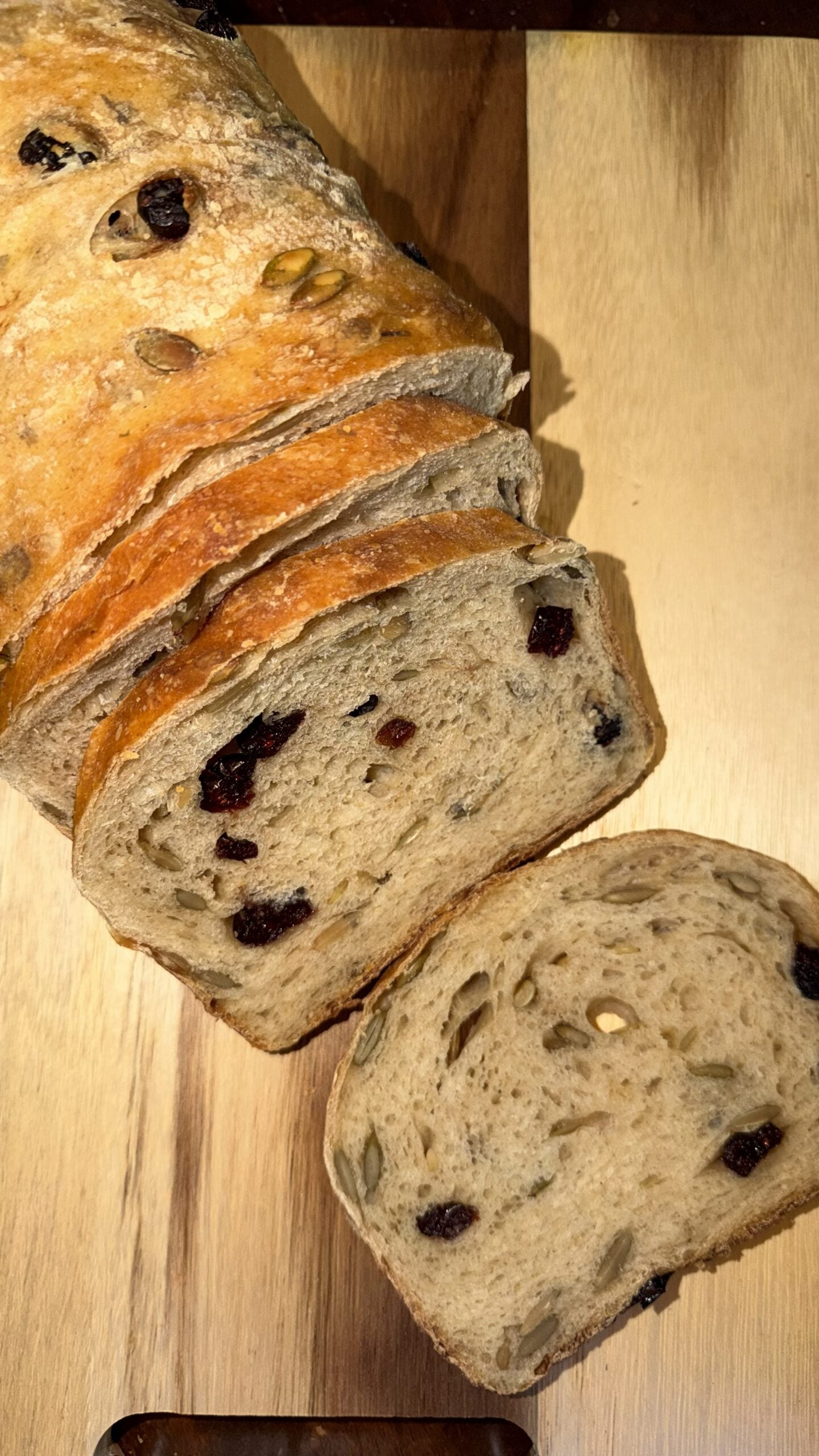
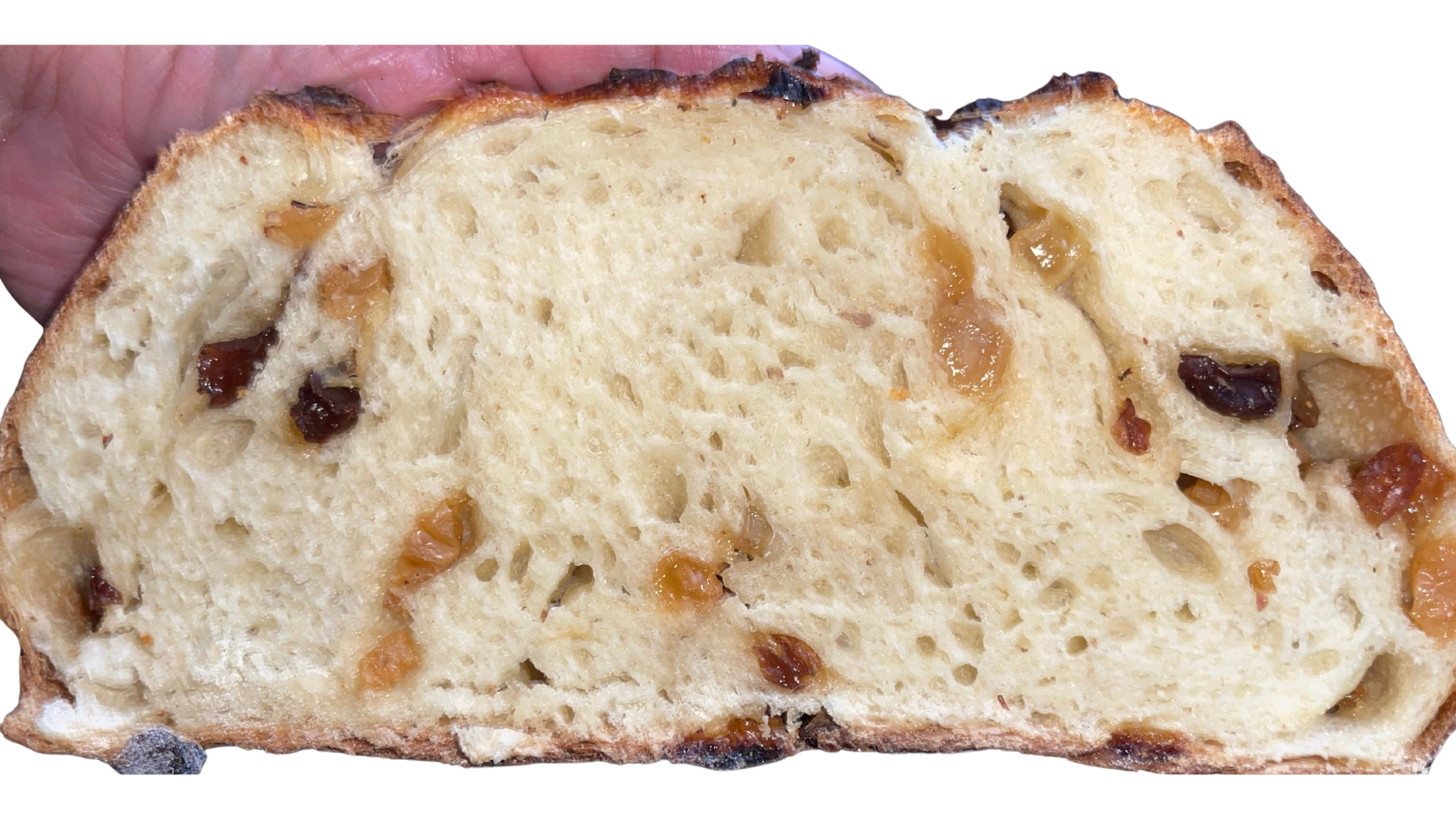
Close-up of the crumb of champagne sourdough bread showing a soft, airy interior with golden and dark raisins baked throughout

Why Sourdough Champagne Bread Is Worth Making

If you love sourdough and enjoy experimenting with flavor, this champagne bread is absolutely worth making. It’s perfect for New Year’s, birthdays, anniversaries, holidays, or any moment that calls for something a little special. It feels celebratory without turning into dessert.

I started with raisins because I wasn’t sure what would complement champagne, but I knew they’d work. In my cinnamon raisin bread, I soak raisins in Grand Marnier, and that hint of alcohol always pulls out deeper flavor. Same idea here. I baked two loaves, shared one with a friend, and it disappeared fast.

If you make this, slice it warm, add good butter, and don’t overthink it.
That’s where this bread shines.

👉 If you try this champagne sourdough, leave a comment, tag me, or save the recipe for your next celebration — I’d love to see how you make it your own.

Some loaves are made to feed people. This one is made to be remembered.

Sourdough Champagne Bread with Golden Raisins

This sourdough champagne bread is made with degassed Brut sparkling wine, vanilla, and champagne-soaked golden raisins. The champagne flavor is most pronounced when freshly baked and mellows beautifully by the next day.
Course: Bread, Sourdough, Sourdough Artisan Loaf
Cuisine: American
Keyword: Sourdough Champagne Bread
Servings: 1 Loaf
Author: Serena Carcasole

Ingredients

Levain

  • 5 Starter
  • 50 Water
  • 50 Flour

Dough

  • 450 g bread flour
  • 50 g all purpose flour
  • 265 g degassed champagne or sparkling wine
  • 65 g water
  • 100 g active sourdough starter (100% hydration)
  • 10 g fine sea salt

Raisin Inclusion

  • 100 g golden raisins
  • Champagne for soaking (discard soaking liquid)
  • 1/2 tsp vanilla powder or vanilla paste

Instructions

Step 1. Mix the Levain

  • You’ll need 100 g active levain (100% hydration) at peak for this recipe.
    5 g mature sourdough starter
    50 g flour (bread flour or all-purpose)
    50 g water
  • Mix until smooth, cover loosely, and let ferment overnight at room temperature (around 70–75°F / 21–24°C).
    The levain is ready when it has doubled or slightly domed, smells lightly sweet and fermented, and shows bubbles throughout.

Degas the Champagne

  • Pour the champagne into a bowl or measuring jug. Whisk gently for 2–3 minutes to release excess carbonation, then let it sit briefly until most of the bubbles have settled. This step stabilizes the liquid so it behaves like water in the dough while keeping the aroma and acidity of the champagne.

Soak the Raisins

  • In a small bowl, combine the raisins with enough champagne to cover. Add the vanilla powder or vanilla paste and stir gently to coat.
    Set aside. The raisins will be added later during the stretch and folds, once the dough has developed strength.
    Let the raisins soak for 20 minutes, then drain thoroughly and discard the soaking liquid.Pat the raisins dry with a paper towel to remove any excess moisture.

Mix (Fermentolyse)

  • In a large bowl, combine the flour, degassed champagne, water, and sourdough starter. Mix until no dry flour remains and the dough looks shaggy and fully hydrated.
    Cover and let rest for 30 minutes.This fermentolyse allows the flour to hydrate fully and jump-starts fermentation without salt, helping the dough develop extensibility and flavor early on.

Add Salt

  • Sprinkle the salt evenly over the dough. Using wet hands, gently pinch and fold until the salt is fully incorporated. The dough will feel slightly tighter at this stage.
    Cover and rest for 30 minutes to allow the gluten to relax before strengthening.

Strengthen the Dough (Stretch & Folds)

  • Perform 3–4 sets of stretch and folds, spaced 30 minutes apart.
    With each set, the dough should feel progressively smoother, stronger, and more elastic. By the final fold, it should hold its shape between folds and feel cohesive rather than slack.

Add the Raisins (Gradually)

  • Once the dough has clearly developed strength, begin adding the raisins.
    Adding inclusions gradually prevents the gluten from tearing and helps distribute the raisins evenly without deflating the dough.
    Fold in half of the drained raisins during the second stretch and fold
    Add the remaining raisins during the third stretch and fold

Bulk Fermentation

  • After the final stretch and fold, let the dough continue bulk fermenting. Bulk fermentation usually takes 3.5–5+ hours total from the start of mixing, depending on your starter strength, dough temperature, and room temperature.

Overnight Cold Proofing

  • For deeper flavor development and added gut-friendly benefits, refrigerate the dough after shaping.
    Pre-shape and final shape
    Place in a floured banneton
    Cover and refrigerate 8–16 hours
    Bake straight from the fridge the next day

FAQs

Can I really use champagne instead of water in sourdough bread?

Yes. In this recipe, degassed champagne replaces the water entirely. Once the carbonation is removed, champagne behaves like a slightly acidic liquid, similar to how beer is sometimes used in bread dough. It contributes aroma and subtle flavor without preventing proper fermentation when handled correctly.

Do I have to degas the champagne first?

Yes — this step matters. Champagne is highly carbonated, and using it straight from the bottle can make the dough feel tight and unpredictable. Degassing removes excess CO₂ while keeping the acidity and aroma, allowing the dough to ferment and develop gluten normally.

Does champagne bread taste alcoholic?

No. The bread does not taste alcoholic. When freshly baked, it has a noticeable champagne aroma and flavor, but not alcohol heat. That flavor softens by the next day into a gently sweet, well-balanced loaf.

Is there alcohol left in the finished bread?

Sourdough fermentation naturally produces small amounts of alcohol, and most of it escapes during fermentation and baking. This loaf bakes for about 45 minutes and reaches an internal temperature over 205°F, which further reduces alcohol. However, trace amounts may remain. If you are pregnant, avoiding alcohol, taking medication, or serving children, use your discretion and consult a healthcare professional if needed.

Can I make this bread without raisins?

Yes. The raisins are optional. Without them, the loaf will be drier, more wine-forward, and closer to a savory country loaf with champagne aroma rather than a lightly sweet bread.

Why do you recommend golden raisins instead of dark raisins?

Golden raisins are softer, lighter, and slightly more floral, which pairs better with champagne’s delicate notes. Dark raisins work, but they create a richer, heavier flavor that can overpower the champagne aroma.

Why not use liquid vanilla extract?

Liquid vanilla extract adds both extra moisture and alcohol, which can subtly affect hydration and fermentation in sourdough. Vanilla powder or alcohol-free vanilla paste provides warmth and aroma without changing the dough’s structure.

Does this dough feel different from regular sourdough?

Yes. This dough is slightly stiffer and less stretchy than a classic country loaf. Champagne’s acidity and composition affect extensibility, especially when the dough is shaped cold. This is normal and expected.

Can I shape the dough straight from the fridge?

Yes. This recipe works well when shaped cold, then proofed on the counter before baking. Cold dough will feel tighter and seams may be harder to seal, but oven spring and steam in the Dutch oven help everything set properly.

Should I bake this the same day or cold proof overnight?

Both options work.

  • Same-day bake: Brighter, lighter flavor with more pronounced champagne notes.
  • Overnight cold proof: Deeper, more rounded flavor, better digestibility, and improved structure.

Choose based on your schedule and flavor preference.

Is this recipe suitable for beginners?

This bread is best for bakers who already have some sourdough experience. It requires reading the dough rather than following strict timelines. Beginners may want to start with a basic country loaf before attempting this recipe.

Can I use Prosecco or Cava instead of Champagne?

Yes. Any dry (Brut) sparkling wine works well. Avoid sweet or flavored sparkling wines. Expensive champagne is not necessary — dry and crisp is what matters.

Why is the champagne flavor stronger on day one?

Aromatic compounds are most noticeable when the bread is freshly baked. As the loaf rests, those aromas mellow and integrate into the crumb, which is normal and expected.

The Official Honeycloud Sourdough Sandwich Bread

The Official Honeycloud Sourdough Sandwich Bread

Honeycloud Sourdough Sandwich Bread is what happens when Japanese milk bread and French brioche have a baby. Soft, golden, and cloud-light with a whisper of honey and butter, this loaf is your elevated everyday sandwich bread.

It slices clean, stays soft for days, and makes everything from grilled cheese to peanut butter sandwiches taste luxurious. This is my softest sourdough loaf yet — naturally leavened, lightly enriched, and boosted with tangzhong for that signature pillowy crumb.

What Makes Honeycloud Sourdough Sandwich Bread Different From Brioche

Brioche is French, famously indulgent, and loaded with butter and eggs.

This Honeycloud sourdough loaf borrows brioche’s tenderness and aroma but keeps it lighter, easier to digest, and far more suitable for everyday eating.

  • Classic brioche can contain nearly 50 percent butter by weight.
  • Honeycloud uses just enough butter to make it silky, but not so much that it becomes dessert-like.

It sits beautifully between Japanese milk bread and light French brioche, especially when fermented overnight.

For my ultra-rich version, see: Classic Sourdough Brioche Loaf (coming soon)

Learn more about milk vs. water in bread.

Why Honeycloud Sourdough Sandwich Bread Works

Honeycloud is built on four pillars:

Tangzhong
A cooked flour-and-milk paste that allows the dough to hold more moisture. It’s the secret behind the soft, springy crumb and long shelf life.

Sweet Stiff Starter (SSS)
A low-hydration, lightly sweet levain that gives the dough gentle strength, mild flavor, and predictable fermentation.

Enriched Dough
Milk, honey, egg, and a touch of butter create a soft, custard-like interior without heaviness.

Overnight Fermentation
Deepens flavor, improves digestibility, and lets you bake with a fresh starter and a well-developed dough the next day.

Honeycloud isn’t brioche. It’s lighter, cleaner, and more cloud-like. Think Japanese milk bread meets Italian comfort with sourdough soul.

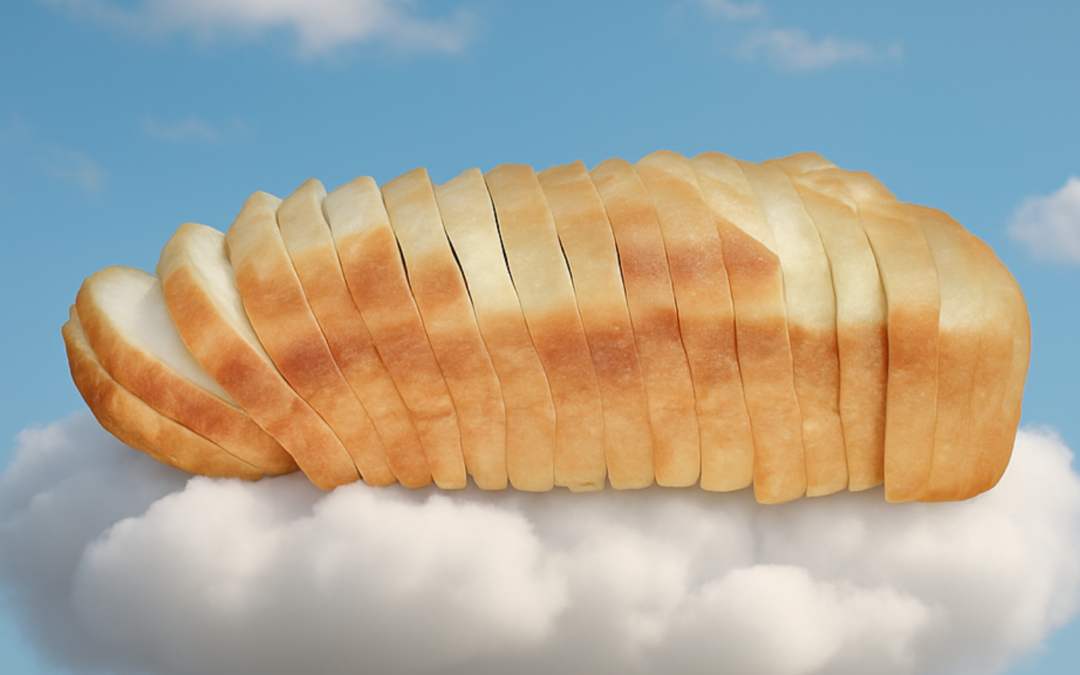
A close-up photo of a fully sliced Honeycloud sourdough sandwich loaf, showcasing its soft golden crust and pillowy, cloud-like crumb texture.

What Is Tangzhong

(And Why It Makes This Bread So Soft)

Tangzhong is a simple cooked mixture of flour and milk. Heating the starches transforms them into a gel that allows the dough to absorb and retain more moisture. This is the key to Honeycloud’s ultra-soft, cloud-like texture and impressive shelf life.

You can make tangzhong in two ways:

Stovetop method
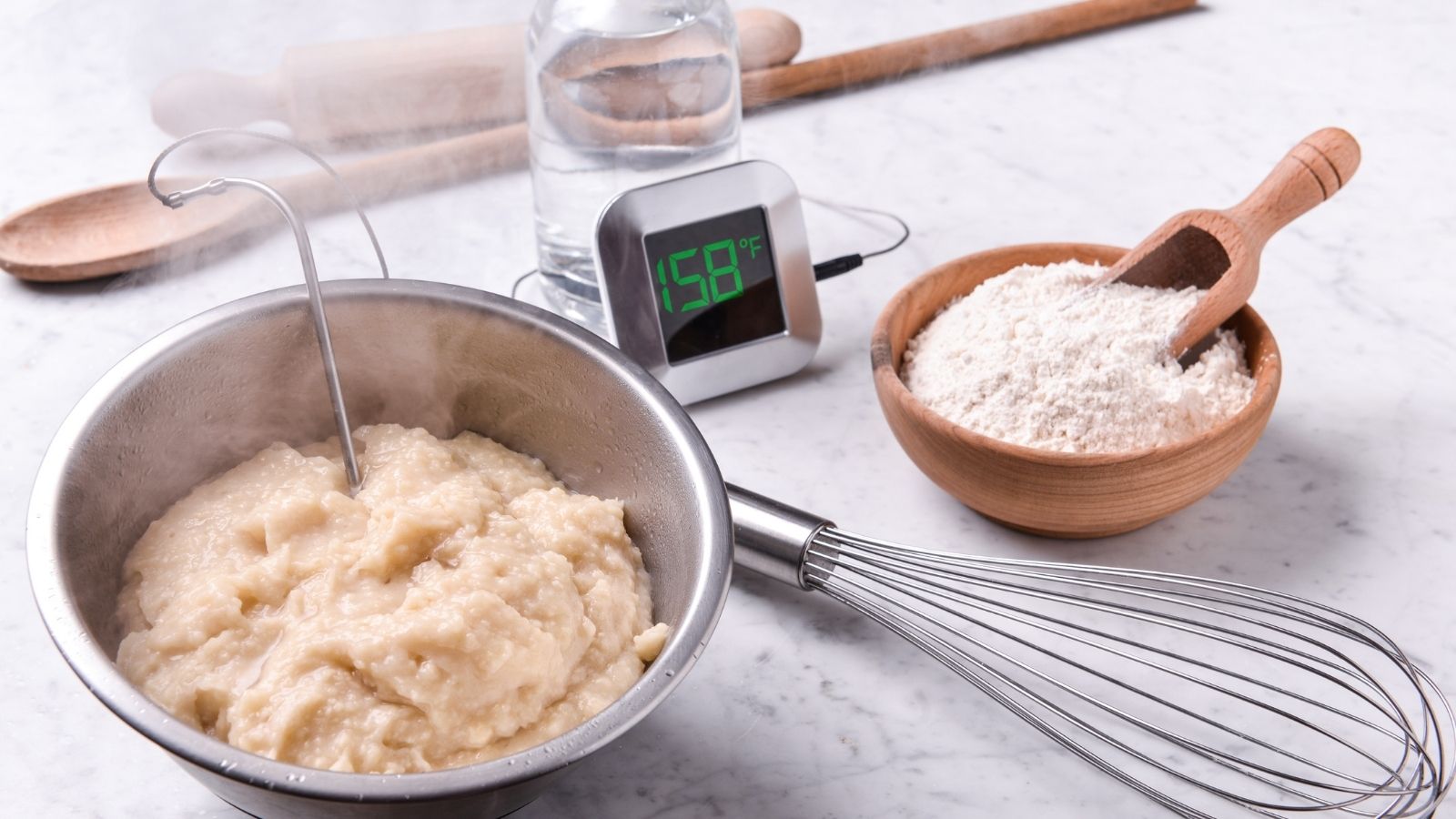
Whisk flour and milk in a small saucepan, then cook over medium-low heat, stirring constantly, until thickened to a glossy, pudding-like paste (about 150–158°F).

Microwave method (my favorite)
In a microwave-safe bowl or mug, whisk the flour and milk together, then heat in 30-second intervals. Stir well between each burst until it reaches 150–158°F and becomes a thick, smooth paste.

Once cooked, cover the tangzhong to prevent a skin and let it cool to room temperature before mixing your dough.

Here’s what tangzhong does for your loaf:

Makes the crumb unbelievably soft
The gelatinized starch holds onto moisture, creating Honeycloud’s signature pillowy texture.

Keeps the bread fresh for days
It slows staling and allows the loaf to stay tender much longer than standard sourdough.

Improves structure without adding more fat
Tangzhong strengthens the dough naturally, so you get softness without needing extra butter.

Think of tangzhong as your “cheat code” for bakery-level sandwich bread. Once you use it, you’ll wonder how you ever baked enriched loaves without it.

A bowl of freshly cooked tangzhong paste at 158°F, with a thermometer, whisk, flour bowl, and baking tools in the background, demonstrating the gelatinized mixture used to create extra-soft bread.

Sweet Stiff Starter vs Liquid Levain

(Choose the one that fits your routine)

This Honeycloud Loaf is best with a Sweet Stiff Starter. This is a low-hydration, lightly sweet levain that creates a mild, clean flavor with beautiful fermentation strength. It produces:

✨ A tighter, more structured crumb
✨ Ultra-soft sandwich loaves
✨ Stronger gluten development
✨ A dough that is easier to handle (less stickiness)
✨ Less sourness overall
✨ Consistent proofing

If you prefer your sandwich bread mild, sweet stiff starter is the gold standard.

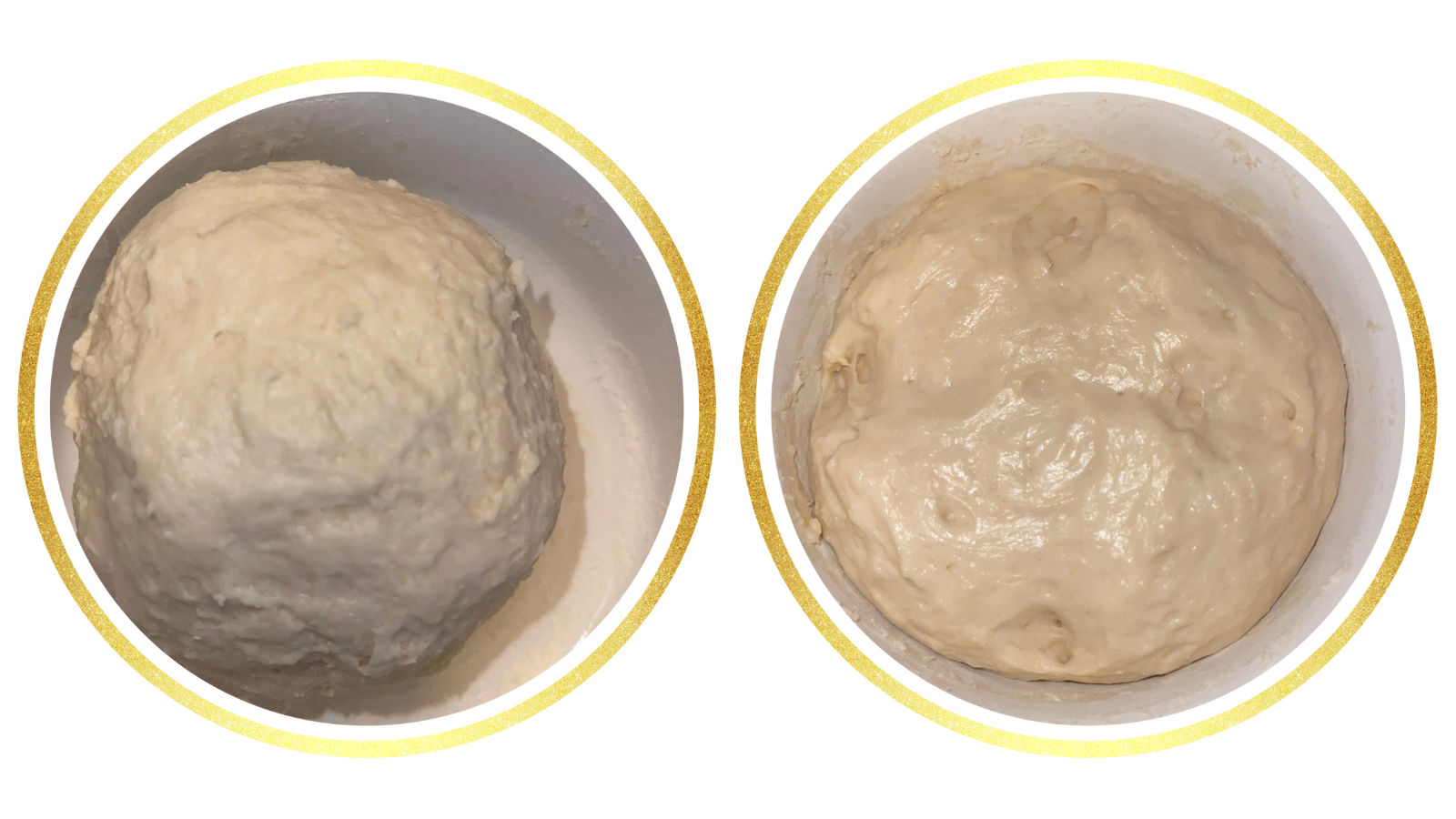
Sweet stiff starter shown at two stages: freshly mixed stiff dough on the left and fully fermented, domed sweet stiff starter ready to use on the right.Left: freshly mixed sweet stiff starter before fermentation.
Right: fully fermented sweet stiff starter, domed and ready to use in Honeycloud dough.

Liquid Levain Option

If you maintain a 100 percent hydration starter, you can absolutely make Honeycloud using a liquid levain.

If using liquid levain:
✨ Expect slightly faster fermentation
✨ The dough may feel softer and slightly stickier
✨ Flavor will be a touch tangier 
✨ A stickier dough: You may need to reduce the milk by 10 to 20 grams to compensate for the extra water in the levain

Both work beautifully — choose what fits your baking rhythm.

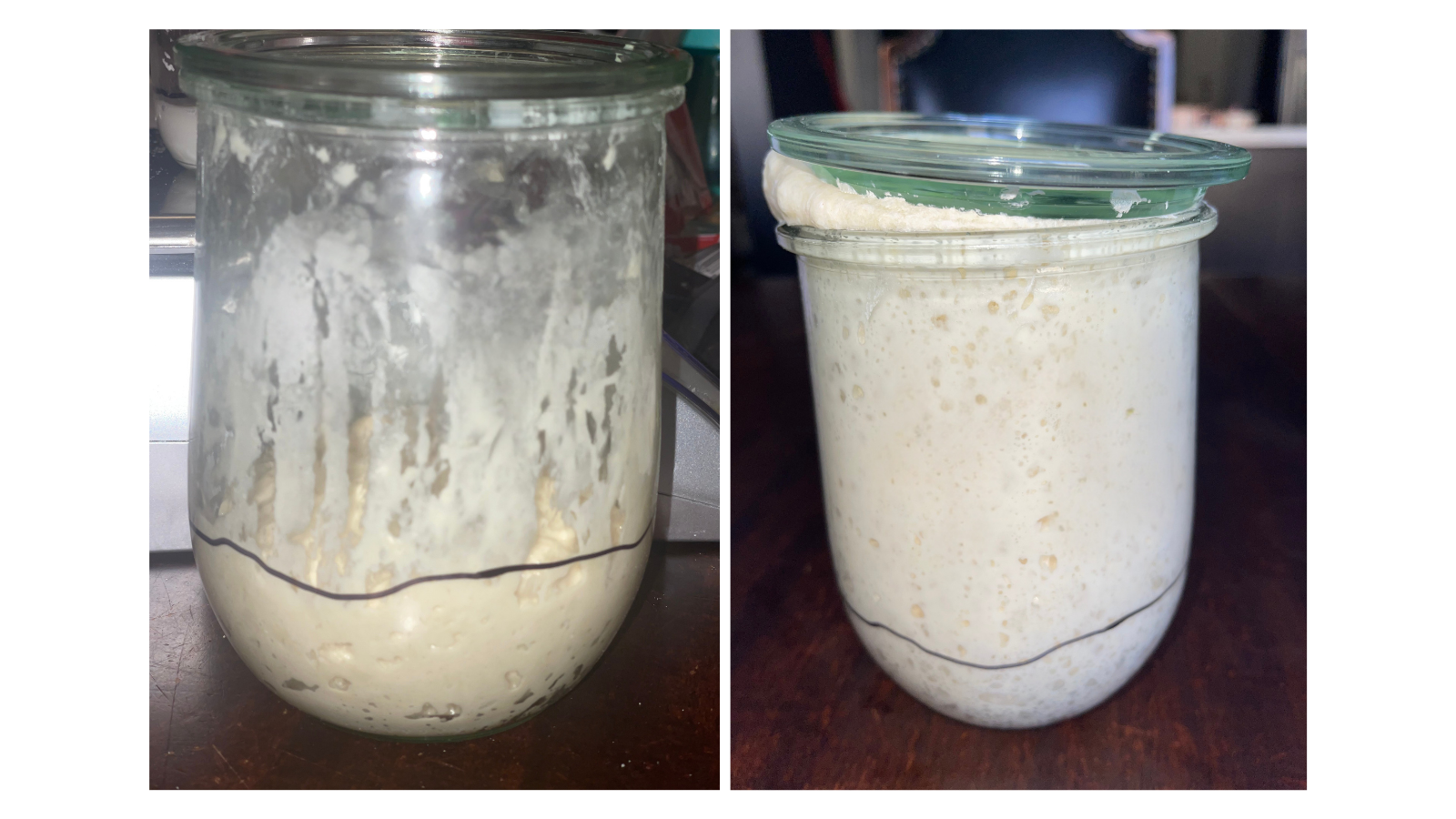
Side-by-side jars of a 100% hydration liquid sourdough starter. The left jar shows a freshly mixed starter with minimal rise, while the right jar shows a fully active, bubbly starter that has risen to the lid and is ready to use. Left: A freshly mixed 100% hydration liquid sourdough starter at feeding.
Right: A fully active, bubbly, and overflowing starter at peak fermentation — happy, strong, and ready to bake with.

Affiliate Disclosure

This post contains affiliate links. As an Amazon Associate, I earn from qualifying purchases. I also partner with other trusted brands and may earn a small commission if you make a purchase through these links, at no additional cost to you. I only recommend tools and products I personally use, love, and trust in my sourdough kitchen. These small commissions help support Sourdoughpedia and allow me to continue creating free recipes, guides, and resources for you. Thank you for supporting my work.

Tools You’ll Need

Here’s what I use when baking Honeycloud:

Honeycloud Sourdough Sandwich Bread Ingredients

Yield: 1 loaf (about 950 g dough)
Pan: 9×5 inch

Tangzhong

  • 15 g bread flour
  • 75 g whole milk

Sweet Stiff Starter

  • All of the SSS build (75 g)

Main Dough

  • 260 g whole milk, lukewarm (about 95–100°F)
  • 50 g egg (1 large egg)
  • 45 g honey
  • Tangzhong (all from above)
  • Sweet stiff starter (all of it)
  • 475 g bread flour
  • 10 g milk powder (optional, but highly recommended for extra softness and flavor)
  • 8 g fine sea salt
  • 30 g unsalted butter, very soft not melted

Step-by-Step Instructions

1: Build Your Sweet Stiff Starter 

For One Loaf of Honeycloud Sourdough Bread
Approx. 75 g total

  • 13 g active sourdough starter
  • 38 g bread flour
  • 19 g water
  • 5 g honey

1. Mix everything into a stiff dough ball. Knead briefly until smooth.

2. Place in a small jar or covered container, score the top with a cross if you like, and ferment:

  • 4–6 hours at around 78–80°F, until domed
    or
  • 1-2 hours at room temperature, then overnight in the fridge (8–12 hours)

3. Use it cold directly in your dough.

2. Make the Tangzhong

In a small microwave-safe bowl, mug, or saucepan, whisk together:

  • 15 g bread flour
  • 75 g whole milk

Why this amount works:
This rsoft sourdough sandwich bread recipe uses the classic 1:5 tangzhong ratio (flour to liquid). While it may look generous on paper, it represents just 3% of the total flour — the ideal amount for ultra-soft, stable sandwich bread.

You have two options to prepare the tangzhong:

Microwave method (fast and easy):
Heat flour + milk in 30-second bursts, whisking each time, until thick, glossy, and 150–158°F.

Stovetop method:
Add the flour and milk to a small saucepan, whisk until smooth, then cook over medium-low heat, whisking constantly, until thickened to a pudding-like paste (around 150–158°F).

Once thickened, cover the surface to prevent a skin, and let cool to room temperature before adding it to the dough.

3. Mix the Dough

In the bowl of your stand mixer, add:

  • 260 g milk
  • 50 g egg
  • 45 g honey
  • Cooled tangzhong
  • All of your sweet stiff starter (tear it into smaller pieces)

Mix gently to start breaking up the SSS.

Add:

  • 475 g bread flour
  • 10 g milk powder

Mix on low speed just until there are no dry patches of flour. The dough will look rough and shaggy.
Cover the bowl and let it rest for 20–30 minutes (this is your fermentolyse).

4. Add Salt and Develop Gluten

Sprinkle 8 g salt over the dough and about 5 g of water or milk.

Mix on medium-low speed for about 6–8 minutes, until the dough begins to smooth out and cling to the hook. It should feel stronger and more elastic, but still soft.

5. Add the Butter

With the mixer on low, add 30 g very soft butter in 2–3 additions, allowing each portion to fully incorporate before adding more.

Once all the butter is in, increase to medium speed and knead another 3–5 minutes, or until:

  • The dough feels silky and supple
  • It pulls mostly cleanly from the sides of the bowl
  • You can stretch a piece gently and it resists tearing (you don’t need an extreme panettone-style windowpane here, just good elasticity)

Note on hydration:
Honeycloud dough should feel soft and slightly tacky. This is normal and correct.

6. Bulk Fermentation

Transfer the dough to a lightly oiled bowl or container.

Let it ferment at room temperature for about 6–8 hours, or until:

  • The dough has risen noticeably (around 60–80 percent)
  • The surface looks smoother and slightly domed
  • It feels airy and jiggly when you gently shake the bowl

You don’t want it doubled or on the verge of collapsing, but it should feel light and well-fermented.

Note: BF may be shorter if your kitchen is warm or your starter is very active. Use visual cues, not just time.

7. Shape and Cold Proof

Lightly oil your counter or chop board and gently turn the dough out (you might not need to since the oil from the bowl should be enough on the dough).

Press it into a rough rectangle, pressing out any very large gas bubbles but not smashing it flat. I use a rolling pin.

Roll the dough up into a snug log, tucking the sides and ends in as you go to create a smooth surface and good surface tension.

Place seam-side down into pan. Cover the pan well and place it in the refrigerator overnight for a cold proof. This helps develop flavor and strength in the dough.

8. Final Rise (After Cold Proof)

The next day, take the pan out of the fridge and let the dough finish proofing at room temperature in the pan on the counter.

Bake when the dough reaches the rim of the pan or rises about ½ inch above it at the center, with a soft dome and a slow-springing poke.

This usually takes about 3–4 hours depending on your kitchen temperature and starter strength.

9. Bake Your Honeycloud Sourdough Loaf

Preheat your oven to 375°F (190°C) for at least 25–30 minutes.

Optional: Brush the top of the loaf with a little beaten egg or milk for shine.

Bake in two stages for the best rise, color, and softness:

1. Bake at 375°F for 20 minutes
This sets the structure and gives the loaf a strong, even rise.

2. Reduce heat to 325°F and bake for another 15–20 minutes
This prevents over-browning while allowing the inside to finish baking gently.

If the top is browning too quickly at any point, tent loosely with foil.

Your loaf is done when:

  • The top is a deep golden brown
  • The internal temperature is 195–200°F 

Note: For enriched doughs, 190–200°F is considered fully baked.
My preferred target is 200°F, which gives the loaf a cloud-soft interior without risk of gumminess.

10. Finish the Crust

For an extra-soft, tender sandwich loaf:

  • Brush the hot loaf with melted butter, or
  • Lightly mist the top with water, or
  • Cover loosely with a clean kitchen towel or tent with foil for 5–10 minutes as it cools.

This keeps the crust supple and enhances that signature Honeycloud softness.

Remove from the pan and cool on a wire rack for 1–2 hours before slicing.

I know it’s hard to wait, but slicing too early will compress that beautiful cloud crumb.

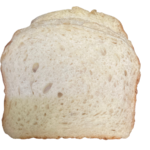
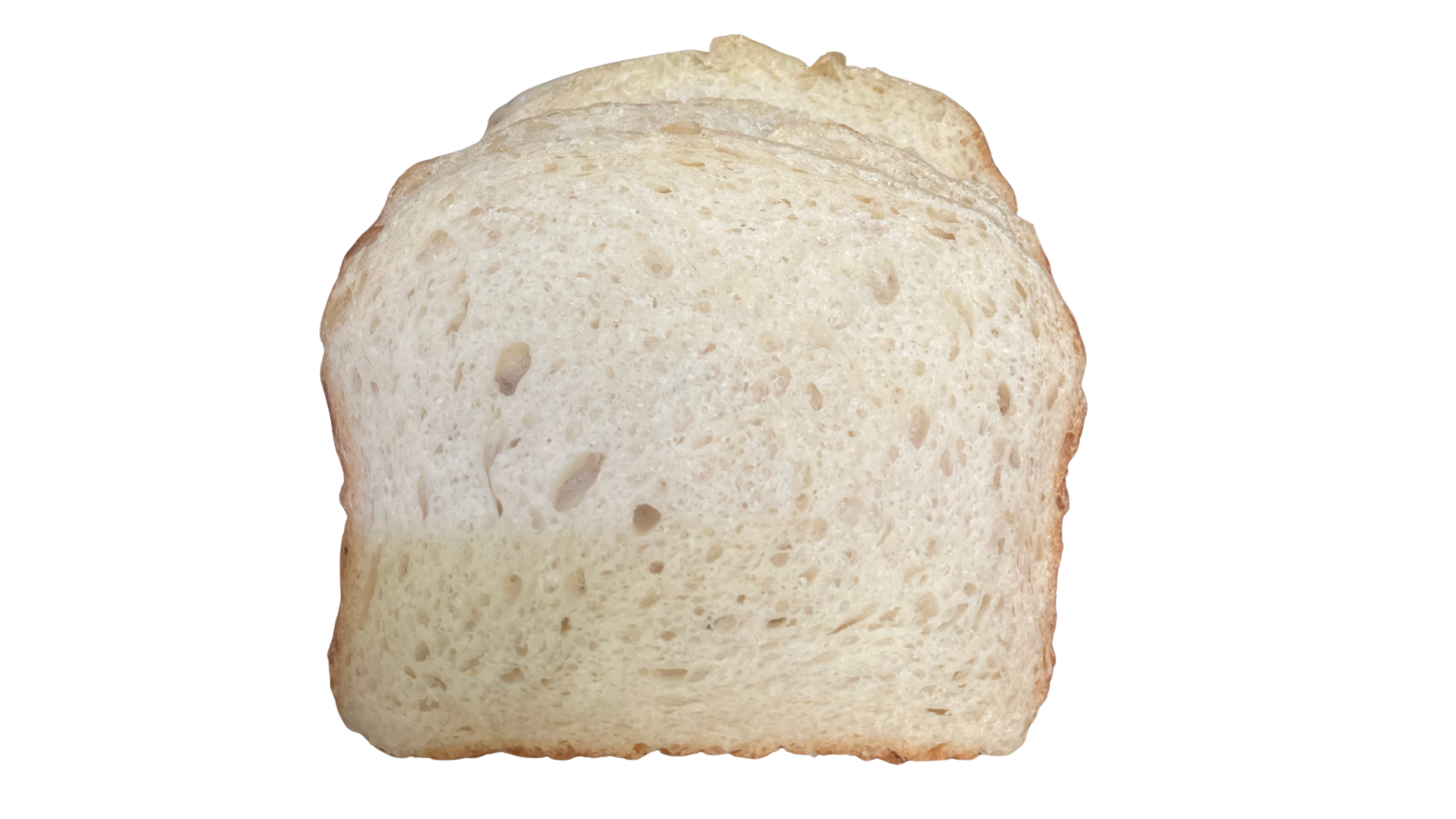
A close-up of a single slice of Honeycloud sourdough sandwich bread on a white background, highlighting its tender, cloud-like crumb and thin golden crust.

Pan Size Guide

For best results, match your dough weight to your pan size:

  • 9×5 inch loaf pan (this recipe): about 950 g dough
  • 8.5×4.5 inch loaf pan: 750–800 g max dough
  • 9×4×4 Pullman pan (no lid): 900–950 g dough
  • 9×4×4 Pullman pan (with lid): 1,050–1,100 g dough
  • Large 12×5 inch loaf pan: 1,350–1,450 g dough
  • Mini loaf pans: 200–250 g dough per pan

Sample Baking Schedule

Here’s a realistic schedule:

Day 1 – Evening

👉 Build your Sweet Stiff Starter
👉 Make the tangzhong (can also do in the morning and let cool before mixing dough)

Day 2 – Morning

👉 Mix the dough
👉 Bulk Ferment at room temperature for 6-8 hours

Day 2 – Evening 

👉 Shape the loaf and place it in the pan
👉 Cover and refrigerate overnight (cold proof)

Day 3 – Morning or Early Afternoon

👉 Bring the pan out and let the loaf finish proofing at room temp for about 3–4 hours
👉 Bake, cool, slice, and enjoy

You can flip this depending on when you like fresh bread (morning vs evening).

Tip: Always bake to visual cues and internal temperature rather than strictly by the clock.

How to Store Honeycloud Sourdough Sandwich Bread

Store Honeycloud in a bread bag or airtight container at room temperature for up to 3–4 days.

For longer storage, slice and freeze. Toast directly from frozen.

This bread makes incredible:
👉 French toast
👉 Grilled cheese
👉 Breakfast sandwiches
👉 Fancy peanut butter and honey sandwiches

It’s basically your “upgrade everything” loaf.

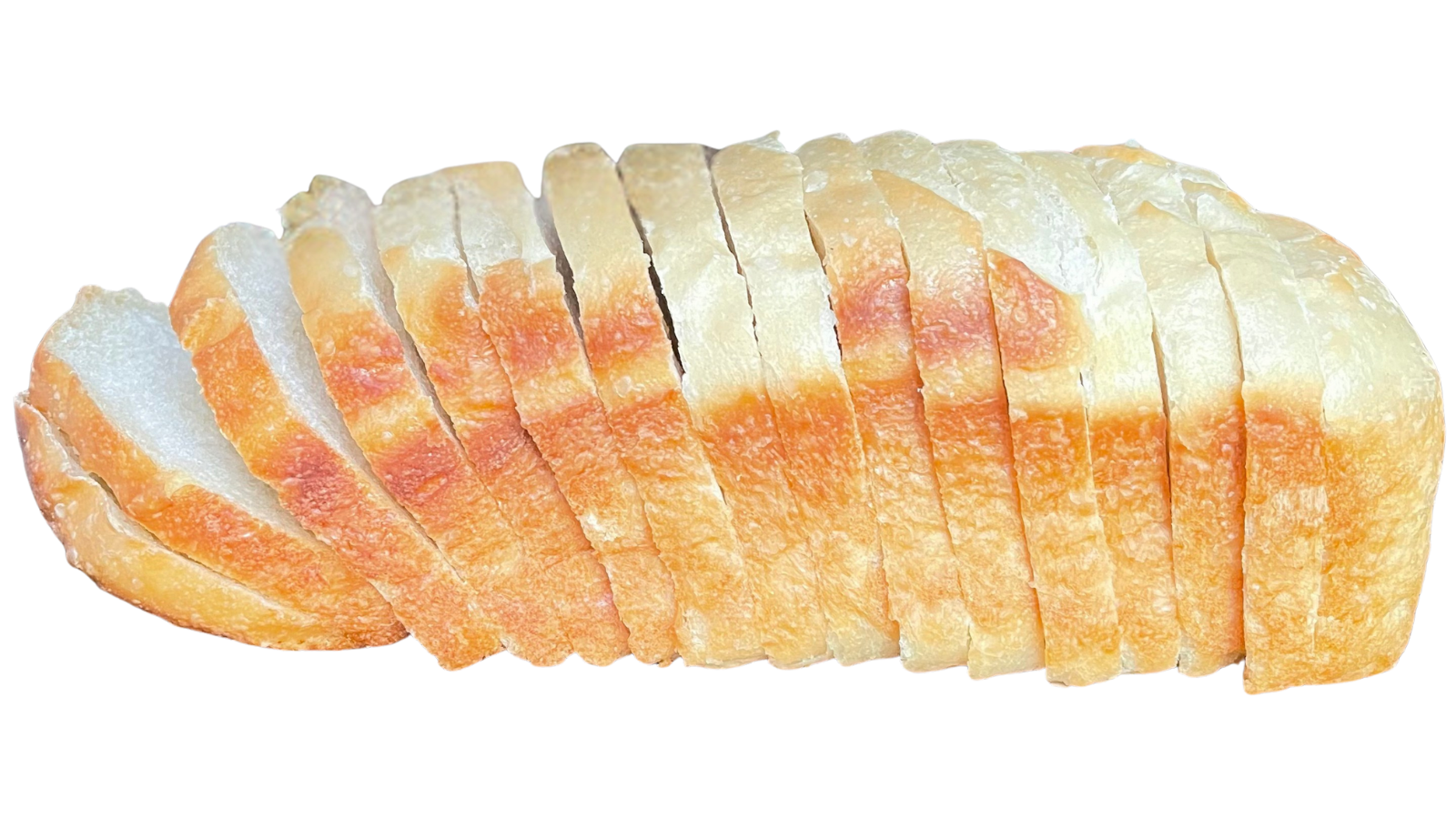
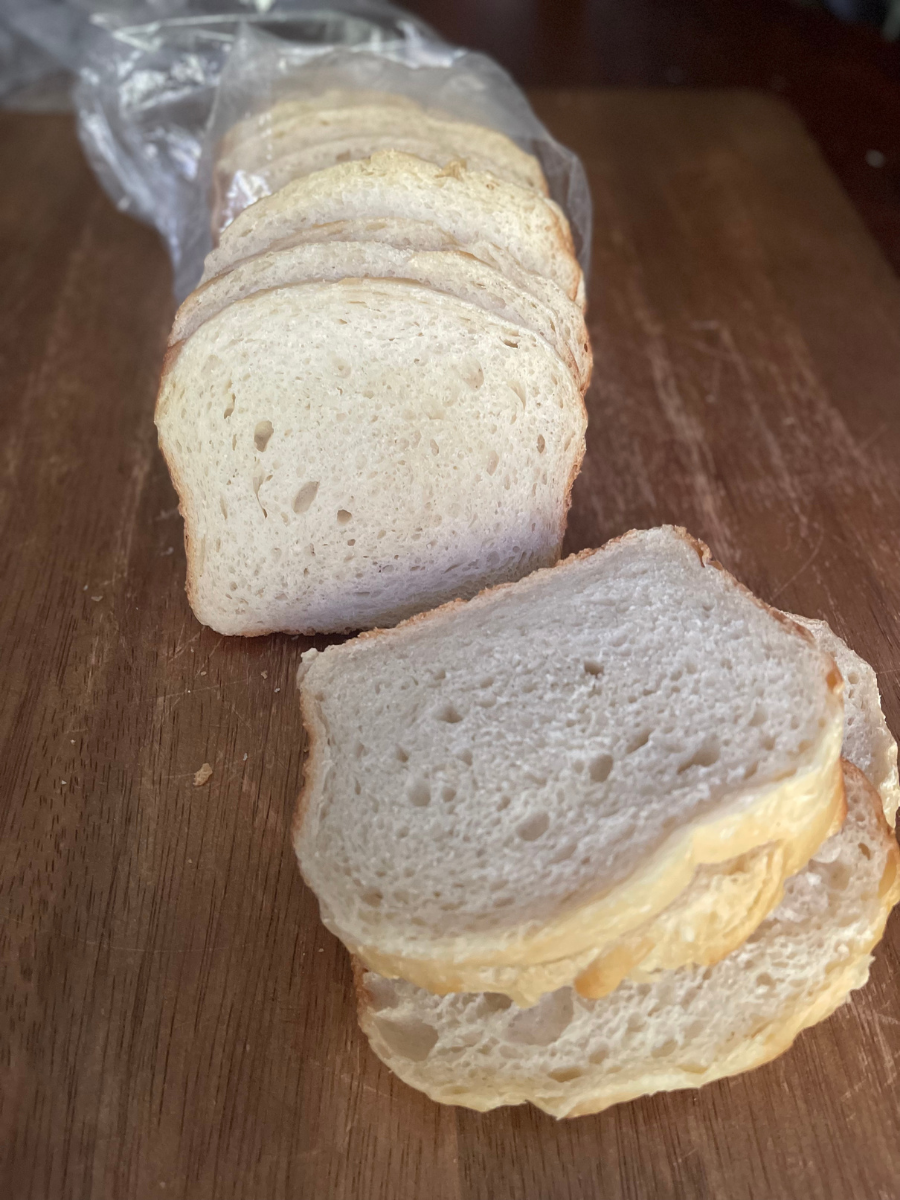
Sourdough Sandwich Bread sliced up and ready for freezing

Ready to Make Your Own Honeycloud Sourdough Sandwich Bread?

When you bake this loaf, your kitchen will smell like pure comfort — and when you slice into it, you’ll understand why it’s become a favorite in my home. If you decide to give it a try, I’d love to see your results. Have a question, need help with the dough, or want feedback on your crumb? Leave a comment or reach out anytime. I’m here to help you bake your softest, dreamiest loaf yet.

When you bake this loaf, share your results with the hashtags #HoneycloudSourdoughBread and #BakeHoneycloudSourdough — and tag me at @sourdoughpedia. I love seeing your bakes, sharing them, and cheering you on.

The Official Honeycloud Sourdough Sandwich Bread

This Honeycloud sourdough sandwich bread is designed to stay soft for days, slice cleanly, and work perfectly for everyday sandwiches.
Prep Time45 minutes
Cook Time45 minutes
Fermentation & Proofing Time (Most of this time is hands-off fermentation. Active work is under one hour)18 hours
Total Time20 hours
Course: Bread, Breakfast, Lunch, Sourdough
Cuisine: American
Keyword: enriched sandwich bread, enriched sourdough bread, homemade bread, Honeycloud Sourdough Sandwich Bread, sandwich bread, Sourdough Bread, sourdough sandwich bread
Servings: 1 Loaf
Calories: 120kcal
Author: Serena Carcasole

Ingredients

Build the Sweet Stiff Starter (see notes for overnight or same day)

  • 13 g active starter
  • 19 g water
  • 5 g honey
  • 38 g flour bread or all purpose flour

Tangzhong

  • 15 g flour Bread Flour or White Wheat Flour
  • 75 g whole milk

Main Dough (1 Standard 9×5 Sandwich Loaf)

  • 75 g Sweet Stiff Starter
  • 90 g Tangzhong
  • 260 g whole milk (warm 95–100°F) I prefer to use whole or homo milk but a lower fat milk is fine too. You may need additional milk while mixing if too dry.
  • 1 Large Whole Egg
  • 45 g honey
  • 475 g bread flour
  • 10 g dry whole milk powder (or skim) Optional but I always use it.
  • 8 g Sea Salt (or whatever salt you prefer)
  • 30 g unsalted butter softened not melted

Finish the Crust (brush immediately after baking)

  • brush with melted unsalted butter or mist lightly with water

Instructions

Build Your Sweet Stiff Starter - For One Loaf

  • Mix everything into a stiff dough ball. Knead briefly until smooth.
  • Place in a small jar or covered container, score the top with a cross if you like, and ferment:
    4–6 hours at around 78–80°F, until domed or 1-2 hours at room temperature, then overnight in the fridge
  • Use it cold directly in your dough.

Make the Tangzhong

  • In a small microwave-safe bowl, mug, or saucepan, whisk together:
    15g bread flour and 75g whole milk
  • You have two options to prepare the tangzhong:
    Microwave method (fast and easy): Heat flour + milk in 30-second bursts, whisking each time, until thick, glossy, and 150–158°F.
    Stovetop method: Add the flour and milk to a small saucepan, whisk until smooth, then cook over medium-low heat, whisking constantly, until thickened to a pudding-like paste (around 150–158°F).
  • Once thickened, cover the surface to prevent a skin, and let cool to room temperature before adding it to the dough.

Mix the Dough

  • In the bowl of your stand mixer, add:
    260 g milk
    50 g egg
    45 g honey
    Cooled tangzhong
    All of your sweet stiff starter (tear it into smaller pieces)
  • Mix gently to start breaking up the SSS.
  • Once mixed in add:
    475 g bread flour
    10 g milk powder
  • Mix on low speed just until there are no dry patches of flour. The dough will look rough and shaggy.
  • Cover the bowl and let it rest for 20–30 minutes (this is your fermentolyse).

Add Salt and Develop Gluten

  • Sprinkle 8 g salt over the dough and about 5 g of water or milk.
  • Mix on medium-low speed for about 6–8 minutes, until the dough begins to smooth out and cling to the hook. It should feel stronger and more elastic, but still soft.

Add the Butter

  • With the mixer on low, add 30 g very soft butter in 2–3 additions, allowing each portion to fully incorporate before adding more.
  • Once all the butter is in, increase to medium speed and knead another 3–5 minutes, or until:
    🌟 The dough feels silky and supple
    🌟 It pulls mostly cleanly from the sides of the bowl
    🌟 You can stretch a piece gently and it resists tearing (light windowpane)
  • Note on hydration: Honeycloud dough should feel soft and slightly tacky. This is normal and correct.

Bulk Fermentation (6+ hours)

  • Transfer the dough to a lightly oiled bowl or container.
  • Let it ferment at room temperature for about 6–8 hours, or until:
    👉 The dough has risen noticeably (around 60–80 percent)
    👉 The surface looks smoother and slightly domed
    👉 It feels airy and jiggly when you gently shake the bowl
    You don’t want it doubled or on the verge of collapsing, but it should feel light and well-fermented.
  • Note: BF may be shorter if your kitchen is warm (longer if your kitchen is cooler) or your starter is very active. Use visual cues, not just time.

Shape & Cold Proof (Overnight)

  • Lightly oil your counter or chop board and gently turn the dough out (you might not need to since the oil from the bowl should be enough on the dough).
  • Press it into a rough rectangle, pressing out any very large gas bubbles but not smashing it flat. I use a rolling pin.
  • Roll the dough up into a snug log, tucking the sides and ends in as you go to create a smooth surface and good surface tension.
  • Place seam-side down into pan. Cover the pan well and place it in the refrigerator overnight for a cold proof. This helps develop flavor and strength in the dough.

Final Rise (After Cold Proof)

  • The next day, take the pan out of the fridge and let the dough finish proofing at room temperature in the pan on the counter.
    Proof until:
    🌟 The dough has risen to just above the rim of the pan (1/2 to 1 inch above the pan from the center of the dome)
    🌟 The top is softly domed
    🌟 A gentle poke springs back slowly, leaving a light indentation
    This usually takes about 3–4 hours depending on your kitchen temperature and starter strength.

BAKE

  • Preheat your oven to 375°F (190°C) for at least 25–30 minutes.
  • Optional: Brush the top of the loaf with a little beaten egg or milk for shine.
  • Bake in two stages for the best rise, color, and softness:
    1. Bake at 375°F for 20 minutes
    This sets the structure and gives the loaf a strong, even rise.
    2. Reduce heat to 325°F and bake for another 15–20 minutes
    This prevents over-browning while allowing the inside to finish baking gently.
    If the top is browning too quickly at any point, tent loosely with foil.
  • Your loaf is done when:
    👉 The top is a deep golden brown
    👉 The internal temperature is 195–200°F (I prefer closer to 200°F for enriched dough)

Finish the Crust (Optional but Recommended)

  • For an extra-soft, tender sandwich loaf:
    Brush the hot loaf with melted butter, or
    Lightly mist the top with water, or
    ✨ Cover loosely with a clean kitchen towel or tent with foil for 5–10 minutes as it cools.
    This keeps the crust supple and enhances that signature Honeycloud softness.

Final Step

  • Remove from the pan and cool on a wire rack for 1–2 hours before slicing.
    I know it’s hard to wait, but slicing too early will compress that beautiful cloud crumb.

Notes

Approximate Nutrition (Per Slice)
Nutrition will vary based on ingredient brands and slice thickness. Based on a 16-slice loaf, each slice contains approximately 120 calories, with 4 g protein, 3–4 g fat, and 19–21 g carbohydrates.

Nutrition

Serving: 1Slice | Calories: 120kcal | Carbohydrates: 20g | Protein: 4g | Fat: 4g | Saturated Fat: 5g | Sodium: 160mg | Fiber: 1g | Sugar: 5g

Frequently Asked Questions

Can I skip the tangzhong?

You can, but it will not be as soft or stay fresh as long. Tangzhong is a big part of what makes Honeycloud special.

Can I use regular sourdough starter instead of SSS?

Yes. Use the liquid levain variation above and reduce the milk slightly. Flavor will be a bit more tangy but still mild.

Is this bread very sweet?

No. It’s gently sweet from honey, more in the “comforting sandwich bread” zone than dessert.

Why didn’t my loaf rise as high as yours?

Common causes: weak or underfed starter, dough too cold, under-proofing, or cutting bulk fermentation too short. If you ever want help, send me a crumb photo and your timeline and I can troubleshoot with you.

Can I make this dairy free?

You can experiment with plant-based milk and butter substitutes, but the texture won’t be identical. Whole milk and real butter give the best result.

Milk in Bread: Your Guide to Softer Loaves, Better Flavor, and Tender Crumb

Milk in Bread: Your Guide to Softer Loaves, Better Flavor, and Tender Crumb

My love for milk-based breads started long before sourdough ever entered my kitchen. Back when my husband and I bought our first bread machine, nearly every recipe called for milk or milk powder — and every loaf came out soft, golden, and dangerously easy to eat. You know when you cut “just one slice” and somehow half the loaf disappears? Yeah… that happened a lot.

Eventually the bread machine gave up on us (probably for the best), and bread took a back seat for a while.

Fast-forward to 2024, when sourdough found me. I fell in love with the slow pace, the ritual, the smell of fermenting dough. And when I started adding milk and milk powder to sourdough, something clicked. It felt like revisiting those bread machine days — only better. The loaves were silkier, softer, and unmistakably bakery-style.

Milk in bread isn’t just a swap. It changes how dough feels, bakes, and tastes — and once you understand why, you can use it with confidence.

Let’s walk through it together.

Liquid Milk vs Milk Powder

They sound similar… but they behave like entirely different ingredients.

Most bakers don’t realize how differently these two enrich bread — and knowing the difference is one of those tiny skills that quietly unlocks better loaves.

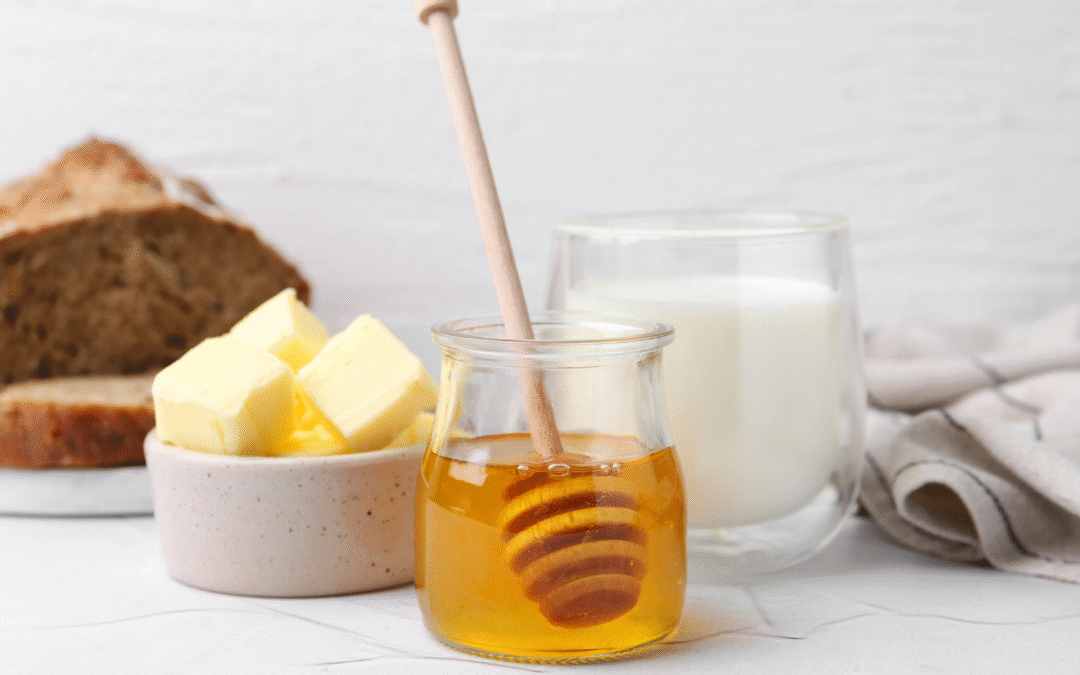
Liquid milk brings hydration, gentle sweetness, natural fats, and protein. It softens the crumb, deepens browning, and slows fermentation in a way that produces a more tender, cozy loaf.

Milk powder adds richness without changing hydration at all. It strengthens the dough, intensifies aroma and flavor, and gives your crust that deep golden color that feels unmistakably “bakery-made.” It’s especially helpful in sourdough, where hydration matters.

And when you use both together, you get something special.

• Milk changes structure and tenderness.
• Milk powder deepens flavor, softness, and color.

Together, they give you that nostalgic, silky bakery crumb — the one that makes people ask,
“Wait… YOU made this?”

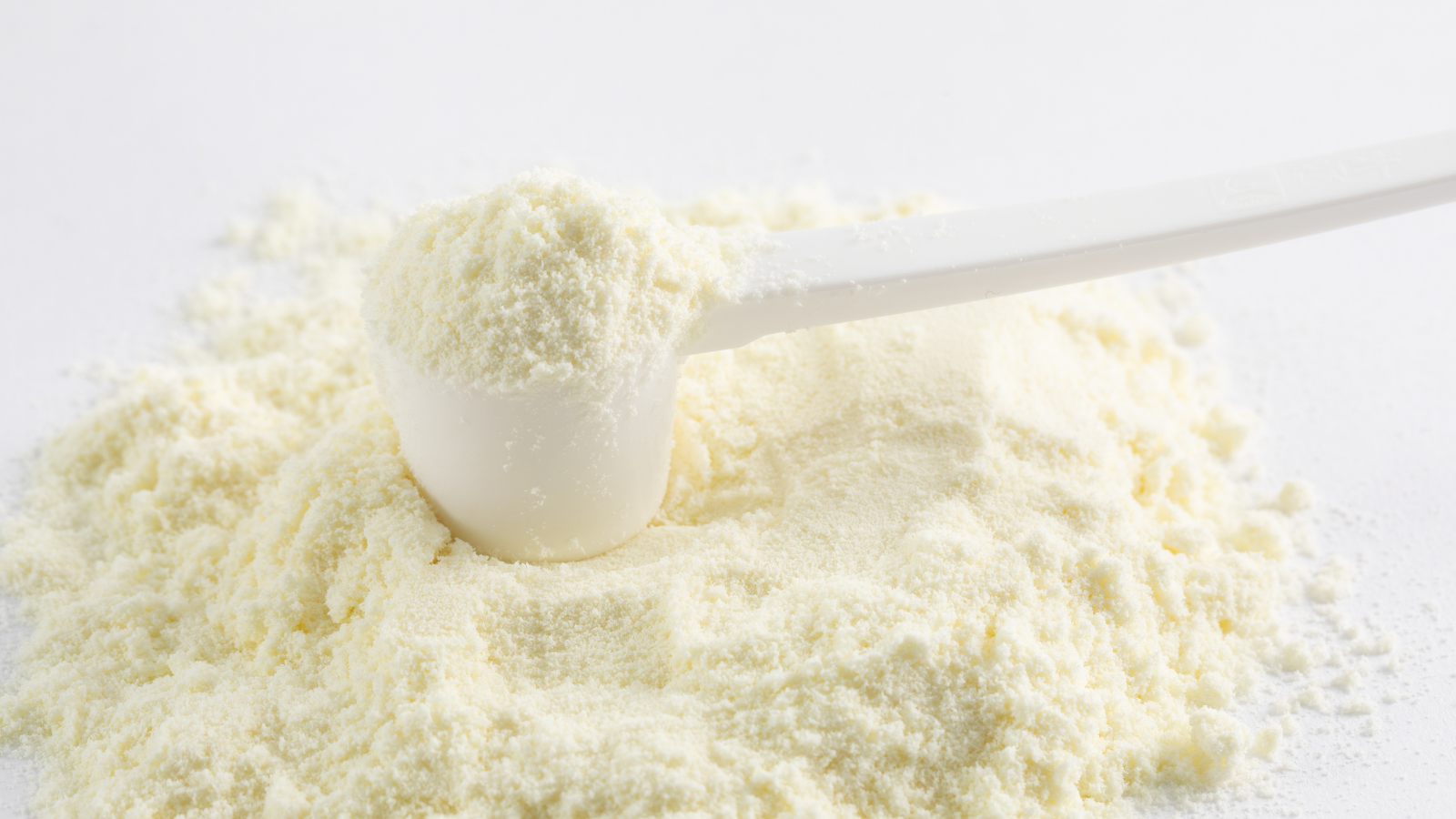
A scoop of milk powder on a white surface, showing the fine texture used to enrich bread dough and improve flavor, browning, and softness.

What Milk Does Inside the Dough

Milk changes bread from the inside out — not dramatically, but in all the right little ways.

When milk hydrates the flour, the fats gently coat the gluten strands. This keeps them from tightening too firmly, which is why milk breads feel soft and tender instead of chewy. You can literally feel the dough relax in your hands.

Milk also naturally softens acidity. In sourdough, this is beautiful. That bold tang turns mellow and rounded, creating a smoother, more balanced flavor.

Milk’s lactose caramelizes quickly in the oven, giving your loaf a deep golden crust long before it’s fully baked. And the smell? That warm, sweet, bakery aroma almost feels nostalgic — like the bread aisle of a grocery store, but better.

And perhaps the best part:

Milk helps bread stay soft longer. Milk solids hold onto moisture, giving you slices that stay tender for days instead of drying out overnight.

If you enjoy digging into the science behind baking, these are excellent starting points:

Dairy protein interactions – dairyscience.info
Maillard browning reaction –seriouseats.com
Open Library – ecampusontario.pressbooks.pub

What Water Does in Dough

(And why it still matters just as much.)

Water is the foundation of most bread. It hydrates flour cleanly and simply, without bringing any extra elements to the party. This gives gluten the freedom to link together tightly, forming strong strands that create structure and height.

This is why water-based doughs tend to:

  • rise tall and airy
  • create open, irregular crumb
  • develop crisp, rustic crusts
  • highlight the wheat and sourdough tang
  • ferment quickly and efficiently

With water, nothing interferes with the grain or the fermentation. You taste the wheat. You taste the fermentation. You taste the tang exactly as it is.

Milk brings softness and comfort.
Water brings structure and character.
Both have their place in a baker’s world.

Milk vs Water in Bread:

The Real Differences

🥛 vs 💧

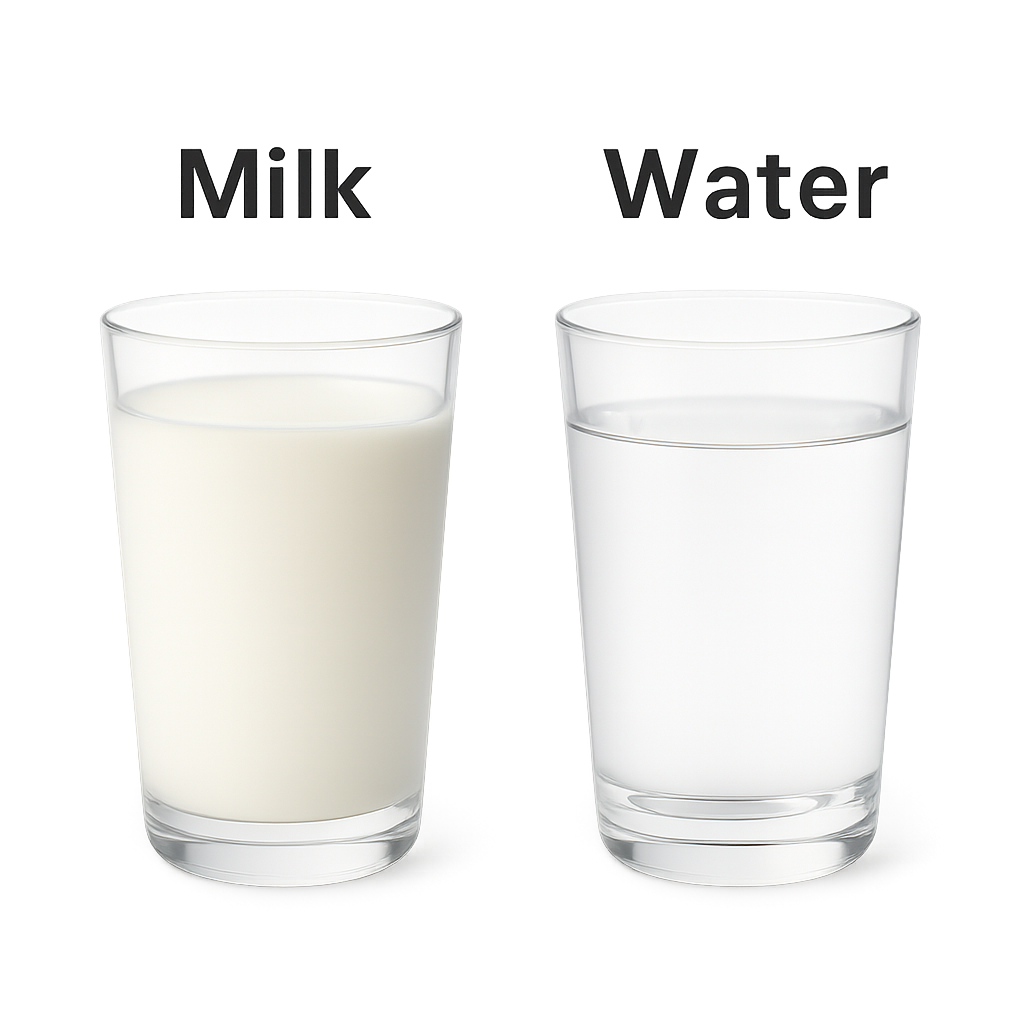
Both liquids hydrate flour, but the results are dramatically different.

Two clear glasses side by side, one filled with milk and the other with water, demonstrating the difference between using milk and water in sourdough bread baking

Structure
💧 Water strengthens gluten, giving the dough elasticity.
🥛 Milk softens gluten because its fats and proteins gently interfere with gluten bonding.

Crumb
💧 Water produces open, irregular holes.
🥛 Milk creates a uniform, silky, tighter crumb.

Browning
💧 Water browns slowly.
🥛 Milk browns deeply and quickly thanks to lactose.

Rise
💧 Water doughs rise tall and airy with more oven spring.
🥛 Milk doughs rise slower but bake tender and even.

Flavor
💧 Water highlights wheat flavor and sourdough tang.
🥛 Milk softens acidity and adds gentle sweetness.

Shelf Life
💧 Water breads stale faster.
🥛 Milk breads stay soft longer because milk solids retain moisture.

Fermentation
💧 Water encourages faster fermentation.
🥛 Milk slows fermentation slightly.

Aroma
💧 Water gives a clean, fresh wheat aroma.
🥛 Milk creates a warm, nostalgic bakery scent.

Crust
💧 Water yields a crisp, rustic crust.
🥛 Milk makes a soft, thin, tender crust.

Dough Handling
💧 Water doughs feel strong and elastic.
🥛 Milk doughs feel relaxed, soft, and supple.

Milk vs Water in Bread:

The Real Differences

🥛 vs 💧

Both liquids hydrate flour, but the results are dramatically different.

Two clear glasses side by side, one filled with milk and the other with water, demonstrating the difference between using milk and water in sourdough bread baking

Structure
💧 Water strengthens gluten, giving the dough elasticity.
🥛 Milk softens gluten because its fats and proteins gently interfere with gluten bonding.

Crumb
💧 Water produces open, irregular holes.
🥛 Milk creates a uniform, silky, tighter crumb.

Browning
💧 Water browns slowly.
🥛 Milk browns deeply and quickly thanks to lactose.

Rise
💧 Water doughs rise tall and airy with more oven spring.
🥛 Milk doughs rise slower but bake tender and even.

Flavor
💧 Water highlights wheat flavor and sourdough tang.
🥛 Milk softens acidity and adds gentle sweetness.

Shelf Life
💧 Water breads stale faster.
🥛 Milk breads stay soft longer because milk solids retain moisture.

Fermentation
💧 Water encourages faster fermentation.
🥛 Milk slows fermentation slightly.

Aroma
💧 Water gives a clean, fresh wheat aroma.
🥛 Milk creates a warm, nostalgic bakery scent.

Crust
💧 Water yields a crisp, rustic crust.
🥛 Milk makes a soft, thin, tender crust.

Dough Handling
💧 Water doughs feel strong and elastic.
🥛 Milk doughs feel relaxed, soft, and supple.

When Milk In Bread Is the Best Choice

Milk is the best choice when your goal is softness, tenderness, and a fine, even crumb. It’s ideal for breads meant to feel comforting, slice cleanly, and stay soft for days.

Use milk when the dough is designed to be soft-first, not structure-first.

Milk works best when:

  • You want a soft sandwich loaf or enriched bread
  • The dough includes eggs or tangzhong/yudane, which help support structure
  • The crumb should be tight, silky, and uniform, not open and rustic
  • You’re baking pan loaves, rolls, buns, or sweet breads
  • You want gentler sourdough flavor and richer browning

Milk adds tenderness, warmth, and that unmistakable bakery aroma. When the dough already has enough structure built in, milk doesn’t weaken it — it completes it.

When Water Is the Better Choice

Water is the better choice when you want strength, lift, and a bold sourdough character. It supports strong gluten development and allows fermentation to shine.

Use water when structure and openness matter more than softness.

Water works best when:

  • You want a rustic or artisan-style loaf
  • You’re aiming for an open, irregular crumb
  • The dough needs to rise tall with strong oven spring
  • You want a crisp, crackly crust
  • You want the wheat flavor and sourdough tang to stand out
  • The dough is high-hydration and relies on gluten strength

Water keeps the dough clean and responsive. Nothing interferes with gluten development or fermentation, which is why water-based breads feel bold, structured, and expressive.

What “Enriched” Means

Lightly enriched doughs include a small amount of fat or sweetener (like oil or honey) but no eggs or tangzhong.
Enriched doughs include eggs, tangzhong, or multiple enrichments working together to support a soft crumb.

When to Use Milk and Water Together

If dough doesn’t have anything built in to support structure — like eggs or a tangzhong — using 100% milk can make it too relaxed. Adding some water keeps the dough balanced.

Use milk and water together when:

  • You want a soft sandwich loaf
  • The dough has no eggs
  • There is no tangzhong or yudane
  • The dough is lightly enriched (for example, oil or honey, but not both in large amounts)
  • You want good rise without sacrificing softness

A reliable rule that works

When in doubt, use: 75% milk + 25% water

This blend gives you:

  • the tenderness and browning of milk
  • the strength and lift of water

It’s especially useful for simple sandwich breads and lightly enriched sourdough loaves where you want the bread to feel soft but still rise nicely.

Easy way to remember

  • Eggs or tangzhong in the dough? Full milk usually works well.
  • No eggs and no tangzhong? Use milk and water together.

Milk adds comfort.
Water adds lift.
Using both helps your bread do both.

Can You Swap Milk and Water?

You can, but the swap is not 1:1. Milk makes dough softer and slows fermentation, so you may need slightly less hydration and a bit more patience during rising. Water makes dough stronger and more open, so if you replace milk with water, your crumb may open up and your crust may brown more gently.

The important thing is to adjust with intention instead of guessing.

If replacing water with milk: If replacing milk with water:
  • reduce hydration slightly
  • dough will be softer
  • fermentation slows a bit
  • crust browns deeper
  • flavor becomes sweeter
  • increase hydration
  • crumb opens up
  • flavor becomes tangier
  • crust may be lighter
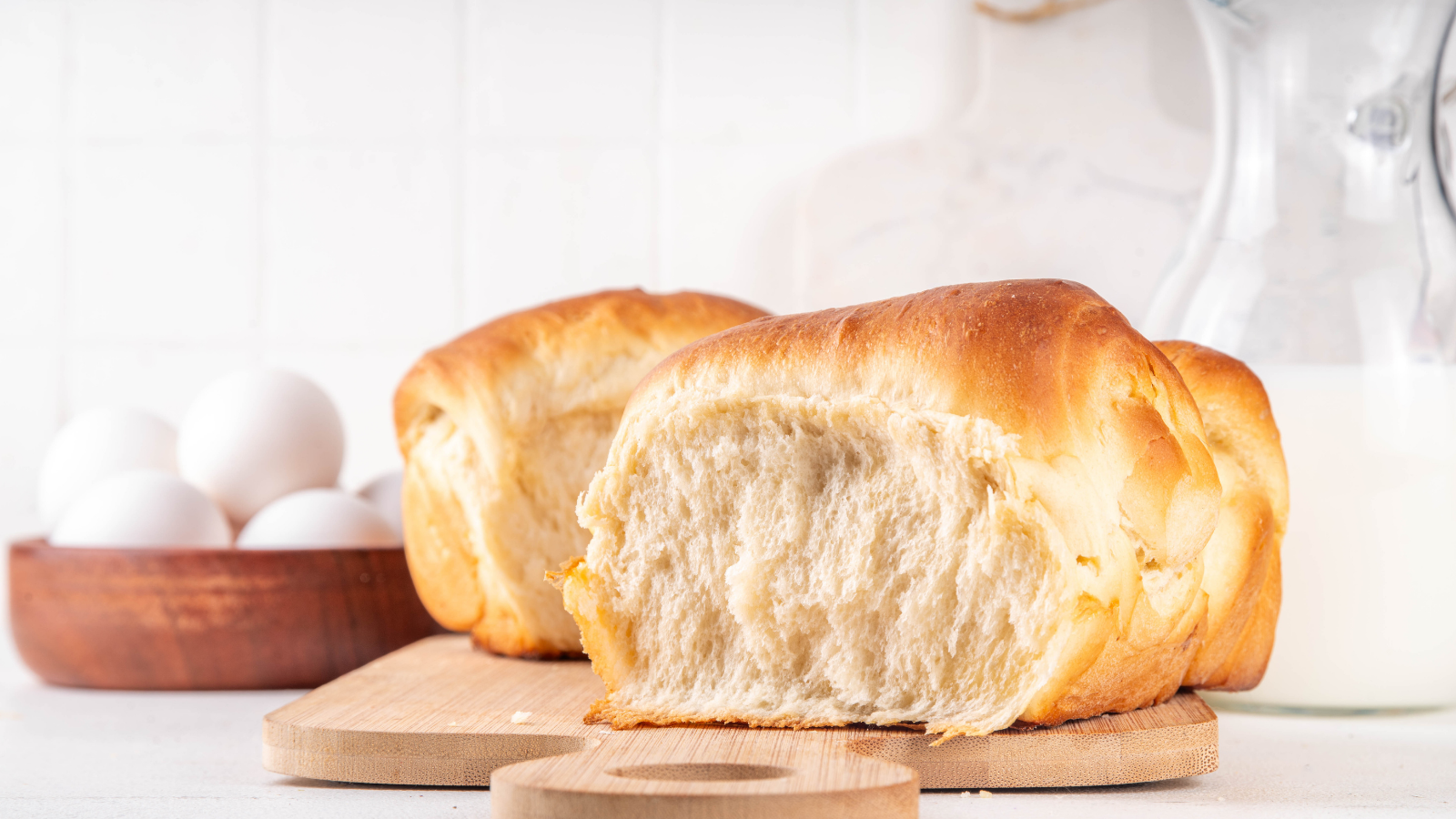
Soft milk bread loaf with a tender, fluffy crumb demonstrating how milk creates a rich, bakery-style texture

Milk in Sourdough

(This is where the magic really happens.)

Milk interacts with wild yeast and bacteria differently than it does with commercial yeast. In sourdough, milk gently tempers acidity, slows fermentation just enough to create structure, and produces a beautifully custard-like crumb that feels luxurious. The browning becomes richer, the aroma warmer, and the loaf stays soft longer — especially after a long cold proof.

If you’ve ever sliced into a milk-enriched sourdough and wondered why it feels almost “silky,” this is why.

If you’re curious to see how this shows up in real loaves, a few of my recipes highlight exactly what milk brings to sourdough:

  • Sourdough Honey Wheat Bread – shows how milk creates softness while still letting the grain shine. Recipe coming soon.
  • Cinnamon Raisin Swirl Sourdough – milk gives this loaf its tender crumb and gentle sweetness. Recipe coming soon.
  • Honeycloud Sourdough Loaf – the best example of that silky, enriched sourdough texture milk makes possible.


Troubleshooting Milk-Based Doughs

Gentle guidance from someone who has made all the mistakes for you.

  • If your dough feels sticky → reduce hydration slightly.
  • If it browns too fast lower the oven temperature or tent with foil.
  • If it rises slowly  relax. Milk naturally slows fermentation.
  • If your crumb feels tight strengthen gluten early with mixing or folds.
  • If the flavor is too mellow or soft → reduce milk slightly or add a touch of whole grain.

Everything is fixable — once you know what milk is actually doing.

What Milk In Bread Really Means 

Baking with milk is one of those little choices that doesn’t look like much on paper but completely transforms what comes out of your oven. It softens the tough edges, rounds out the flavor, and adds this quiet warmth that you can feel in every bite. Once you understand what it’s doing inside your dough, it becomes one of those tools you reach for with confidence.

Whether you’re making a cozy loaf for your family or experimenting with your own enriched sourdough creations, I hope this guide helps you see milk not as a “maybe,” but as a beautiful way to shape the kind of bread you love.

If you try baking with milk or milk powder, come back and tell me how your loaf turned out. I love hearing your stories and seeing what’s happening in your kitchen. I am here to answer your questions.

Frequently Asked Questions

Can I replace water with milk in any bread recipe?

You can, but it’s best to do it with intention. Replacing water with milk will soften the crumb, slow fermentation slightly, and cause the bread to brown faster. For rustic or high-hydration artisan breads, milk may make the loaf too soft. For sandwich loaves, enriched doughs, and soft sourdough, milk works beautifully.

Does milk make bread softer?

Yes — very noticeably. Milk fats and proteins interfere slightly with gluten development, which prevents the dough from becoming too tight or chewy. The result is a softer, more tender crumb that feels plush instead of elastic.

Why does bread made with milk brown faster?

Milk contains lactose, a natural sugar that caramelizes more readily than the sugars found in flour. This leads to deeper browning, a shinier crust, and that warm bakery aroma many people associate with enriched breads.

Can I use milk in sourdough bread?

Absolutely. Milk works especially well in enriched sourdough breads. It softens acidity, slows fermentation just enough to improve texture, and creates a smooth, custardy crumb. Many bakers love milk in sourdough sandwich loaves, honey wheat, cinnamon raisin, and milk bread–style doughs. Check out my enriched sourdough recipes. 

Does milk affect sourdough fermentation?

Yes, slightly. Milk slows fermentation because fats and proteins interfere a bit with yeast activity. This isn’t a bad thing — it often leads to better structure and a more even crumb. You may just need to allow a little extra time for bulk fermentation or proofing.

Is milk powder better than liquid milk for bread?

They serve different purposes. Milk powder adds flavor, color, and softness without changing hydration, making it very useful in sourdough baking. Liquid milk changes both hydration and structure. Many professional bakers use both together for the best results.

Can I use non-dairy milk instead of milk?

You can, but results will vary. Unsweetened soy milk behaves most similarly to dairy milk due to its protein content. Almond, oat, or coconut milk may add flavor but won’t provide the same softening or browning effects unless they contain added sugars or fats.

Does milk make bread last longer?

Yes. Milk solids help retain moisture and slow down starch retrogradation, the process that causes bread to go stale. Milk-based breads typically stay soft and fresh longer than water-based loaves.

Why does milk bread taste less sour?

Milk naturally buffers acidity, which softens the sharp tang of sourdough. This is why milk-based sourdough breads often taste more mellow, rounded, and gently sweet rather than boldly sour.

When should I avoid using milk in bread?

Milk isn’t ideal for breads where you want a crisp crust, open crumb, and strong chew — such as rustic boules, baguettes, or high-hydration artisan sourdough. In those cases, water allows the gluten and fermentation to shine.

Bakery-Style Honey Sourdough Cornbread Muffins

Bakery-Style Honey Sourdough Cornbread Muffins

I remember the very first time I tried cornbread and I honestly didn’t like it. The flavor was flat, dry, and bland, and I couldn’t understand why people loved it so much. That changed the day I finally tasted a truly good cornbread muffin. It was warm, sweet, tender, and full of flavor, and it instantly made me wish I could recreate that experience at home. I had never found a version that matched that memory, so I set out to create my own flavorful (and healthier) honey sourdough cornbread muffins that would be just as delicious.

I also wanted the recipe to reflect the way I bake today. That meant using sourdough for better digestibility, keeping the flavor completely non sour, and replacing refined sugar with honey for a naturally sweet, moist crumb. When I tested the final version, the results were spectacular. The muffins baked up tall, stayed soft for days, and had the warm honey-forward flavor I’d been searching for.

Now, this is the cornbread recipe I reach for whenever I want something comforting, nostalgic, and incredibly easy to make. It tastes like a bakery-style muffin with all the gentle benefits of sourdough fermentation, and it is just as good next to a bowl of chili as it is with a cup of tea the next morning.

🌽 History of Cornbread

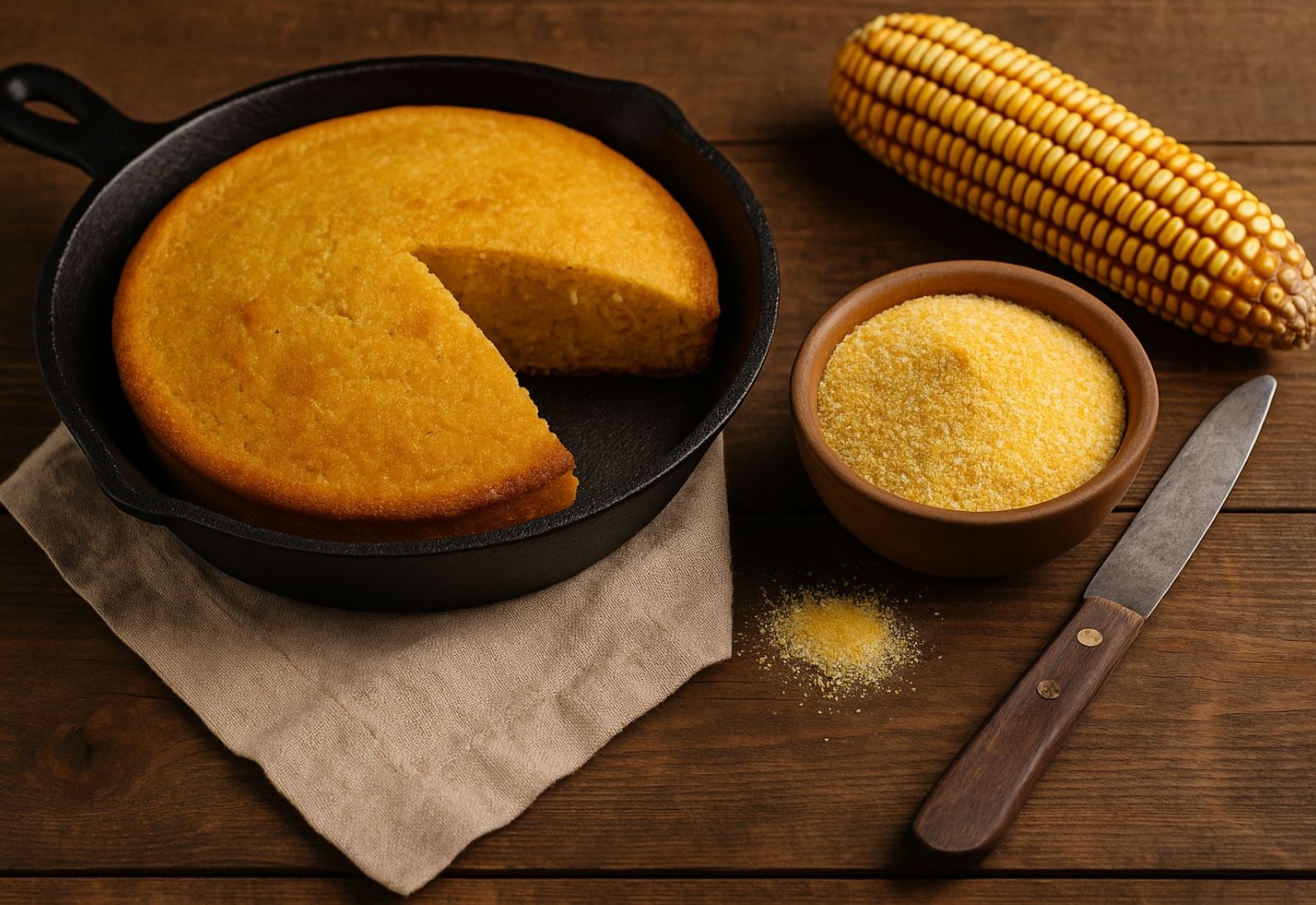
Cornbread has deep roots in North American food culture, long before ovens or cast-iron pans existed. Indigenous communities were the first to grind dried corn into meal, mixing it with water and baking it over open fire or hot stones. When European settlers arrived, they adapted these traditional methods using their own cooking tools, eventually giving rise to the skillet-baked cornbread we know today. Over the generations it became a staple across the American South, celebrated for its simplicity, affordability, and versatility. If you want to go even deeper into the origins of cornbread and how it became such a staple on American tables, this article from Stanford Daily is a great place to start.

Rustic cast-iron skillet cornbread with a slice removed, surrounded by cornmeal and a dried corn cob on a wooden table, representing the traditional roots of early American cornbread.


What Makes These Honey Sourdough Cornbread Muffins Special

There are many cornbread recipes, but this one stands out because it blends bakery-style sweetness with a naturally leveled sourdough approach that stays mild. The texture is moist and tender, the honey adds depth and warmth, and the sweet levain keeps the crumb soft without giving any sour flavor.

To put it simply, these muffins feel like comfort food with a beautiful modern twist.

They are also:

  • naturally sweetened with honey
  • very easy to mix
  • freezer friendly
  • adaptable for muffins or a 9 by 13 pan
  • perfect for both sweet and savory meals

Because the sourdough fermentation improves texture and digestibility, these muffins stay moist longer than traditional cornbread.

Can Sourdough Cornbread Be Non Sour

Yes, absolutely. Sourdough does not automatically mean sour flavor. In fact, the way you build your levain determines how mild or acidic the final result will be.

To keep the flavor gentle and sweet:

  • use a sweet levain fed with a touch of honey
  • bake same day or limit the rest time
  • balance the batter with dairy and baking soda
  • avoid using very acidic or neglected starter
  • let honey be the star of the flavor

This ensures your muffins taste soft, naturally sweet, and never tangy.

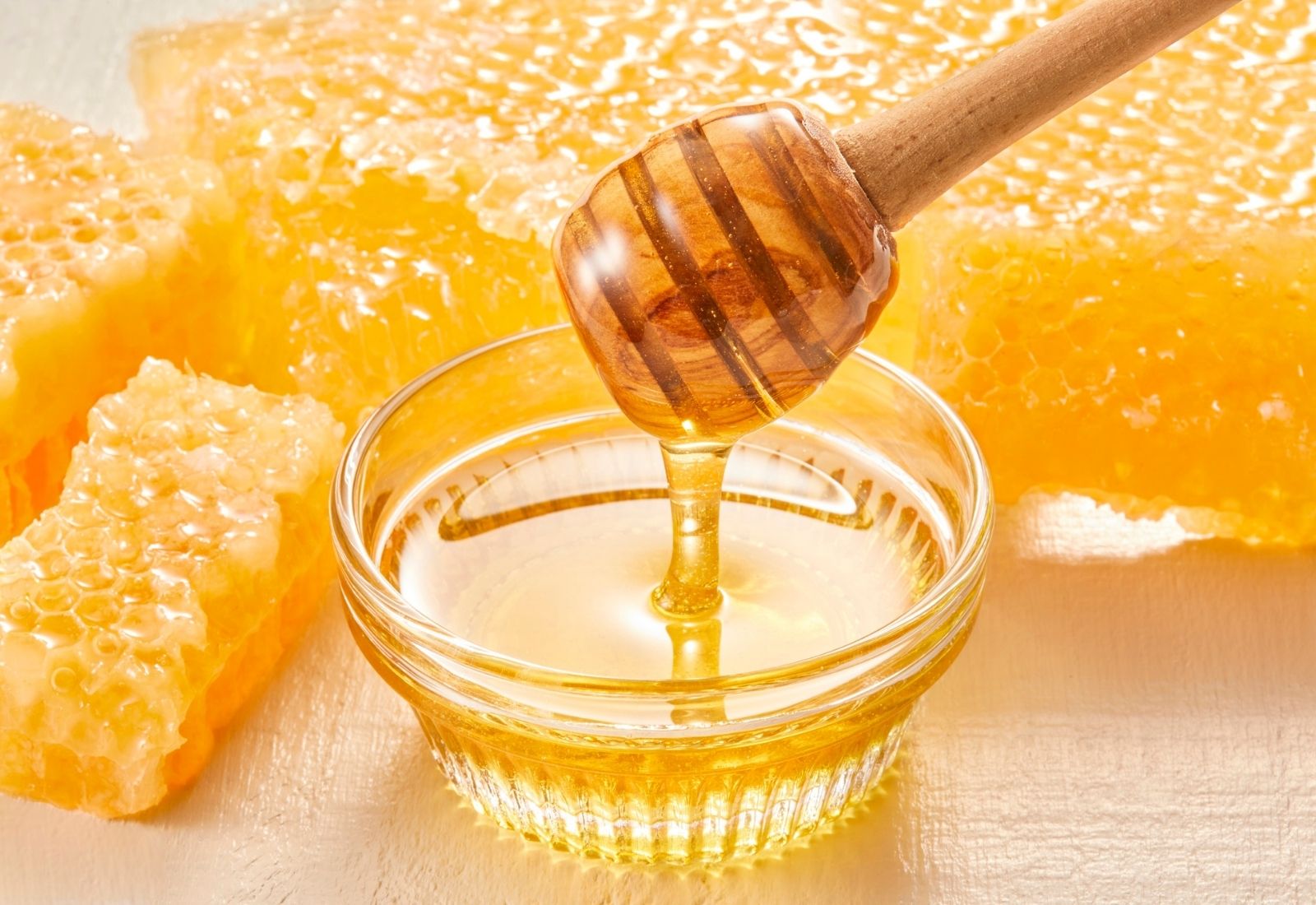
Golden honey flowing from a wooden dipper into a glass bowl, with fresh honeycomb pieces in the background.

Why I Built This Recipe Around a Sweet Levain

When I first tested this recipe, I tried mixing a sweet stiff starter into the wet ingredients. It worked, but it took real effort to get the stiff starter fully incorporated. Later, I moved to a higher hydration sweet levain, and the entire process became smoother and more enjoyable. It blends easily, rises predictably, and keeps the muffins soft for days.

The sweet levain also allows these muffins to remain non sour while still delivering all the advantages of sourdough baking. This balance is what makes the recipe so unique.

Tools You Need for Honey Sourdough Cornbread Muffins

This post contains affiliate links, which means I may earn a small commission if you purchase through them, at no extra cost to you. As an Amazon Associate, I also earn from qualifying purchases. I only recommend products I personally use, trust, and love. Your support helps me continue creating free recipes and resources for Sourdoughpedia. Thank you.

To make your bake simple and consistent, gather the following tools:

These tools help you get even baking, perfect texture, and reliable results every time.

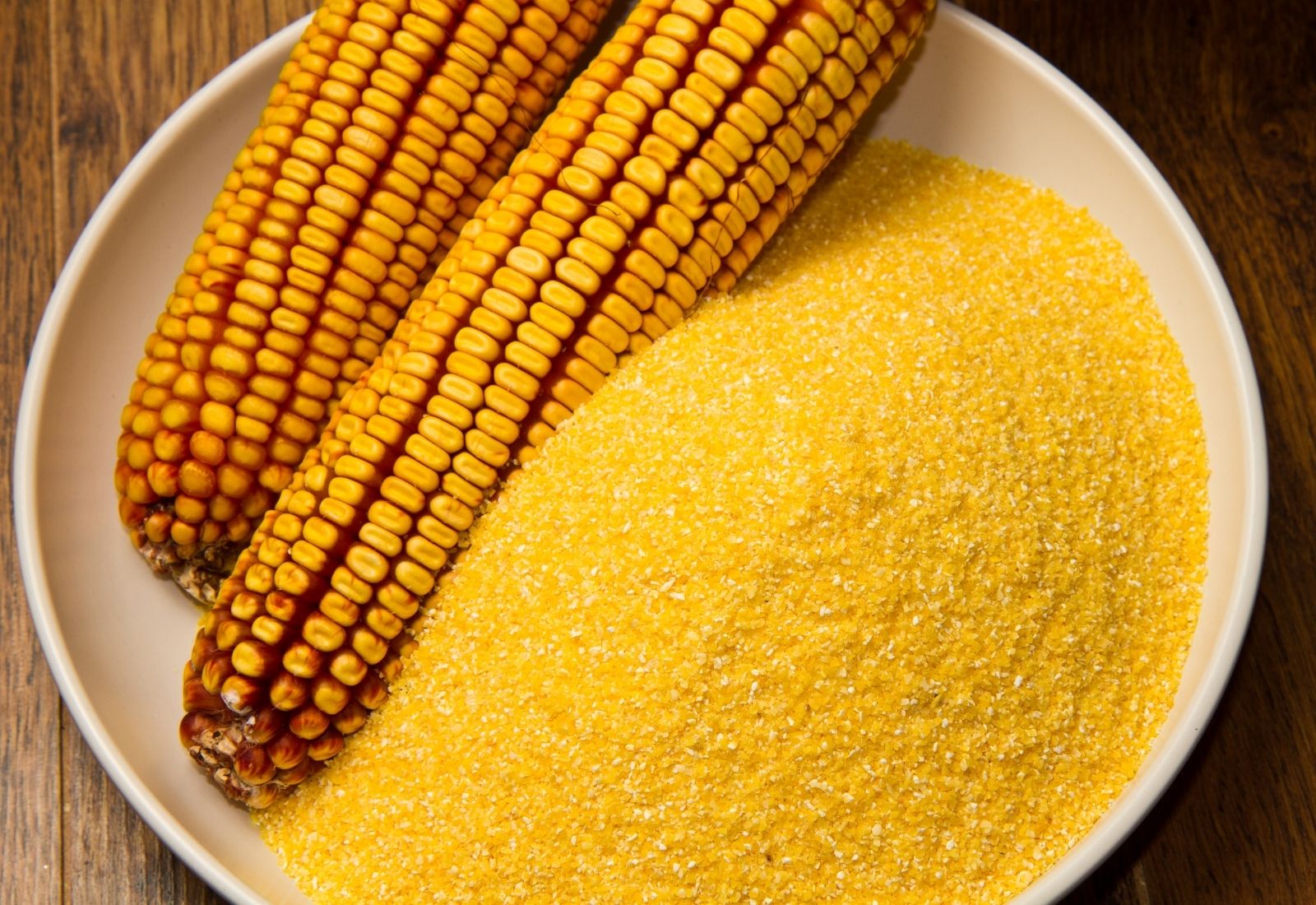
Yellow cornmeal and fresh corn kernels displayed on a plate, the main ingredient used in making sourdough cornbread and corn muffins.

Ingredients for Honey Sourdough Cornbread Muffins

Double batch. Makes one 9 by 13 pan or twelve jumbo muffins.

Sweet Levain (4 to 6 hours ahead)

To keep this recipe simple and precise, this sweet levain is built to equal exactly 300 g, which is the total amount needed for the batter. It mixes easily, gives a mild flavor, and keeps the crumb soft without any tang.

Sweet Levain Ingredients

  • 60 g mature starter
  • 135 g all purpose or bread flour
  • 95 g water
  • 10 g honey

Total = 300 g (use all)

Ferment for 4 to 6 hours at about 75 to 78°F until doubled, domed, and lightly sweet-smelling. Use the entire 300 g in the recipe.

This hydration level (about 77 percent) blends smoothly into the wet ingredients and is ideal for quick batters like cornbread muffins.

Wet Ingredients

  • 300 g sweet levain
  • 200 g milk
  • 200 g sour cream
  • 180 g melted butter
  • 240 g honey
  • 4 large eggs
  • 10 g vanilla extract (2 tsp)

Dry Ingredients

  • 300 g cornmeal
  • 200 g all purpose flour
  • 40 g milk powder
  • 24 g baking powder (2 tbsp
  • 3 g baking soda (½ tsp)
  • 9 g fine sea salt (1½ tsp)

Honey Butter Glaze (Optional but Highly Recommended)

This glaze is what makes the muffins bakery-style. It sinks slightly into the warm tops and gives your cornbread a glossy, golden finish that tastes like sweet sunshine. Brush it on as soon as the muffins come out of the oven and let it melt right into the crumb.

Ingredients

• 42 g melted unsalted butter (3 tbsp)
• 28 g honey (2 tbsp)
• Pinch of fine sea salt

Instructions

Whisk the melted butter, honey, and salt until smooth. Brush generously over warm muffins and let it set for 5 minutes. The shine is gorgeous.

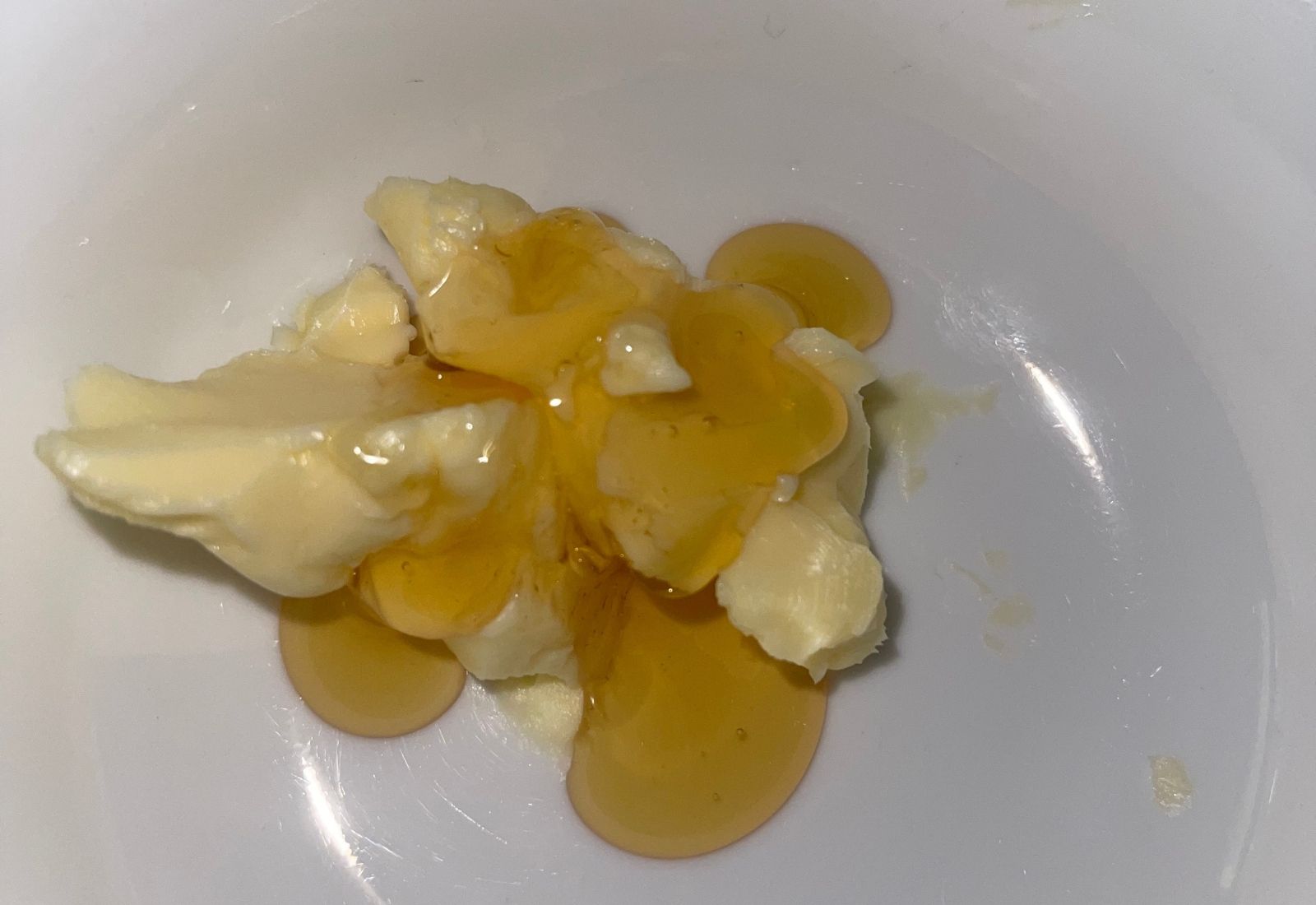
Bowl with softened butter and honey ready to be mixed into a warm glaze for cornbread or muffins.

Step-by-Step Instructions

  1. Preheat the oven to 375 F. Line muffin tins with tulip liners or prepare a 9×13 pan.
  2. In a large bowl, whisk milk, sour cream, melted butter, honey, eggs, and vanilla.
  3. Add the 300 g sweet levain in small portions and whisk until fully dissolved.
  4. In a separate bowl, whisk together the cornmeal, flour, milk powder, baking powder, baking soda, and salt.
  5. Add the dry mixture to the wet mixture. Fold gently until just combined.
  6. Bake:
    • Jumbo muffins: 28–33 minutes
    • 9×13 pan: 35–40 minutes
    • Internal temp should reach 203–205 F.
  7. Brush warm muffins with the honey butter glaze.
  8. Cool 15–20 minutes before serving.

Honey Sweetness Scale

  • 180 g honey: lightly sweet
  • 210 g honey: medium sweet, classic bakery balance
  • 240 g honey: bakery-sweet (tested level)
  • 260 g honey: dessert-level sweet

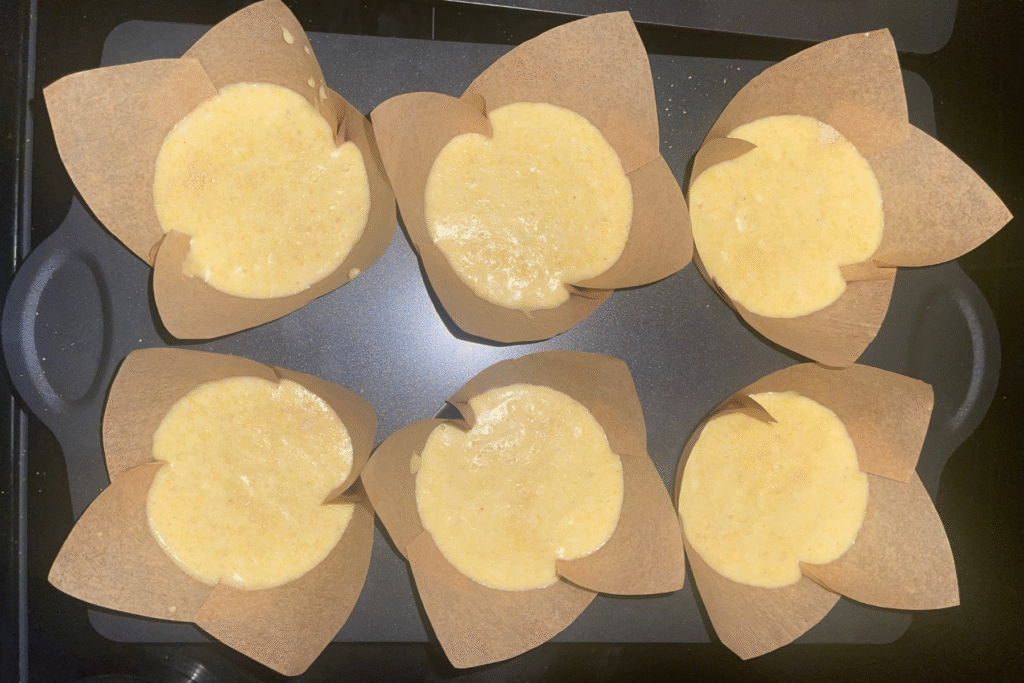
Unbaked sourdough honey cornbread batter portioned into tulip muffin liners before baking.

Baker’s Notes

I tested twelve jumbo muffins using this exact levain and 240 g honey. They baked for about 30 minutes and reached 205–211 F. They stayed soft, moist, and flavourful for two full days.

Optional Overnight Method

If you need an overnight option, mix all wet and dry ingredients except baking powder and baking soda. Refrigerate overnight. In the morning, mix in the baking powder and baking soda and bake immediately.

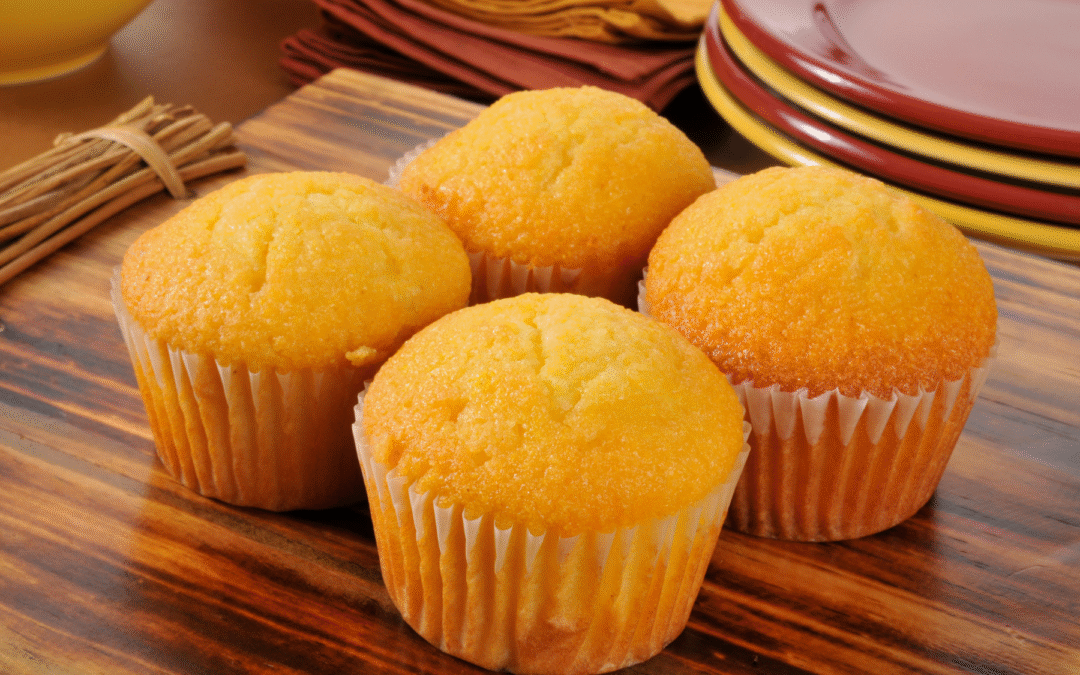
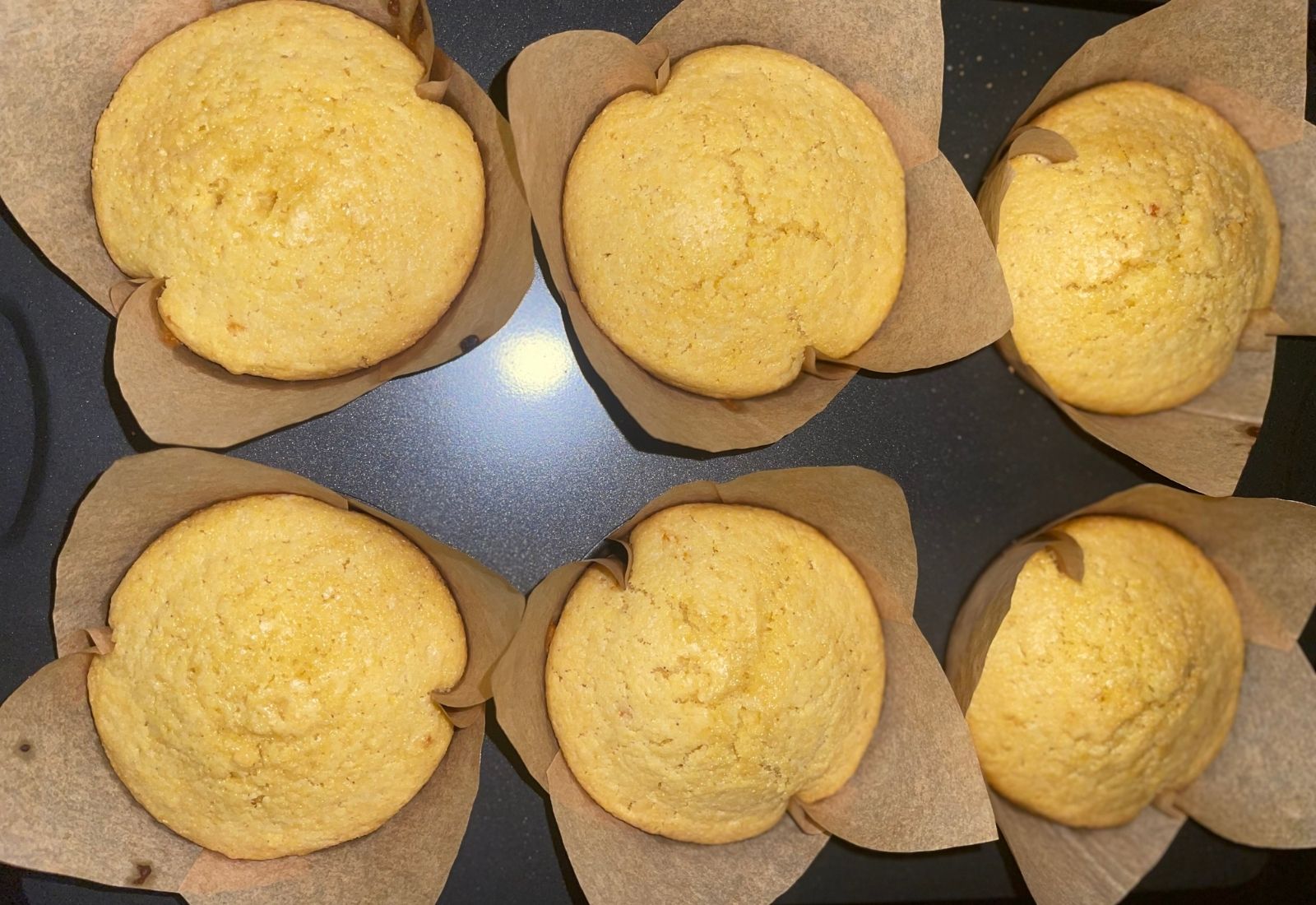
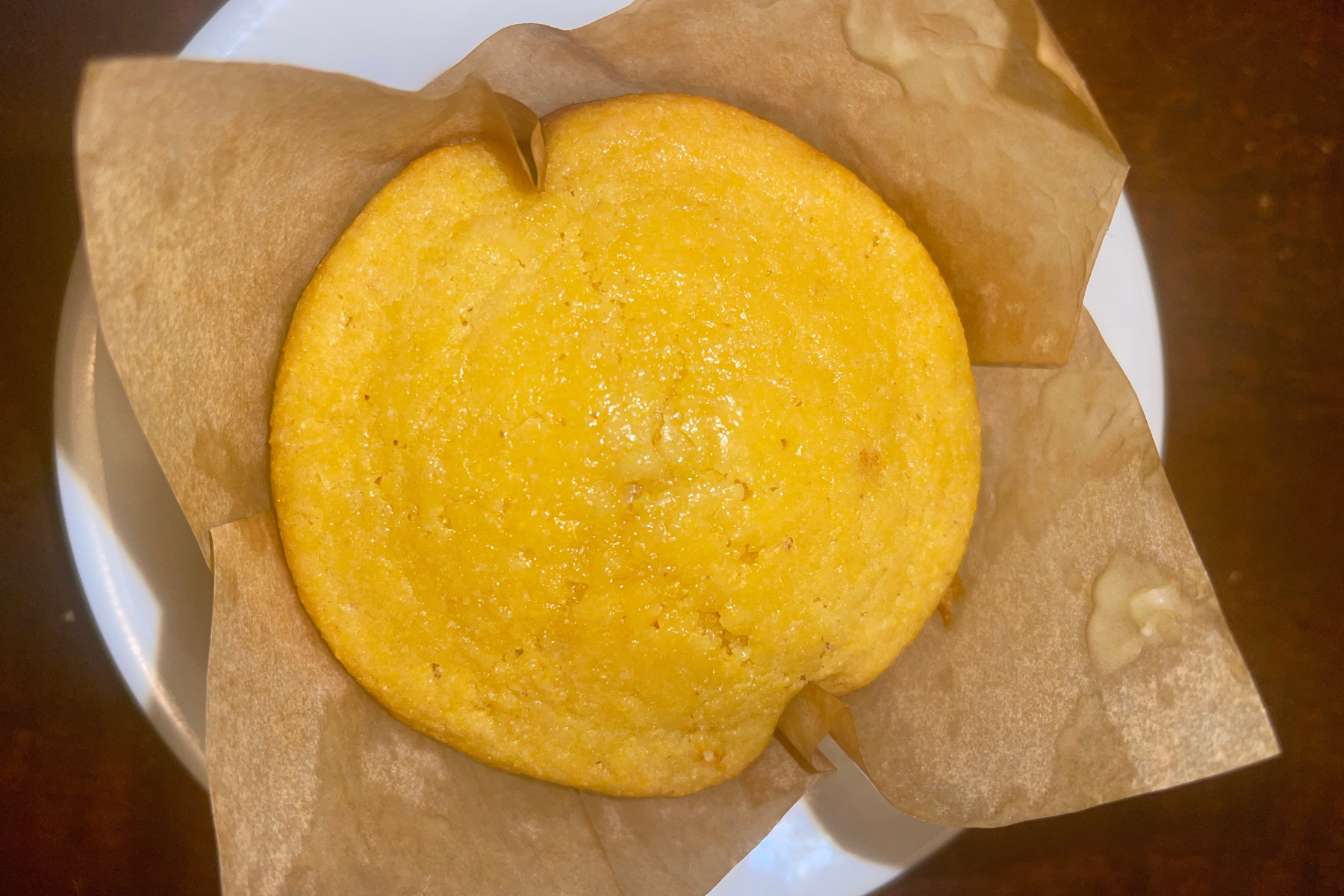
Half Dozen jumbo honey sourdough corn muffins baked in tulip liners with evenly domed golden tops.
Close up of one honey sourdough corn muffin in a tulip liner with a shiny honey butter glaze.
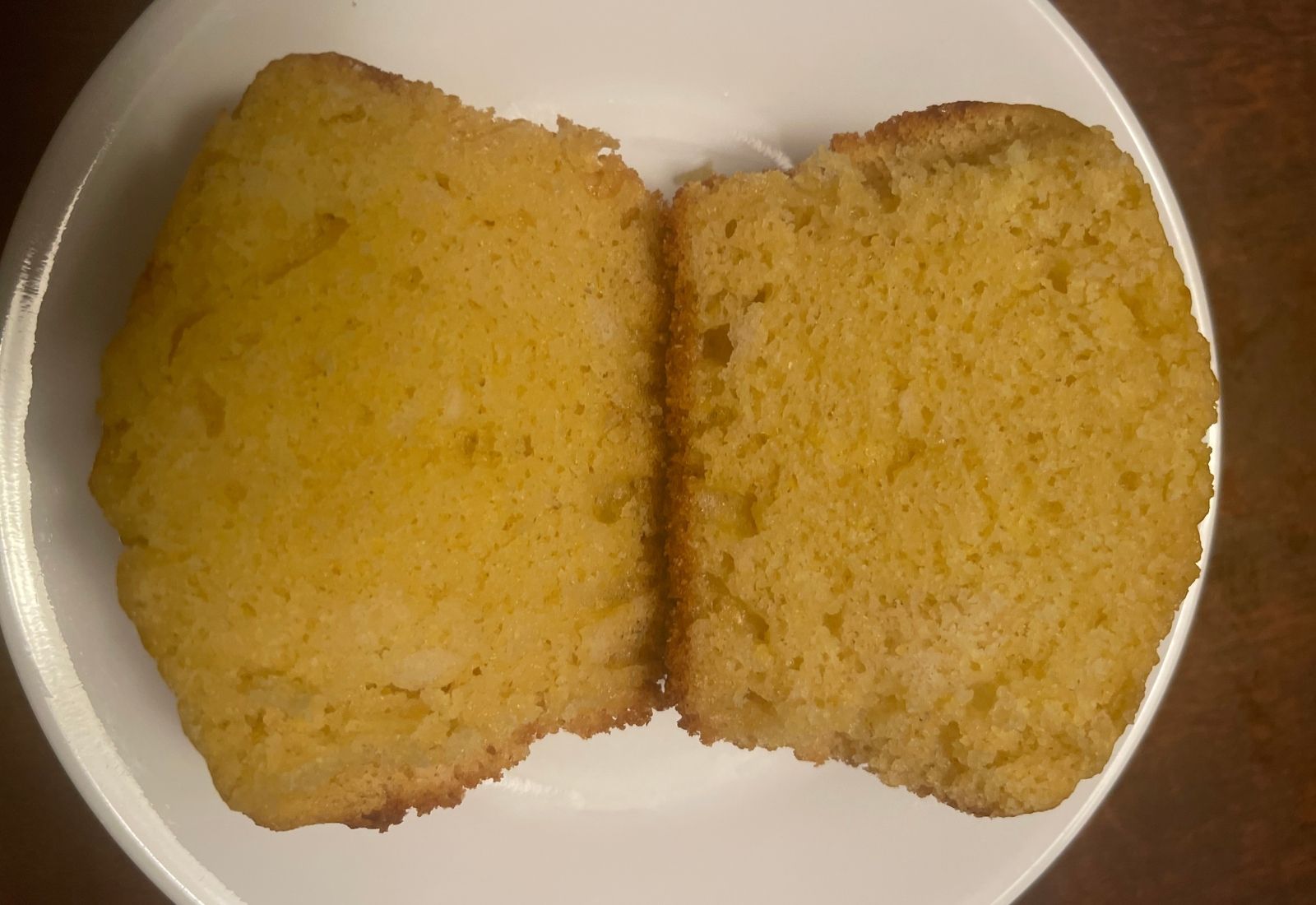
Honey sourdough corn muffin sliced open to show its soft, moist, tender crumb and golden color.

How to Store Honey Sourdough Cornbread Muffins

Room Temperature (Best for Freshness): 2–3 days
Store the muffins in an airtight container once fully cooled.
Tip: Place a small piece of paper towel inside the container to absorb extra moisture and keep the tops from getting sticky.

Refrigerator: Up to 5 days
Great if you want them to last a bit longer. Warm them for 10–15 seconds in the microwave before serving to bring back their soft, buttery texture.

Freezer: Up to 2 months
Wrap each muffin individually in plastic or place them in a freezer bag with excess air removed.
To serve, thaw at room temperature or microwave for about 20–25 seconds.
They taste freshly baked again when warmed with a little honey butter glaze.

⭐ Serving Suggestions

With Chili or Stew:
These muffins are perfection next to hearty chili, beef stew, or chicken tortilla soup. The sweetness balances savory flavors beautifully.

As a Holiday Side:
Serve warm with butter on Thanksgiving, Christmas, or Easter — they complement ham, turkey, and roasted veggies.

Breakfast Treat:
Split a muffin, warm it gently, and add butter, extra honey, or blueberry jam. Works wonderfully with eggs and bacon.

BBQ Companion:
A natural match for grilled chicken, ribs, pulled pork, or smoked brisket. The honey glaze adds the perfect finishing touch.

Turn Into Dessert:
Crumble a muffin into a bowl, top with vanilla ice cream or whipped cream, and drizzle with more honey. It tastes like a warm honey cake.

Pair With Soup:
Butternut squash, potato leek, tomato basil, or corn chowder all pair beautifully with these muffins.

Why These Sourdough Honey Cornbread Muffins Belong in Your Kitchen

When I first set out to recreate that unforgettable cornbread muffin from years ago, I never imagined it would turn into a recipe that feels this special. There’s something comforting about the way honey, butter, sour cream, and sourdough work together — a blend of warmth, nostalgia, and nourishment that tastes like home in the best way.

And the truth is, every batch reminds me why I love sourdough so much. It gives us the freedom to take something traditional, elevate it, make it healthier, and still keep all the joy and flavor we remember. These muffins are exactly that: familiar, but better. Tender, but never dry. Sweet, but never artificial. And just wholesome enough to enjoy any day of the week.

Now it’s your turn.

Bake a batch, let your kitchen fill with that buttery-sweet aroma, and share how they turn out. Did you go with the sweet levain? Did you brush on extra honey butter glaze? Did your family devour them warm?

I’d love to hear your experience. Leave a comment below or tag me on socials @sourdoughpedia and #sourdoughpedia when you bake them. Your sourdough journey is part of Sourdoughpedia now, and I’m cheering you on with every recipe you try.

Frequently Asked Questions

Can I use sourdough discard?

Yes, as long as you refresh it with flour, water, and honey before using.

Can I bake without sourdough?

Yes. Replace levain with 150 g extra flour + 150 g milk.

Why do muffins stick to liners?

Honey and steam cause sticking. Tulip liners help, and cooling fully helps even more.

Can I freeze these?

Yes. Freeze up to 2 months.

Honey Sourdough Cornbread Muffins

These Honey Sourdough Cornbread Muffins are soft, moist, and naturally sweetened with honey — no refined sugar and no sour flavor. A mild sweet levain adds incredible tenderness and better digestibility while keeping the classic cornbread taste you love. Perfect for weeknight dinners, holiday tables, or whenever you want bakery-quality cornbread muffins made with healthier ingredients.
Prep Time15 minutes
Cook Time33 minutes
Levain Fermentation4 hours
Total Time5 hours
Course: Bread, Muffins, Side Dish, Snack, Sourdough
Cuisine: American
Keyword: honey sourdough cornbread, Sourdough Cornbread Muffins
Servings: 12 Jumbo Muffins
Calories: 385kcal
Author: Serena Carcasole

Ingredients

Sweet Levain exact (300 g)

  • 60 g mature starter
  • 135 g flour
  • 95 g water
  • 10 g honey

Wet Ingredients

  • 300 g sweet levain
  • 200 g milk
  • 200 g sour cream
  • 180 g melted butter
  • 240 g honey
  • 4 large eggs
  • 10 g vanilla extract

Dry Ingredients

Honey Butter Glaze

  • 42 g melted butter
  • 28 g honey
  • pinch salt

Instructions

  • Mix sweet levain ingredients and ferment 4–6 hours until doubled.
  • Preheat oven to 375 F. Prepare muffin tin or 9×13 pan.
  • Whisk milk, sour cream, butter, honey, eggs, and vanilla.
  • Add sweet levain gradually and whisk until smooth.
  • Whisk cornmeal, flour, milk powder, baking powder, baking soda, and salt.
  • Fold dry into wet until combined.
  • Bake jumbo muffins 28–33 minutes or 9×13 pan 35–40 minutes, until 203–205 F internal temperature.
  • Brush warm muffins with honey butter glaze.
  • Cool 15–20 minutes.

Notes

  • These muffins are naturally sweetened with honey only — no refined sugar. All sugar listed in the nutrition facts comes from honey and natural milk sugars.
  • This recipe uses a sweet levain to keep the muffins soft and flavorful without any sour taste.
  • Batter will be thick and creamy; avoid overmixing to keep the crumb tender.
  • Use full-fat sour cream for the richest texture.
  • If using a 9×13 pan instead of jumbo muffins, bake 35–40 minutes or until internal temperature reaches 203–205°F.
  • These muffins freeze beautifully. Thaw at room temperature or warm briefly in the microwave/oven for a freshly baked texture.
  • Contains dairy, eggs, and gluten.

TIPS & TRICKS

  • Levain texture matters: A 77% hydration sweet levain dissolves more easily into the batter and prevents lumps.
  • Warm ingredients mix better: Let eggs, sour cream, and milk come to room temperature for a smoother batter and better rise.
  • Use tulip liners for jumbo muffins: They help the muffins rise tall and prevent sticking.
  • Check internal temperature: Perfectly baked honey cornbread hits 203–205°F in the center.
  • Brush glaze immediately: Adding the honey butter glaze while the muffins are still hot gives you that glossy, bakery-style finish.
  • Don’t skip the milk powder: It adds richness and moisture without thinning the batter.
  • Cornmeal texture: Medium cornmeal creates the softest crumb. Coarse cornmeal gives a rustic, grainier bite.
  • Storage tip: Add a small paper towel inside your airtight container to prevent condensation.

Nutrition

Serving: 1Muffin | Calories: 385kcal | Carbohydrates: 58g | Protein: 6g | Fat: 15g | Saturated Fat: 9g | Polyunsaturated Fat: 1g | Monounsaturated Fat: 4g | Trans Fat: 0.01g | Cholesterol: 82mg | Sodium: 360mg | Potassium: 210mg | Fiber: 2g | Sugar: 32g | Vitamin A: 440IU | Calcium: 150mg | Iron: 1.5mg
Ooni Halo Pro Spiral Mixer Review

Ooni Halo Pro Spiral Mixer Review

From My First KitchenAid to the Ooni Halo Pro

Is the Ooni Halo Pro Spiral Mixer really the best mixer for sourdough, pizza, and pasta dough? Here’s my honest experience as a home baker.

When I was first married, I bought my very first stand mixer, a shiny black and silver KitchenAid from someone on Kijiji for $150.

I was over the moon. Back then, I thought KitchenAid was the holy grail of mixers. And to be fair, for most home cooks, it really is.

But the truth? It sat on my counter for years, barely used.

I’ve always loved cooking, I’m Italian, and cooking has been part of my life since my early teens. But baking didn’t really pull me in until the past couple of years, when something unexpected happened…

I fell head over heels in love with sourdough.

The Moment I Became a Sourdough Baker

It started with endless nights watching sourdough videos on Instagram and TikTok. The shaping, the scoring, the magic of a bubbly starter.

I have never loved store-bought sourdough. Most of it tasted too sharp or heavy. Then one day I tried a loaf from a small bakery that was actually pretty good. That was my turning point. I thought to myself… I can do better.

So I dusted off my old KitchenAid, fed my new starter, and got to work. You can learn about my sourdough starter story and how to create your own here.

For one loaf it worked fine. Once I started baking two loaves at a time or experimenting with enriched breads and pizza dough, things started to fall apart.

The bowl overflowed. The dough climbed the hook. The motor groaned. That was the moment I realized what every serious sourdough baker eventually learns.

When I Outgrew My KitchenAid Mixers

I thought the problem was size, not power. My KitchenAid was a 4.5-quart model, so I upgraded to a 7-quart. It should have been perfect, but it was actually worse. The smaller mixer handled dough better. The listing claimed it could fit up to eight loaves, but they clearly meant tiny sandwich loaves for dolls. Three loaves of sourdoughs were enough to make it shut down. The dough kept rolling up the hook, small metal flakes started coming off, it started overheating within a few minutes and the motor shut down. It couldn’t handle 10 or more minutes of mixing. It was horrible.

I returned it immediately and decided to finally invest in the Ooni Halo Pro Spiral Mixer.

Discovering the Ooni Halo Pro Spiral Mixer

There were a few other mixers on my radar, but the Halo Pro stopped me in my tracks. The design was beautiful, solid, and clearly made for real dough. After reading glowing reviews, especially from That Sourdough Gal who raved about it, I placed my order.

When it arrived I felt like a kid on Christmas morning. The first thing I mixed was my signature sourdough dough, enough for four loaves. It was life-changing.

Affiliate Note: Some of the links in this post are affiliate links, which means I may earn a small commission if you purchase through them at no extra cost to you. I only recommend products I personally use and trust in my sourdough kitchen.

What I Love Most About the Ooni Halo Pro

The Ooni Halo Pro Spiral Mixer quickly became one of my favorite kitchen tools.

The first thing that impressed me was how hands-off it can be. The built-in timer lets you walk away and it stops automatically when your set time is up. No guessing, no overmixing.

The built-in light is another simple but brilliant feature. It lets you actually see the texture and development of your dough as it mixes, which is perfect when you’re watching for gluten strength or the moment to stop mixing.

The control knob is smooth and responsive. You can dial in the exact power and speed you want instead of jumping between fixed settings.

And my personal favorite, the protective cover. It completely stops the flour storm that every baker knows too well. No mess, no sticky counter cleanup.

The spiral motion itself is hypnotic. The dough folds and stretches evenly, developing that beautiful strength without tearing. For the first time I really understood what people meant by “windowpane.”

What Mixing Dough Feels Like in the Halo Pro

The difference was instant. The spiral motion folded and stretched the dough smoothly and rhythmically, just like hand kneading. For the first time I understood what “windowpane” really meant.

With my KitchenAid I had to keep stopping, scraping the bowl, and worrying that the motor was overheating. The Halo Pro didn’t even slow down. The bowl stayed cool, the mix was even, and the dough came out strong, supple, and silky.

Capacity-wise it’s incredible. Four loaves fit comfortably and I’m confident it could handle five or six smaller ones without effort. See it in action (sorry about the background noise).

What It’s Best (and Not Best) For

 I’ve tested the Ooni Halo Pro Spiral Mixer with everything from enriched doughs to pasta, and it has never struggled.

This mixer shines when it comes to bread, pizza, and enriched doughs. I’ve made everything from high-hydration sourdoughs to soft sandwich loaves, inclusions like nuts and dried fruit, and even buttery enriched doughs. Every batch came out consistent, smooth, and easy to handle.

But it doesn’t stop at bread. I also use it to make fresh pasta dough in large batches. Because I’m always running multiple businesses, I like to cook in larger quantities and freeze. It saves so much time and makes life easier. I’ll mix up big portions of pasta dough, shape and freeze them for quick weeknight meals or last-minute guests. My pasta machine review will be posted soon.

I do the same for bread, muffins, and cookies so I always have something homemade ready for visitors or busy weeks.

Did you know freezing bread can lower its glycemic impact and boost gut-friendly resistant starch? Read my full post on the health benefits of freezing bread here.

The only downside is the bowl size. It’s large, which is perfect for dough, but it might not be ideal for small dessert batches like a single cake or a dozen cookies. I haven’t tested it for sweets yet, so I can’t give an honest review there (I will update this post when I do). But for sourdough, pizza, and pasta dough, it’s been incredible.

How Ooni Compares to KitchenAid

I still use my KitchenAid for smaller projects like making homemade butter, but when it comes to serious dough, the Ooni Halo Pro wins every time.

Feature Ooni Halo Pro Spiral ?Mixer Kithenaid Aritsan/Pro
Best For Sourdough and pizza dough Small cakes and batters
Mixing Action True spiral kneading Planetary mixing
Capacity 4–6 loaves comfortably 1–2 loaves
Motor Strength Built for heavy doughs Struggles under load
Noise Level More Quiet and stable Noticeably louder + unstable

If you bake multiple loaves or love pizza, this is the kind of tool that makes you feel like you’re running your own little bakery at home.

Why Spiral Mixers Are Ideal for Sourdough

The Halo Pro doesn’t just mix dough, it develops it properly. The motion is gentle but powerful, building gluten evenly while preserving hydration.

For enriched doughs like my Better Than Sara Lee Honey Wheat Sourdough Loaf or Honeycloud Sourdough Loaf, it incorporates butter and honey smoothly without greasy over-mixing.

When I use it for my Same-Day Sourdough Pizza Dough or overnight ferment, the dough gains beautiful strength and elasticity, giving that chewy Neapolitan bite every time. Recipes coming soon.

Final Thoughts

For me, the Ooni Halo Pro Spiral Mixer has become the heart of my baking routine. It’s strong, smart, and easy to love.

Between the timer, the light, the cover, and that perfect spiral motion, it’s everything I wished my older mixers could do. I can walk away while it mixes, come back to perfectly developed dough, and skip the mess entirely.

I love knowing that I can mix big batches of bread, pizza, or pasta dough, portion and freeze them, and have fresh food ready whenever I need it.

It’s large, powerful, and built for bakers who take their craft seriously.

Pro Baker’s Verdict ⭐ ⭐ ⭐ ⭐ ⭐Rate 5/5

Verdict: The Ooni Halo Pro Spiral Mixer is perfect for serious home bakers who want professional mixing power.

Pros

  • Built-in timer stops automatically
  • Integrated light for clear visibility
  • Smooth control knob and protective cover
  • Handles sourdough, pizza, and pasta dough with ease
  • Quiet, steady, and powerful

Cons

  • Large bowl not suited for very small dessert batches
  • Heavy and takes up counter space
  • Premium price, but worth it for serious bakers

Verdict: For anyone who bakes or cooks in batches, this is more than a mixer. It’s a time-saver, a clean-up reducer, and a dough dream machine. A sourdough baker’s dream!

Where to Buy the Ooni Halo Pro Spiral Mixer

You can purchase the Ooni Halo Pro Spiral Mixer directly from Ooni’s official website or through my affiliate link here. It’s the same price for you and helps support Sourdoughpedia so I can keep testing and sharing recipes and reviews.

FAQ’s

Is the Ooni Halo Pro Spiral Mixer worth it for sourdough bakers?

Yes. It mixes and strengthens sourdough beautifully while preserving hydration.

Can it handle pasta dough?

Yes, and it’s one of my favorite uses for it. It handles large pasta batches effortlessly, perfect for freezing and meal prep.

Does it work for enriched doughs like brioche or milk bread?

Yes. It folds fats into the dough without overmixing.

Is it noisy?

No. You can have uninterrupted conversations while the machine is mixing.

How many loaves can it mix at once?

I have only attempted four loaves of artisan bread and enriched bread, and large batches of pizza dough, and there was plenty of space for more. It depends on what your are making.